What should I pack for a Nile cruise?
Light breathable layers, sun protection, a shawl for temples & a light jacket for cool evenings — plus key documents.
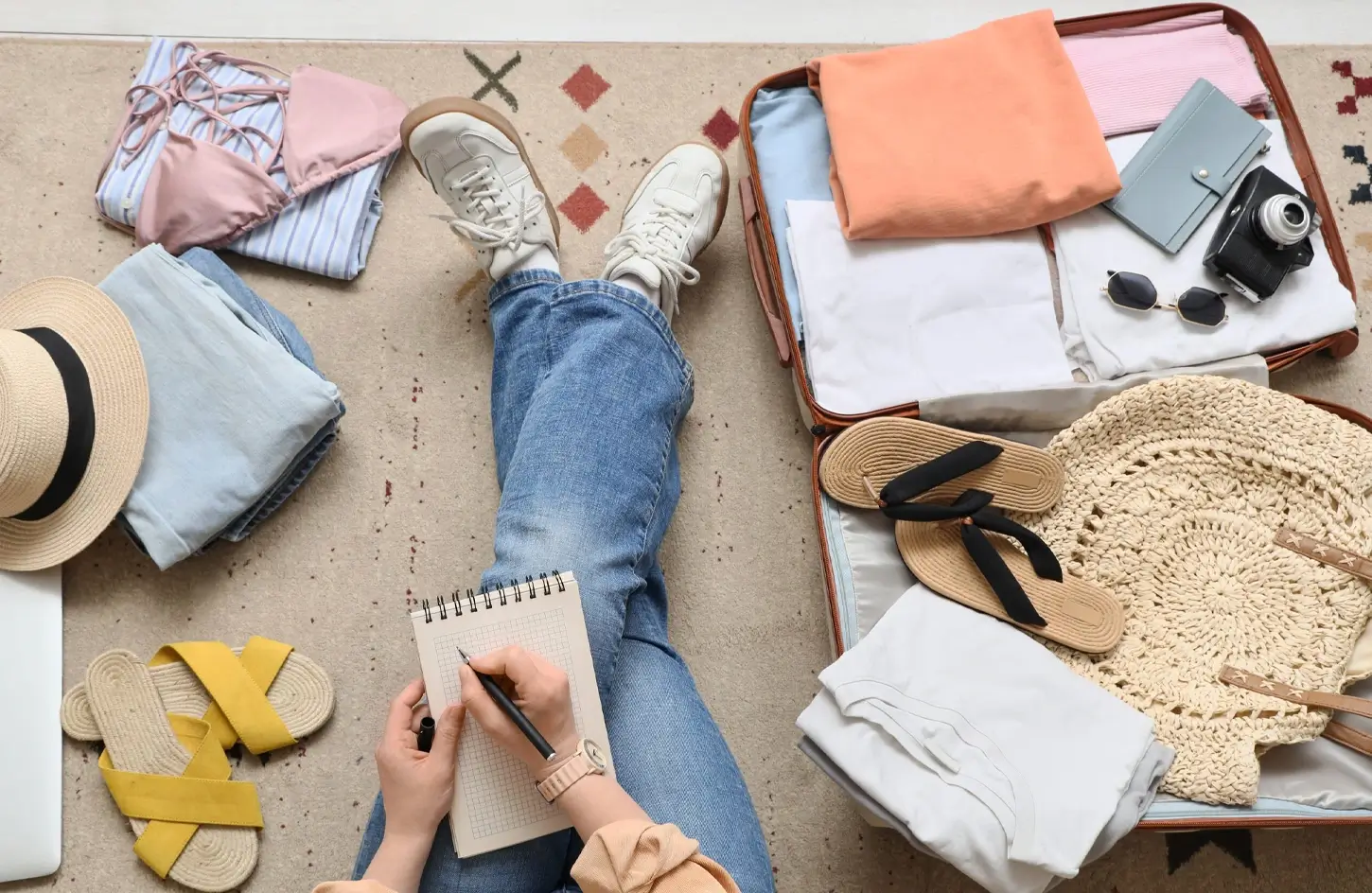
- 👕 5 light shirts, linen trousers, 2 dinner outfits, swimwear & walking shoes
- 🧣 Modest shawl/scarf — required to cover shoulders & knees at all temples
- 🧴 SPF 50+, sunglasses , wide-brim hat & electrolytes — sun is intense year-round
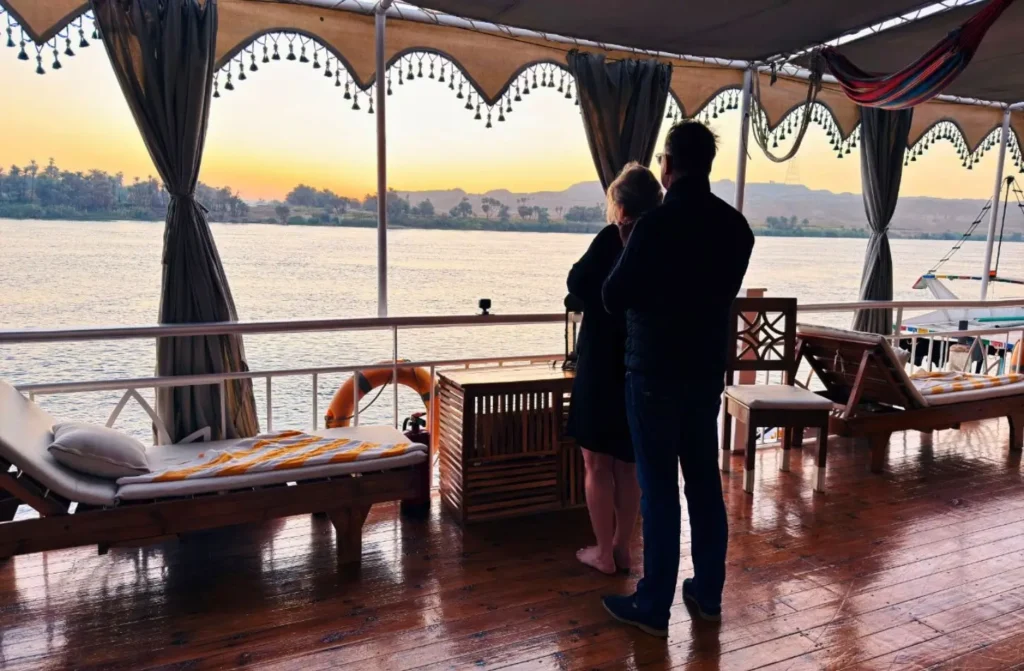
- 🧥 Light fleece for cool evenings (8–15°C), even in warmer shoulder months
- 🛂 Passport (6+ mo validity) , e-visa ($30), power adapter & cash for tips
Planning what to pack for a Nile cruise is one of the most important steps before any trip to Egypt. Pack too little, and you will be caught off-guard by fierce midday sun or a cool winter evening on deck; pack too much, and you will regret it — Nile cruise ship cabins are notably more compact than ocean-going equivalents, and storage space is limited.
Whether you are sailing the classic Luxor-to-Aswan route, venturing as far as Abu Simbel, or cruising Lake Nasser, this complete Nile cruise packing list for 2026 covers everything — clothing by season, temple dress codes, health essentials, tech, documents, and the items experienced travelers always leave at home.
1. The Essentials: what to pack for a Nile cruise
Before diving into the details, it helps to see the full picture at once. A well-organized Nile cruise packing list falls into three broad categories: clothing and footwear, health and sun essentials, and documents with technology.
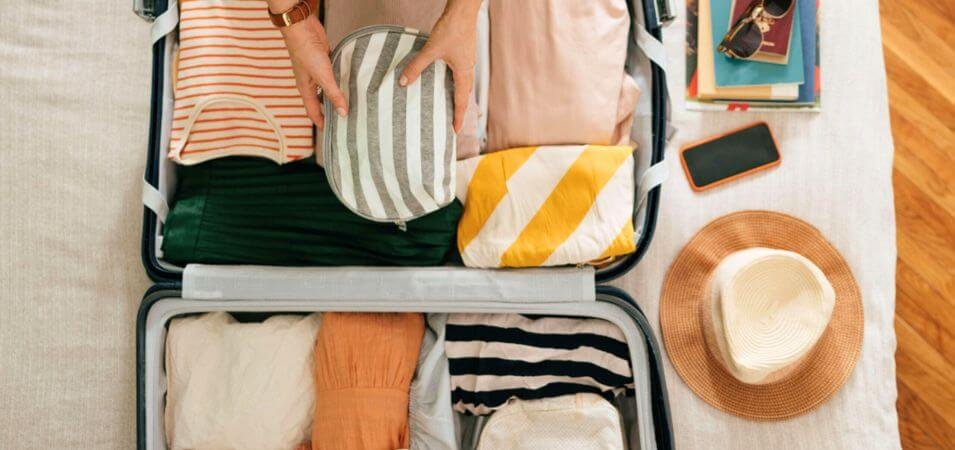
For clothing, the core items are lightweight breathable shirts — five is a practical number for a week-long cruise — paired with long linen trousers or maxi dresses that serve equally well for daytime temple visits and evenings on deck. A light sweater or fleece jacket is essential regardless of the season, since Nile evenings can be surprisingly cool even in October. A modest shawl or cover-up doubles as temple attire and an extra layer, while two smart-casual dinner outfits cover any captain’s dinner or themed night. For footwear, pack comfortable walking shoes for excursions on uneven stone, sturdy sandals with ankle grip for warmer days, and lightweight pool sandals. Two swimsuits, a wide-brim sun hat, and UV-protection sunglasses round out the clothing essentials.
On the health and sun side, broad-spectrum SPF 50+ sunscreen is non-negotiable — Egypt’s UV intensity is extreme year-round. SPF lip balm, polarised sunglasses, and DEET-based insect repellent belong in your day bag at all times. Bring any personal prescription medications in quantities exceeding your trip length, plus antidiarrhoeal tablets, pain relievers, hydration tablets or electrolyte sachets, hand sanitizer, and a good moisturizer. Egypt’s desert air parches skin faster than most travelers expect.
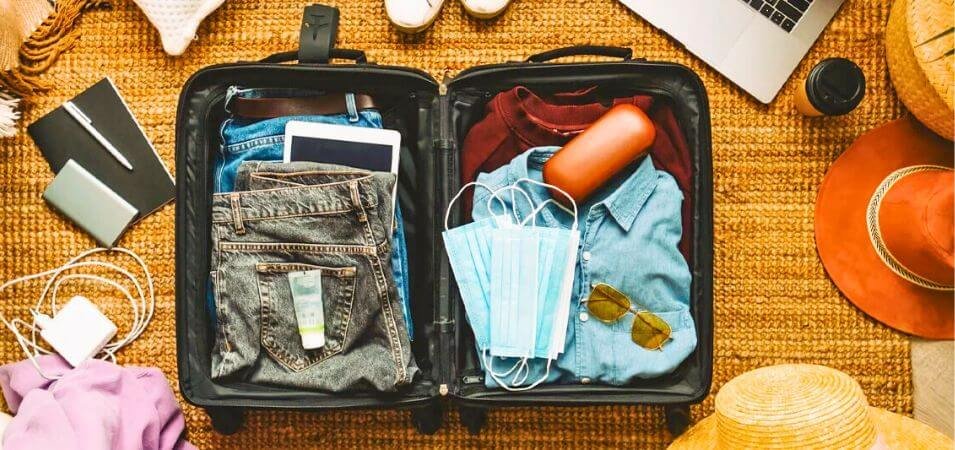
For documents and technology, your passport must be valid for at least 6 months from the date you arrive. Egypt visas are available on arrival or as an e-visa in advance. Travel insurance documents, cash in Egyptian pounds for tipping, and a universal power adapter are must-haves. A high-capacity power bank (10,000 mAh or above) keeps devices charged during long excursions, and a camera with spare memory cards will earn its space many times over once you reach Karnak or Abu Simbel. Keep printed or PDF copies of emergency contacts and a passport scan stored separately from the original.
Use the checklist table below as a quick reference — print it, save it to your phone, or tick it off as you pack. Each category is covered in full detail throughout the rest of this guide.
| Clothing Footwear | Health, Sun Toiletries | Documents Tech |
| ☐ Lightweight breathable shirts (×5) | ☐ Broad-spectrum SPF 50+ sunscreen | ☐ Passport (6+ months validity) |
| ☐ Long linen trousers/maxi dresses | ☐ SPF lip balm | ☐ Egypt visa (on arrival or e-visa) |
| ☐ Light sweater or fleece jacket | ☐ Polarised sunglasses | ☐ Travel insurance documents |
| ☐ Modest shawl/cover-up for temples | ☐ Insect repellent (DEET-based) | ☐ Egyptian pounds — cash for tips |
| ☐ Smart-casual dinner outfit (×2) | ☐ Personal prescription medications | ☐ Universal power adapter |
| ☐ Comfortable walking shoes | ☐ Antidiarrhoeal tablets | ☐ Power bank (10,000 mAh+) |
| ☐ Sturdy sandals with ankle grip | ☐ Pain relievers | ☐ Camera + spare memory cards |
| ☐ Pool sandals/flip-flops | ☐ Hydration tablets/electrolytes | ☐ Noise-canceling headphones |
| ☐ Swimwear (×2) | ☐ Hand sanitizer | ☐ Printed / PDF emergency contacts |
| ☐ Wide-brim sun hat | ☐ Moisturizer (Egypt air is very dry) | ☐ Passport scan emailed to self |
| ☐ UV-protection sunglasses |
2. Clothing: What to Wear on a Nile Cruise
Working out what to wear on a Nile cruise comes down to three distinct environments: temple excursions ashore, relaxed time on deck, and evening dining. Each calls for a slightly different approach, but with smart choices, you can cover all three without overpacking.
Daytime Excursions
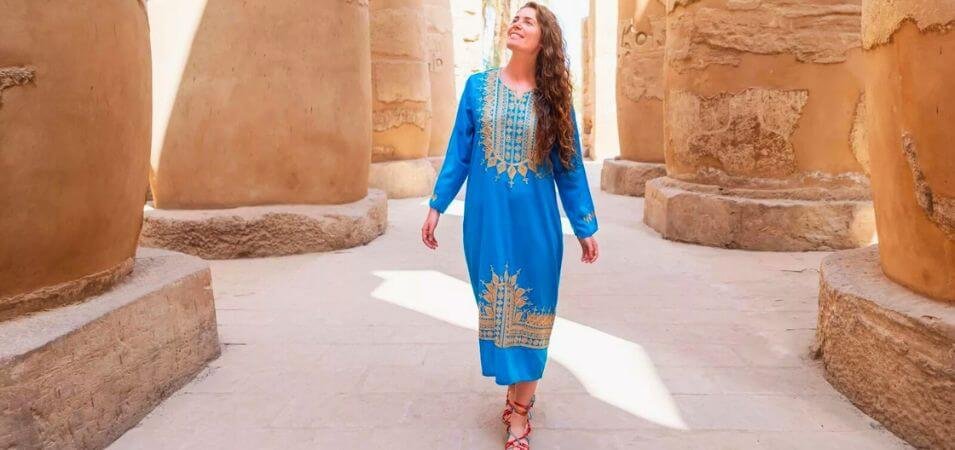
Lightweight, loose-fitting clothes in breathable natural fabrics — cotton and linen above all — form the backbone of any solid Nile cruise packing list. Light colours (beige, white, olive, tan) reflect sunlight rather than absorbing it, keeping your core temperature noticeably lower during long visits to exposed archaeological sites. Long-sleeved UPF shirts and wide-leg linen trousers offer a dual advantage: sun protection and the cultural modesty required at every temple on the route.
On-Deck Relaxation
Once you are back on board, the dress code relaxes entirely. Shorts, sleeveless tops, sundresses, and swimwear are all perfectly appropriate by the pool or on the sun deck. Most Nile cruise ships feature a swimming pool and at least one Jacuzzi, so swimwear is a genuine essential rather than an optional extra.
Evening Dining
Dining rooms on Nile cruises typically expect smart-casual attire. Men tend to wear collared shirts with trousers; women opt for dresses, blouses, or elegant pantsuits. Pack two dressier outfits for captain’s dinners or themed nights — the popular Galabeya night is a beloved tradition on most cruises, and you can purchase a jalabiya cheaply at any market in Luxor or Aswan.
3. Summer Packing vs. Winter Packing Differences
Egypt’s climate shifts dramatically across the year. To get a fuller picture of when to travel, it is worth reading our guide on the best time for a Nile cruise — but for packing purposes, here is how each season changes what goes in your bag.
November – February (Winter: Peak Season)
Daytime temperatures in Luxor and Aswan typically range from 22°C to 26°C, but evenings and early mornings can drop to 8–15°C, occasionally lower on the upper deck. Bring a warm fleece or light down jacket specifically for sunrise temple visits and evening deck time. Closed-toe shoes are more practical than sandals, and layering is the core strategy: remove in the midday warmth, add back at dusk. This is the most popular period to cruise, and rightfully so.
March – May and September – November (Shoulder Seasons)
Daytime temperatures range from 20°C to 34°C with mild evenings. These periods offer the best packing flexibility — breathable layers that can be added or shed throughout the day. A thin cardigan and a versatile scarf that doubles as sun protection and modesty cover at temples are the most useful single items you can pack for shoulder-season travel.
June – August (Summer: Peak Heat)
Temperatures regularly exceed 35–40°C along the Upper Nile, with intense UV radiation throughout the day. Moisture-wicking fabrics become essential rather than optional. Pack extra shirts so you can change mid-excursion — it makes a genuine difference in comfort. Prioritize light colors, a wide-brimmed hat with a chin cord (vital on breezy decks), and SPF 50+ sunscreen reapplied every 2 to 3 hours. Early morning starts are standard on summer cruises for this reason — most excursions are scheduled before 10 am.
4. Temple Etiquette Dress Code Requirements
Every major attraction on a standard Nile cruise itinerary — Karnak Temple, Luxor Temple, the Valley of the Kings, Philae Temple on Agilika Island, Edfu Temple, Kom Ombo, and Abu Simbel — expects modest dress. A lightweight shawl or scarf solves this instantly and packs completely flat, so there is no reason not to bring one. Avoid tight or revealing clothing inside temple complexes and Nubian villages. Closed or sturdy footwear is genuinely safer than sandals on sandy, uneven ancient stone surfaces. A scarf can also serve as a head covering in more conservative religious buildings. Swimwear is appropriate only at the pool — never at temples, markets, or village visits.
5. Sun Protection, Medication Health Essentials
Health preparation is just as critical as choosing the right clothes when packing for a Nile cruise. The Egyptian sun is relentless — UV radiation is high year-round and extreme from May through September.
Sun Protection
Pack broad-spectrum SPF 50+ sunscreen and reapply every two to three hours, especially after swimming or sweating near the pool deck. Polarised sunglasses reduce glare from the Nile’s surface and the pale limestone of temple facades. A wide-brim hat with a chin cord is not optional on breezy upper decks — it protects your face, neck, and ears through hours of outdoor exploration.
Medications and First Aid
Bring any personal prescription medications in quantities that cover several days beyond your trip length in case of delays. Antidiarrhoeal tablets and oral rehydration sachets are useful if your stomach takes time to adjust to local food and water. Ibuprofen or paracetamol, plasters, and antiseptic wipes cover the basics. DEET-based insect repellent is most effective near the riverside sites where mosquito activity increases at dusk. Antihistamines are worth adding — fine dust at desert temple sites affects more travelers than they expect.
Hydration
Egypt’s desert air dehydrates faster than almost any other environment. Carry a refillable water bottle and keep electrolyte tablets in your day bag, particularly for long morning excursions in the hotter months. Moisturizer and SPF lip balm help prevent cracked skin and lips that catch many first-time visitors off guard after just a day or two ashore.
6. Technology Documents to Bring
Essential Documents
Egypt visas cost $30 USD, whether obtained on arrival or as a single-entry e-visa in advance (multiple-entry e-visas cost $65). As of March 2026, both fees increased by $5 from previous years — if you see older figures of $25, they’re outdated. The e-visa is processed via Egypt’s official portal, visa2egypt.gov.eg, typically within 24–72 hours, and remains the better option for most travelers since it avoids airport queues. Be cautious of unofficial third-party visa sites that charge inflated fees.
Cash in Egyptian pounds is essential for tipping throughout the cruise. Tipping is expected and genuinely appreciated at every stage of the journey — guides, drivers, crew, and carriage operators all depend on it. For a full breakdown of amounts and etiquette, see our guide to tipping on a Nile cruise. ATMs are scarce near rural temple sites, so carry enough cash before leaving Luxor or Aswan.
Keep a printed or PDF copy of your passport number, insurance policy number, cabin number, and emergency contacts in your day bag — separate from the original documents. Email a scan of your passport to yourself as a digital backup.
Technology
A universal power adapter is essential — Egyptian sockets use type C and F plugs, and cabin power outlets vary by vessel. A power bank with 10,000 mAh or more keeps your phone and camera charged during excursions that routinely last 8 to 10 hours. Bring a camera with multiple spare memory cards — from the Colossi of Memnon to the twin temples of Abu Simbel, you will fill storage fast. Noise-canceling headphones are a quiet luxury worth the small amount of space they take up.
7. What NOT to Pack (Save the Space)
Knowing what to leave behind is as important as knowing what to pack for a Nile cruise. Over-packing is the single most common mistake first-time Nile cruisers make — and Nile ship cabins are significantly more compact than ocean cruise equivalents.
- Oversized suitcases — a medium rolling case plus a day bag is the practical limit for most cabins. Anything larger creates real storage problems.
- Heavy formal wear — smart-casual is genuinely the maximum dress code on board. A suit or formal gown will never leave the bag.
- More than three pairs of shoes — walking shoes, evening shoes, and pool sandals cover every scenario.
- Valuable jewelry — it attracts unnecessary attention and adds zero value to a temple visit.
- Full-size hair dryers and heavy styling appliances — most ships provide these, and Egypt’s dry air does half the work anyway.
- Bulky beach towels — cruise ships provide them for pool and deck use.
- Excessive “just in case” items — Luxor and Aswan have pharmacies and markets well-stocked with forgotten basics.
8. Luggage Tips for Nile Cruises
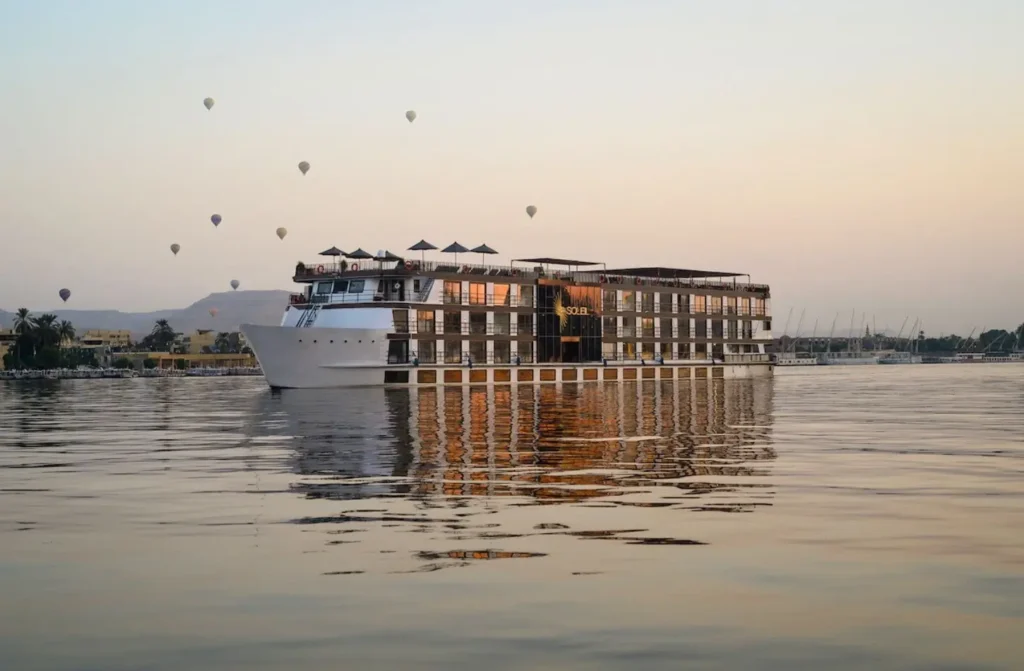
One of the genuine pleasures of river cruising is knowing that you only need to pack for a Nile cruise and unpack once — your floating hotel moves with you from Luxor to Aswan. Smart luggage strategy makes the experience considerably smoother.
- Roll clothing rather than folding it. Rolling saves substantial space and all but eliminates wrinkles in linen and cotton — the fabrics you’ll be wearing most.
- Keep a lightweight day bag or backpack purely for shore excursions — large bags are impractical and uncomfortable on temple tours.
- Stock your day bag the night before each excursion: sunscreen, water bottle, hat, shawl, camera, and small cash in Egyptian pounds.
- Most ships offer a laundry service. On a week-long cruise, three or four days of clothing is often sufficient if you use it.
- Pack a spare foldable tote bag — Luxor and Aswan markets are excellent, and you will almost certainly buy something.
Top Attractions You’re Packing For
Understanding exactly where you will go shapes every decision about what to pack for a Nile cruise. For a detailed breakdown of the full route, see our Nile cruise itinerary guide. Here is what to expect at each major stop — and what it means for your bag.
Luxor — The World’s Greatest Open-Air Museum
Luxor packs more ancient history per square kilometer than almost anywhere on earth. The Karnak Temple Complex — the largest in Egypt at 63 acres — features 134 soaring columns in the Great Hypostyle Hall and demands comfortable, closed-toe walking shoes on its uneven paved surfaces. Luxor Temple on the East Bank is equally spectacular and often visited at night, when it is dramatically illuminated. Bring a light layer for evening visits. In the West Bank, the Valley of the Kings houses the royal tombs of over 60 pharaohs, including Tutankhamun — the interiors are warm and slightly airless, so close-fitting, breathable clothing works better than loose layers here. The mortuary temple of Queen Hatshepsut at Deir el-Bahari and the vast Colossi of Memnon both sit fully exposed to the sun with no shade to speak of, making your hat and sunscreen non-negotiable.
Edfu and Kom Ombo — Sailing Between the Sites
The Temple of Edfu, dedicated to the falcon god Horus, is one of the best-preserved ancient temples in all of Egypt — a genuinely extraordinary sight. Many cruises reach it by horse carriage from the dock, which is a fun experience in itself. Kom Ombo sits directly on the Nile bank and is often visited near sunset, when the light on the stone is exceptional. The evening air can feel cool here even in the shoulder seasons, so keep your shawl or light jacket accessible in your day bag.
Aswan — Nubian Culture and Island Temples
Aswan is one of Egypt’s most beautiful cities, and its key attractions each have specific packing implications. Philae Temple sits on Agilika Island and is reached by a short motorboat transfer — the water crossing can be breezy, so a windproof outer layer is useful. The Unfinished Obelisk and the Aswan High Dam are open-air sites in full sun. Nubian village visits are culturally immersive and wonderful, but require particularly respectful modest dress — covered shoulders and knees as a minimum.
Abu Simbel — The Twin Temples of Ramses II
Abu Simbel is the most dramatic site on the entire itinerary. The twin rock-cut temples of Ramses II and Queen Nefertari, relocated from their original position during the construction of the High Dam, sit in the open desert south of Aswan. Most visits happen in the early morning, either by coach or a short flight, meaning an extremely early wake-up call and cool pre-dawn temperatures. Pack warm layers specifically for the Abu Simbel excursion — the contrast between a cold 5 am departure and midday desert heat is significant.
One thing you do not need to pack for is food — Nile cruise ships typically serve generous full-board meals, and the onboard cuisine is a highlight in itself. If you are curious about what to expect at the table, our guide to Egyptian food on a Nile cruise covers everything from mezze and ful medames to the traditional Galabeya night feast.
9. FAQs About Packing for Egypt
Do I need formal wear on a Nile cruise?
No. Smart-casual is the highest standard expected on virtually all Nile cruise ships. A neat collared shirt and trousers for men, or a dress or blouse for women, is sufficient even for a captain’s dinner. Full formal wear is unnecessary and takes up valuable cabin space.
Is it safe to drink tap water on a Nile cruise?
Stick to bottled water throughout the trip. Most ships provide bottled water with meals, but carry a sealed bottle on every excursion. Staying well-hydrated in Egypt’s heat is not optional — dehydration sets in faster than most people expect, particularly in the hotter months.
Can women wear shorts on a Nile cruise?
Yes — on board and during casual moments in tourist areas. However, at temples, religious sites, and Nubian villages, knees and shoulders should be covered. A quick-dry sarong or shawl carried in your day bag solves this effortlessly — wrap it on before entering a site, remove it once you are back on board.
How much cash should I carry for tips?
Budget at least $50–$80 USD per person in small bills for a 4–7 night cruise. This covers guides, drivers, horse carriage operators, cruise staff, and deck crew. Egyptian pounds are preferred; USD and EUR are also widely accepted. See our dedicated tipping guide for exact amounts by role.
What to pack for a Nile cruise in summer (June–August)?
Summer demands full heat management. Focus on moisture-wicking, light-coloured fabrics; SPF 50+ sunscreen reapplied constantly; a wide-brim hat with a chin cord; polarised sunglasses; extra shirts for mid-excursion changes; electrolyte supplements; and a well-insulated water bottle. Plan all excursions before 10 am and after 4 pm.
What to pack for a Nile cruise in winter (November–February)?
Winter is the most popular season and deservedly so. The key additions to your standard Nile cruise packing list are a warm fleece or light down jacket for cool evenings and early mornings — temperatures can drop to 8°C on the upper deck — and closed-toe shoes for comfortable temple visits. Layering is the guiding principle: you will add and remove layers multiple times each day.
FAQ
What should I pack for a Nile cruise?
Light breathable layers, sun protection, a modest shawl for temples and a light jacket for cool evenings, plus your documents. Around five lightweight shirts covers a week, paired with linen trousers or maxi dresses that work for both temple visits and evenings on deck, and two smart-casual outfits for the captain’s dinner.
Is there a dress code at Egyptian temples?
Shoulders and knees need to be covered at temples, so a modest shawl or cover-up is the one item you should not leave behind. It doubles as an extra layer in the evening, which is why experienced travellers pack it even when the forecast looks uniformly hot.
Do I need warm clothes on a Nile cruise?
Yes. A light sweater or fleece is essential regardless of season, because evenings on deck can drop to around 8 to 15°C — and that catches people out in October as much as in winter. The days are hot; the nights on the water are genuinely cool.
What shoes should I bring for a Nile cruise?
Three pairs cover everything: comfortable walking shoes for excursions across uneven stone, sturdy sandals with ankle grip for warmer days, and lightweight sandals for the pool deck. Temple floors are the reason the walking shoes matter more than they would on a normal beach holiday.
What sun protection do I need in Egypt?
Broad-spectrum SPF 50+ sunscreen is non-negotiable, because Egypt’s UV intensity is extreme year-round rather than seasonal. Pack SPF lip balm alongside it, plus a wide-brim hat, UV-protection sunglasses and electrolytes — dehydration builds faster than most visitors expect.
What documents do I need for a Nile cruise?
A passport with at least six months of validity, and an e-visa, which costs $30. Bring a power adapter and cash for tipping, since gratuities on board are generally not handled by card. Pack light overall: cruise cabins are more compact than ocean-ship equivalents and storage is limited.