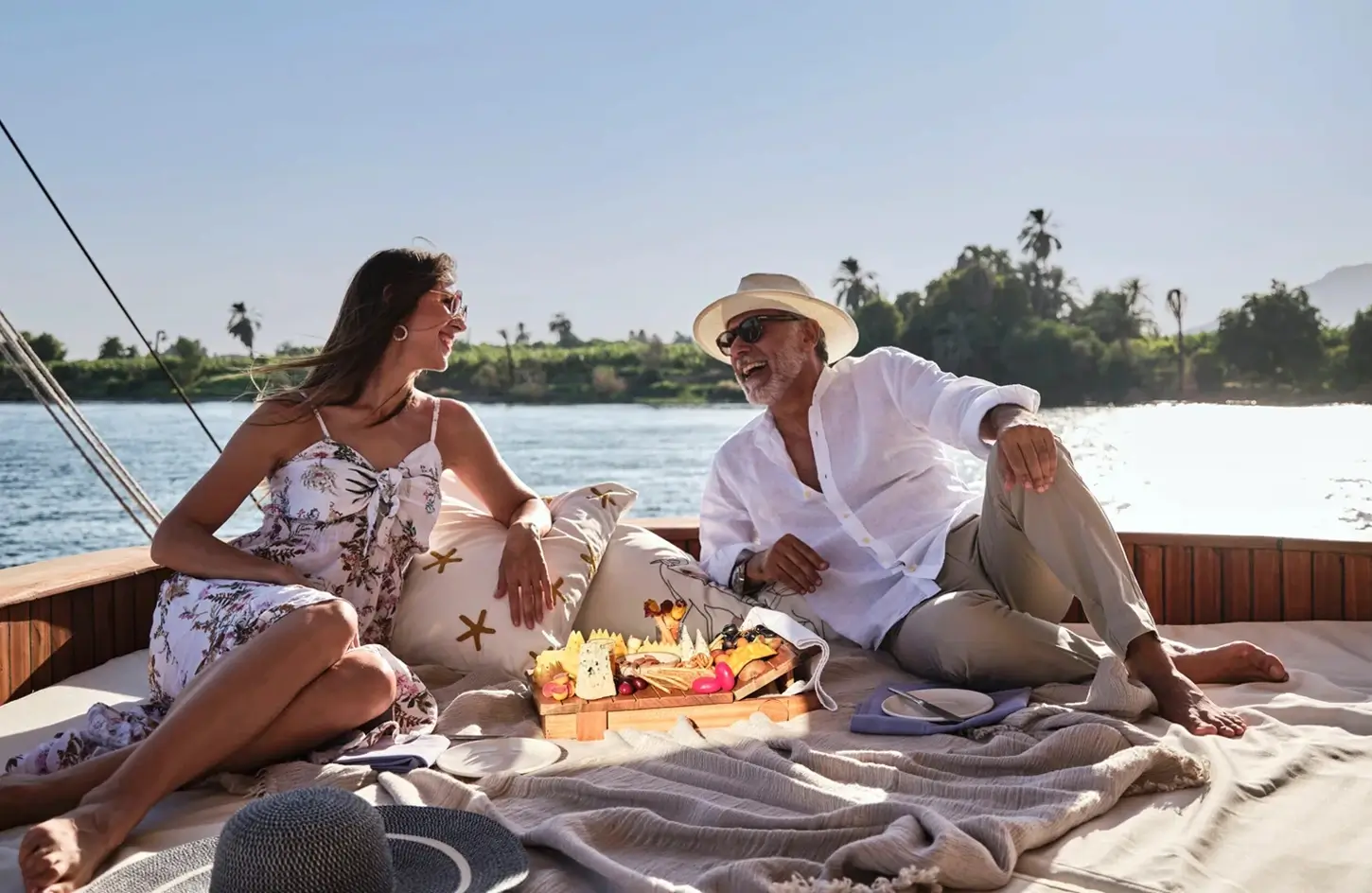
What food is served on a Nile cruise?
All 3 daily meals are included, mixing authentic Egyptian dishes with international options.
- 🍳 Breakfast:ful medames, ta’ameya, aish baladi, labneh & eggs
- 🍽️ Lunch/dinner: koshari, kofta, molokhia, mahshi & grilled Nile fish
- 🍮 Desserts: Om Ali, basbousa & konafa; karkadeh tea after dinner
- 🥗 Vegan, vegetarian & gluten-free accommodated with 24–48hr notice
- ✅ All meals are halal fby default; alcohol only on deluxe/luxury ships
My experience as a tour guide arranging cruises on the Nile has taught me that the one query that I receive more frequently than anything else from my tourists has nothing to do with which sites they will see or which vessel will transport them to their destinations.
It is a reasonable question and deserves a clear reply. Egyptian cuisine aboard the cruise ships on the Nile can be described as excellent, authentic, and unique, differing vastly from the international buffet of mediocre food we typically associate with a holiday meal plan. When my customer tasted molokhia for the first time on the upper deck of the MS Mayfair, traveling from Luxor to Esna as the sun set, she assured me it would be her favorite meal of the entire journey. Not the temples, but the food.
Everything you might want to learn is here — the menu options, the all-you-can-eat concept and its variations according to the cruise class, the cultural dinner nights, and dining outside the ship at Luxor and Aswan.
What Food Is Served on a Nile Cruise?
With very few exceptions, every Nile river cruise runs on an all-inclusive dining plan, which means breakfast, lunch, and dinner are all part of your booking fees. There’s no need to browse menus and tally up prices because the meals just come at perfectly timed intervals in accordance with your excursions. If you’re taking a regular or even a luxury cruise between Luxor and Aswan, it’s a bargain, especially since the cuisine far exceeds expectations for the cost.
Dining menus change daily but consist primarily of traditional Egyptian fare, with some foreign dishes mixed in for familiarity. The approach taken is one of moderation – enough comfort food to prevent you from feeling like an outcast, yet plenty of local Egyptian fare to keep you connected with the destination.
Here is how the day breaks down.
Breakfast: Beginning Your Nile Breakfast Cruise
Breakfast on any Nile cruise is a leisurely and plentiful affair, typically served buffet-style between 7:00 AM and 9:30 AM. The following items are among what you can expect when taking a cruise, such as the Sonesta St. George I or the Iberotel Crown Emperor:
- Just-made aish baladi – the round, soft flatbread fresh from the ship’s galley
- Ful medames – fava beans simmered in cumin, lemon juice, and olive oil, served with bread. This is the meal that has kept Egypt alive for countless centuries, and which, if you are my guest in Egypt for the first time, you should sample above all others.
- Ta’ameya – Egypt’s form of falafel using fava beans instead of chickpeas, seasoned and fried so crispy on the outside and with a beautiful green inside
- Labneh, white cheese (gibna beida), and tomatoes – the unsung heroes of every Egyptian breakfast spread
- Eggs prepared how you like, fresh fruit, yogurt, and pastries
- Mint tea or ahwa (Egyptian coffee) to begin the day right
Tip from Yousef: Don’t have pastries for breakfast; do it like the Egyptians and start your meal with ful, ta’ameya, some bread, and a powerful mint tea. You will instantly know why nothing has changed about their breakfasts in centuries.
Lunch and Dinner: The Heart of the Experience
Lunch is normally a full buffet served after the morning tour, usually between 1 and 3 pm. Dinner is a plated or semi-buffet served around 7.30 pm, preceded by a cultural performance or a sunset sail.
The meal pattern is very similar for both: a choice of cold mezze followed by a hot dish with either rice or bread, vegetables, and dessert. The Oberoi Zahra and the Sanctuary Sun Boat IV, both luxury cruises, offer plated dinner services featuring elegant presentations of Egyptian and Continental cuisine.
The most important thing about the meal here is that there are no Egyptian dishes added as afterthoughts or as novelties on a Western menu; they are the main focus of the food served.
Desserts, Tea, and After-Dinner Drinks
Egyptian desserts are unapologetically sweet and deeply satisfying after a day in the heat. Expect:
- Om Ali – Egyptian equivalent of bread pudding with a mix of puff pastry, warm milk, cream, and nuts baked till golden brown. Om Ali is the dessert everyone wants to try by name at the end of the second day.
- Basbousa – Egyptian semolina cake sweetened with sugar syrup with the essence of rosewater.
- Konafa – Shredded dough filled with cream or cheese, topped with syrup.
- Freshly cut fruits such as mango, guava, and other seasonal fruits from the valley of the Nile.
Karkadeh, or cold hibiscus tea, which is sour and vividly red, is served at the ship’s bar after dinner, together with sahlab, which is a warm milk-based drink made from orchid roots and usually consumed during winter, along with beverages, including beer and wine.
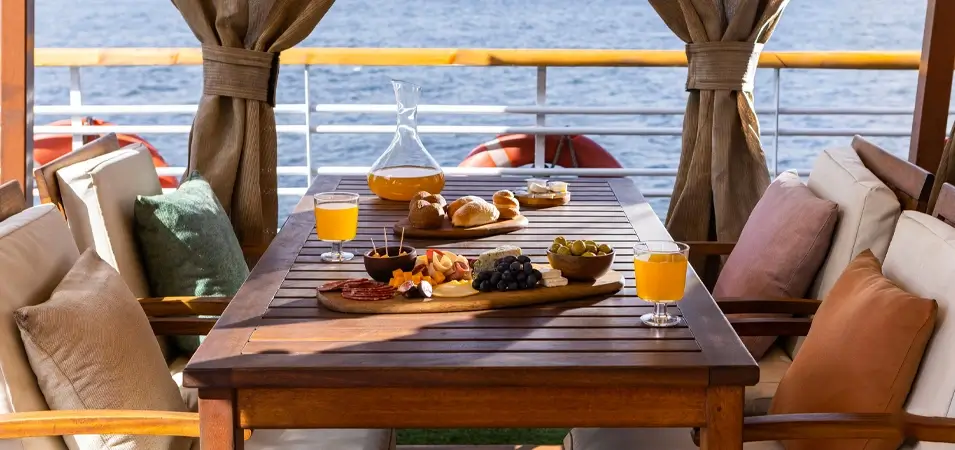
The Essential Egyptian Dishes You Will Find Onboard
Specificity makes the case for enjoying Egyptian cuisine on a Nile cruise. They are not general cuisines like those from the Middle East; they are specific dishes that have been enjoyed for ages, each dish corresponding with the place through which you sail. Here are some examples.
Koshari – The National Cuisine of Egypt
Koshari is what Egypt eats when feeding itself, rather than entertaining tourists. This consists of layers of rice, brown lentils, macaroni, and spaghetti covered with fried onions, tomato-vinegar sauce, and a spiced garlic dressing known as daqqa. This mixture may sound bizarre until you try it, but when you do, it makes perfect sense – full-bodied and utterly satisfying.
It is believed to have originated in the mid-nineteenth century, when Egypt’s heterogeneous workforce incorporated influences from India, Italy, and local culture into a single, nutritious meal. Nowadays, it can be found anywhere from food stalls in Cairo to the cabins of Nile cruises, and this is well justified. In almost any regular and premium cruise, you will find it on the lunch menu as a self-service option. Sometimes it is offered as a cultural dish during special evenings.
Ful Medames and Ta’ameya
A dish that has been eaten consistently for more than 4,000 years is ful medames, or braised fava beans flavored with lemon juice, garlic, ground cumin, and olive oil. There is archaeological proof of their consumption in Ancient Egypt as well. Eating something as a part of your breakfast at sea is much more connected with such a long and fascinating tradition than sightseeing in any temple would be.
Ta’ameya, or Egyptian falafel, differs from the latter in that it is made from fava beans rather than chickpeas. The crunchy outside is filled with herby, green falafel inside and served with aish baladi, tomatoes, and tahini sauce. Once you taste authentic ta’ameya, the falafel prepared from chickpeas tastes quite artificial.
Molokhia, Mahshi, and Kofta
Molokhia is a viscous, glossy, jute leaf stew prepared with garlic and coriander, using the tasha method, which involves frying garlic in hot ghee and adding it to the stew shortly before serving. The taste of molokhia is very intense and incomparable to any dish in Western cuisine. This stew is usually eaten with rice and bread, often accompanied by grilled chicken or rabbit.
Mahshi, or stuffed vegetables, is the dish that reflects all the patience and care of Egyptians. It includes zucchini, peppers, vine leaves, and tomatoes, each filled with rice and herbs, then stewed in tomato broth. Each family in Egypt makes its mahshi, and each person thinks that his/her mahshi is the best.
Kofta is a very popular meat dish known for its taste and aroma. It is made from a mixture of minced meat and seasoned with onion, parsley, and other spices. Kofta meatballs are cooked on skewers over the fire. Cooking koftas becomes an integral part of dining on cruise ships, as the smell of these dishes attracts everyone’s attention.
Grilled Nile Perch and River Fish
The Nile tilapia, known as bolti, and the Nile perch rank among the most ancient food sources in Egypt, having been depicted in tomb art in Luxor since the New Kingdom. Served grilled with cumin, coriander, and lemon, or in a light tomato sauce, these fish feature on menus on river cruises frequently, especially those navigating Esna and Edfu, areas where fisherman communities along the river banks continue to provide daily catches for local markets.
On luxury river cruises, there is often no shortage of culinary creativity in preparing fish dishes; a whole-baked Nile perch, served with roasted vegetables and a tahini dressing, is a truly well-prepared dish. On a normal cruise, the humble grilled bolti with rice and a lemon slice is fresh and truly Egyptian.
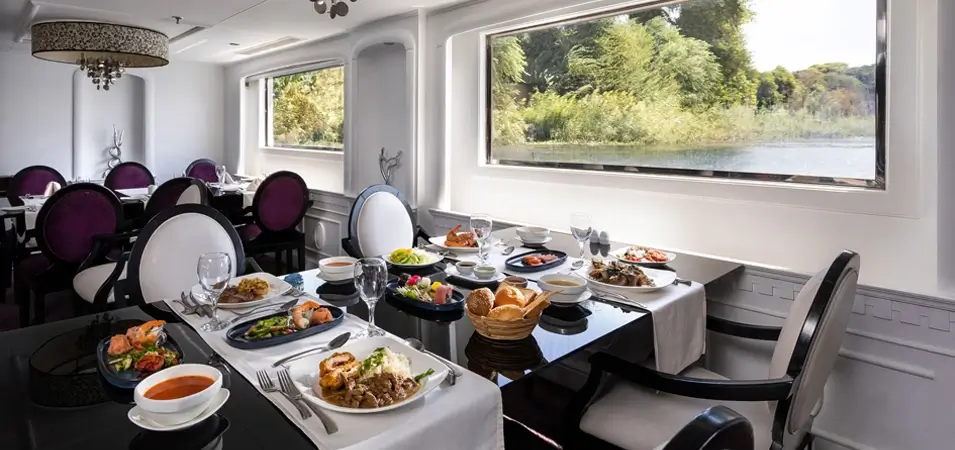
Deluxe vs. Luxury Dining — What Is the Difference?
Not all Nile cruise dining is the same, and understanding the distinction helps set realistic expectations before you travel.
| Factor | Standard / Deluxe Cruise | Luxury Cruise |
|---|---|---|
| Examples | MS Nile Style, Iberotel Crown Emperor, Sonesta St. George I | Oberoi Zahra, Sanctuary Sun Boat IV, Sonesta Moon Goddess |
| Meal service | Buffet (breakfast, lunch); semi-buffet or set menu (dinner) | Plated à la carte dinner; full buffet breakfast and lunch |
| Egyptian dishes | Core classics: koshari, kofta, molokhia, ful medames | Full range plus regional specialties; Nubian dishes in Aswan |
| International options | Pasta, grilled chicken, salads, basic desserts | Continental European, Mediterranean; wine list curated by region |
| Dining room | Comfortable, panoramic windows, air-conditioned | Elegant, formal tablecloths, open-deck dining option |
| Dietary customisation | Available on request (24hr notice recommended) | Fully accommodated; menu consultation with chef available |
| Cultural dinner nights | 1–2 per cruise, themed evenings | Integrated throughout; private Nubian dinners available |
| Beverages | Soft drinks, tea, coffee included; alcohol at extra cost | Often fully all-inclusive, including local beer, wine, and spirits |
Note by Yousef: The reality is that the difference in quality of the food provided in a regular deluxe cruise compared to a luxury cruise is not as great as you would think. All that luxury provides is presentation, service, and the variety of wines. The Egyptian cuisine, including ful, molokhia, and kofta, is equally prepared with as much pride on all levels. I have eaten superb meals on budget cruise ships and mediocre meals on luxurious ones.
Meals for Everyone: Vegetarian, Vegan, Gluten-Free, and Halal
Egyptian food culture is flexible enough to accommodate a wide range of dietary restrictions. The cooking system is based on legumes, vegetables, grain, and dairy. While meat is included, it does not always dominate.
Vegetarians can relax, as Egyptian cuisine offers extensive choices. For example, dishes like ful medames, ta’ameya, koshari, mahshi, molokhia, feteer meshaltet (a layered pastry that can be enjoyed with honey or cheese), and roasted and dressed vegetables give vegetarians no less to eat than everyone else aboard.
Vegans must inform the cruise ship operator 48 hours prior to the start of the trip. The default base of Egyptian meals is vegetarian; however, the additional elements like dairy products and eggs can easily be excluded. It won’t be difficult for the cooks to prepare fully vegan versions of the breakfast and lunch meals.
Customers who are sensitive to gluten will need to discuss this carefully with the chefs. While rice, lentils, and vegetables are naturally gluten-free, bread remains an essential part of Egyptian meals, making contamination a likely risk on regular cruises. However, luxury ships with cooking stations offer better security against this problem.
Halal cuisine will be the default on all Nile cruise ships. Halal is the most common meal type offered in Egypt because of religious practices, so no special order is necessary for people with such dietary preferences.
Cultural Dinner Nights Onboard — What to Expect
Most Nile cruises for at least five days have at least one night devoted to a themed cultural dinner. These nights are the highlights of any cruise, rather than an act performed for the tourists; they are a demonstration of how Egyptians celebrate.
The restaurant is redecorated in a traditional style, with lanterns and flowers. The selection of food has expanded to include dishes not found on the usual menu: Nubian lentil dishes in Aswan, quail on the grill in Luxor, and lamb served from a plate with spiced rice, as examples of an ancient Egyptian wedding dinner.
Music during dinner can be performed by an oud player, a tabla dancer, or even a group playing classic or folklore songs of Egypt. Sometimes there is also a performance by a whirling Sufi dervish after the dinner.
In luxury cruises, cultural dining becomes even more elaborate. The Oberoi Zahra provides a private dinner experience of Nubian cuisine in Aswan, where the menu is carefully crafted to include a range of dishes that represent the unique cuisine of Upper Egypt – spicier dishes with rich flavors, featuring ingredients such as dried okra and slow-cooked lamb.
The History Behind Egyptian Cuisine
Egyptian cuisine is not simply a regional version of Middle Eastern food culture. Instead, it represents an independent food culture, older than many of the traditions surrounding it, shaped over thousands of years of cultivation along the shores of the Nile River.
The ancient Egyptians would cultivate crops such as emmer and barley to make bread and beer, two staples of their diet used in both culinary preparation and religious rituals. Crops such as lentils, beans, onions, garlic, leeks, and cucumbers were raised in the fertile black earth produced by the annual flooding of the Nile. Fish were salted and dried. Animals provided meat and milk products.
What ensued over millennia was superimposition rather than the erasure of layers. The arrival of the Greeks and Romans introduced olive oil and wine culture into Egypt’s culinary tradition. Rice, spices, and dishes from across the Muslim world entered the region during the Arab invasions in the 7th century. The contribution of the Ottomans consisted of influences from the Levant and Anatolia — meat stewed for hours, stuffed vegetables, and soaked pastries.
All of this means that Egyptian cuisine enjoys remarkable complexity. By enjoying molokhia while touring the Nile River, you will enjoy something documented in Arab cookery manuals of the Middle Ages. Eating ful medames will bring you closer to the food that ancient Egyptians enjoyed than anything else.
How to Eat Like a Local Beyond the Ship
The kitchen aboard your ship will make sure that you eat deliciously. However, the best memories associated with eating on a Nile cruise are made on dry land in Luxor and Aswan. This is what you should know about them.
Spice Markets in Aswan
One of the most aromatic markets in Egypt is the Aswan Souk located beside the Corniche in central Aswan. The stalls are packed with dried hibiscus flowers (used to prepare karkadeh tea), cumin, coriander, dried fenugreek seeds, black seed (nigella), and Egyptian tea leaves. Bargaining is accepted, and shopkeepers expect tourists; however, when wandering deep into the market, stalls selling ingredients for the local community can be found.
Pick up a handful of dried karkadeh. Prepare it by pouring hot water over the leaves in a cup, adding some sugar, and squeezing lemon juice over the top. It is one of the most refreshing things produced in Egypt. And at prices ranging from 20 to 40 EGP (less than $1 USD), it is also one of the best souvenirs to buy.
Yousef’s Tip for you: Let your guide lead you to where the local population buys their spices in the souk, and avoid going to the tourist end near the entrance. It is of superior quality and much cheaper.
Street Food in Luxor
Before or after touring Karnak Temple, head to the marketplace behind Luxor Temple, located on the east side. The street vendors there offer fiteer (an Egyptian pastry with a honey or white cheese filling), hawawshi (spiced minced meat sandwiched in flatbread), and fresh sugarcane juice, squeezed by vendors who have maintained their positions there for decades.
Sofra Restaurant, which lies in a charmingly restored townhouse on Mohamed Farid Street, can be counted on to give you a glimpse of how Luxorians really eat. It offers authentic Upper Egyptian food, namely dishes native to the Luxor and Aswan areas, which are slightly different from those of Cairo cuisine. The molokheya is prepared with rabbit meat, as it is done in Upper Egypt, unlike Cairo, where it is made with chicken meat.
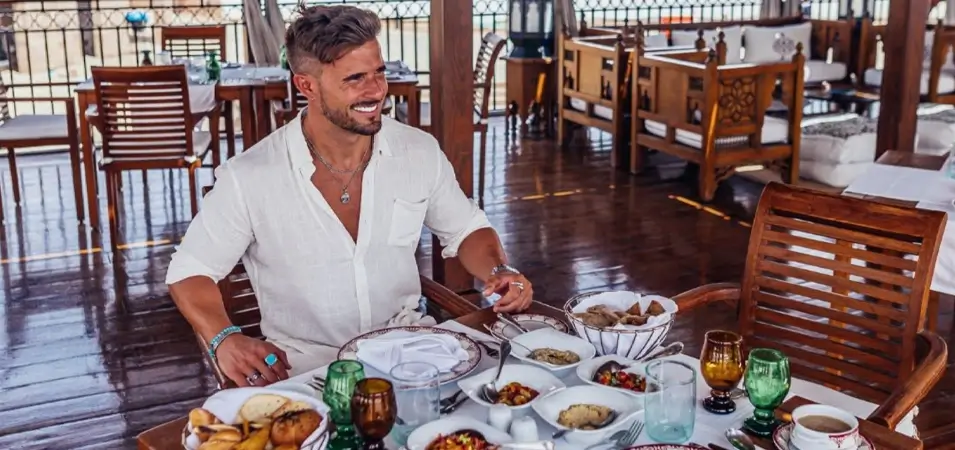
Food in a Nubian Village in Aswan
If you decide to explore a Nubian village opposite Aswan, reachable in only 15-20 minutes by felucca, you will enjoy a unique culinary experience. The food in Nubia has a particular flavor – more seasoning, the use of dried fish and okra, and dishes based on the crops grown in the strip of land between the desert and the river.
Usually, you will be treated to Nubian tea, a very strong and sweet tea made in the black variety and poured into small glasses, and home-prepared dishes if pre-arranged through your local guide.
FAQ — Egyptian Food on a Nile Cruise
What food is served on a Nile cruise?
All Nile cruises include three meals per day as part of the all-inclusive package. Breakfast includes Egyptian dishes such as ful medames, ta’ameya, aish baladi, and labneh, along with other foods like eggs, fruits, and pastries. The noon meal is a buffet following the morning cruise tour, while the night meal is served as a plated meal or half buffet, including koshari, kofta, molokhia, mahshi, and continental cuisine items. Alcohol is served only on the deluxe boats.
What is the most famous Egyptian dish served onboard?
Egypt’s traditional cuisine is Koshari – the layered combination of rice, lentils, macaroni, and spaghetti, dressed with caramelized onions, hot tomato-vinegar sauce, and garlic oil. It is a pride of Egyptian street food, invented in the nineteenth century for the poor, but now featured on our Egyptian cruises as a national menu item.
Is the food on a Nile cruise safe to eat?
Yes. Cruise ship kitchens follow guidelines set by the Egyptian Ministry of Tourism, which require the use of fresh local produce and filtered water when preparing meals. As a precaution, make sure you consume only bottled water throughout your trip and do not eat vegetables sold by street vendors off the ship.
Can I request vegetarian or special diet meals on a Nile cruise?
No problem. Egyptian dishes are inherently vegan — for example, ful medames, koshari, mahshi, ta’ameya, and molokhia are vegan by default. Vegan and gluten-free diets can be accommodated with 24 to 48 hours’ advance notice. All food served on the Nile cruise ships is always halal.
What is a cultural dinner night on a Nile cruise?
Cultural Dinner Night is a themed event usually held once or twice during a five- to seven-day cruise. The dining room is decorated in traditional Egyptian decorations, and the menu includes dishes typical of the region. Musical accompaniments consist of live music played on either oud or tabla, while a whirling dervish show follows later on the sun deck.
How does food on a luxury Nile cruise differ from a standard cruise?
Egyptian staple foods, however, are always cooked to the same high standards, regardless of which level you choose. There are differences between luxury and regular vessels in terms of service style (plated or buffet), food selection, drink quality (wine selection or full alcohol service), and special requirements to cater to your tastes.
What should I try first if I have never eaten Egyptian food before?
Start with ful medames at breakfast — braised fava beans with cumin, lemon, garlic, and olive oil, eaten with warm flatbread. It is one of the oldest dishes in the world and the best introduction to Egyptian culinary identity. Follow it with ta’ameya for breakfast, koshari for lunch, and molokhia for dinner. By the end of your first day, you will have tasted the foundations of Egyptian cuisine.
Final Reflection from Yousef Atta
One of the most common questions people ask me after returning from Egypt is what their biggest surprise was there. Surprisingly often, the answer is related to food.
The temples? They have heard of them before. The Nile? Pictures can only reveal so much. It is the Egyptian cuisine that surprises them with dishes that seem commonplace yet turn out to be amazing, such as the ful medames that proved to be incredible rather than just okay; or the molokhia, which smells like nothing but tastes amazing once you try it; or the kofta cooked up on the upper deck while watching the sun go down.
The cuisine of Egypt deserves more appreciation than it gets. While it may lack eye-catching looks or fancy presentation, it more than makes up for it through the complexity of flavors and long history, as well as the honest taste brought to the plate by centuries-old agriculture in the land.