How do I plan a Nile cruise in Egypt?
Pick a 3 or 4-night Luxor–Aswan sailing, travel between October and April, budget from $1,400 per person, and sort your e-visa a week ahead of departure.
- 🌤️ Sail October–April for the mildest weather, generally 20–28°C.
- 💵 5-star cabins start from $1,400 per person; dahabiya sailings run from $3,000.
- 🛂 The standard tourist e-visa costs $30 as of 2026 — apply at least a week ahead.
- 🕌 Don’t skip Karnak , the Valley of the Kings, Edfu, Kom Ombo, and Philae Temple.
Picture waking up to Karnak’s colossal columns catching the first light, then falling asleep as your ship drifts quietly past palm-lined banks toward Aswan. That is what a well-planned Nile cruise delivers, but between ships, cabin classes, sailing dates, and a dozen conflicting itineraries online, most travelers get stuck before they even book. This guide strips the process down to nine practical steps, from choosing your route to packing your bag, drawing on the same Egypt Nile cruise packages our team plans every week. By the end, you will know exactly how to plan a trip that matches your budget, your dates, and the temples you actually want to see.
Step 1: Choose Your Route and Length
The first thing to settle when figuring out how to plan a Nile cruise is the route: every sailing covers the same 220-kilometer stretch between Luxor and Aswan, so the real decision is direction and length rather than destination. A southbound trip leaves Luxor and reaches Aswan after 4 nights, while a northbound sailing runs from Aswan to Luxor over 3 nights, covering identical stops in reverse. Travelers short on time often pick the shorter option, and our guide to the 3-night Nile cruise breaks down exactly what each day looks like.
With more time available, a 7-night round trip lets you sail further south and gives you a slower pace at each site, without the early-morning rush shorter sailings require. Check the sailing calendar before booking: most 4-night departures leave Luxor on Mondays or Saturdays, and most 3-night departures leave Aswan on Fridays or Wednesdays, so your flights need to line up with the ship’s schedule.
Our full Nile cruise itinerary guide compares all three lengths day by day.
Step 2: Pick the Right Cruise Style
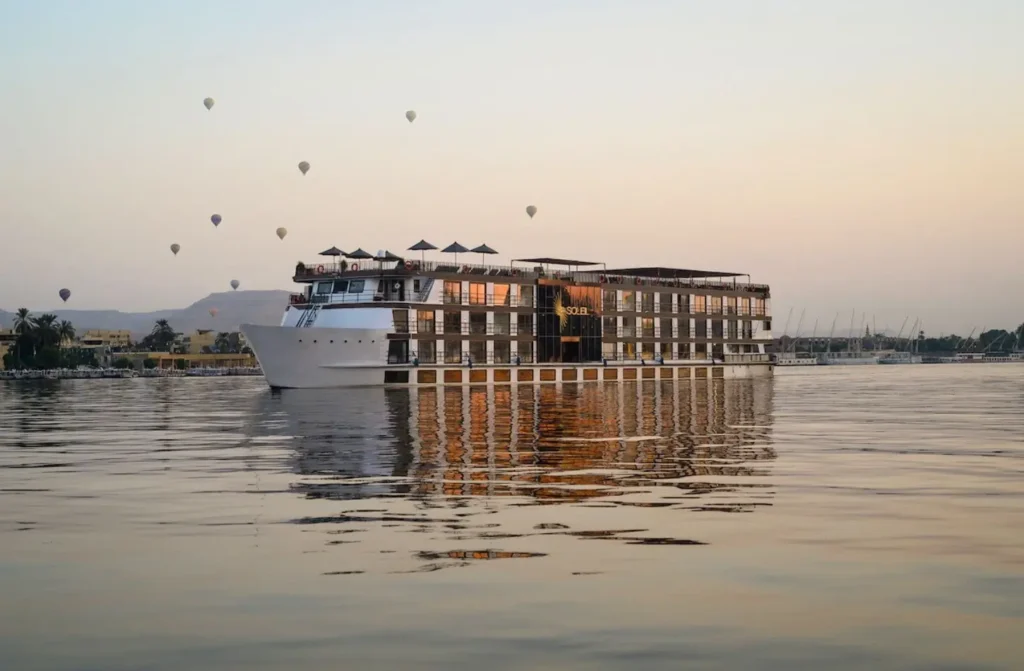
Not every Nile cruise ship is built the same way, and part of how to plan a Nile cruise well is matching the style to your trip, not just the route. 5-star standard cruises are the most booked option, offering the full temple program at the most accessible price, which makes them the natural starting point for first-timers. Deluxe cruises step things up with larger cabins, calmer ships, and more refined dining — a good fit for couples and families after a quieter onboard atmosphere.
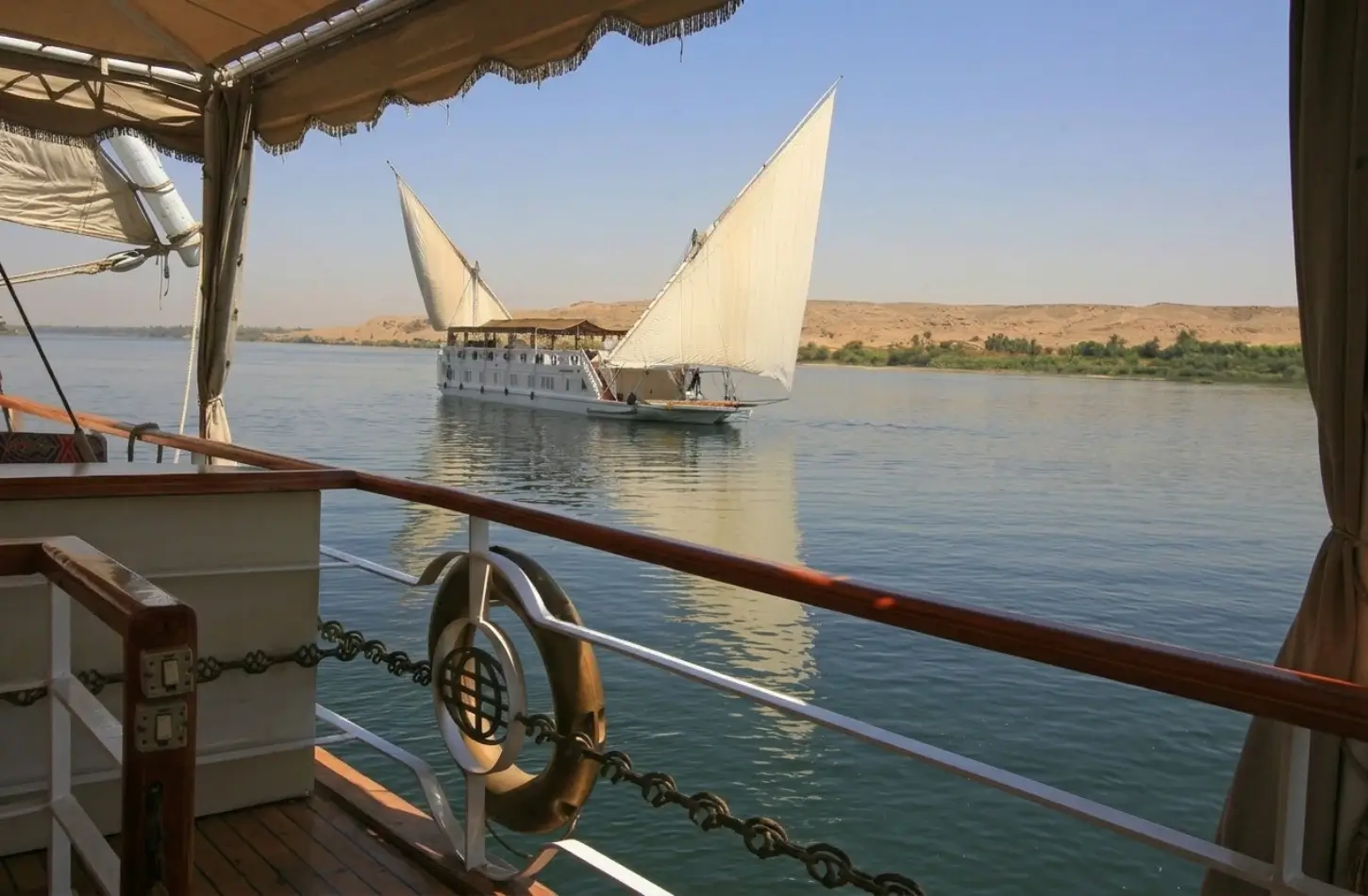
At the top of the market, luxury cruises bring butler service, spacious suites, and premium Egyptologist guiding for travelers who want the finest version of the trip. For something different, a dahabiya cruise swaps the large ship for a traditional sailing boat carrying only 6 to 12 guests — ideal for a private, unhurried pace.
If Abu Simbel and the Nubian temples matter more than Luxor’s East Bank, a Lake Nasser cruise sails the remote southern lake instead, a good option for an off-the-beaten-path route.
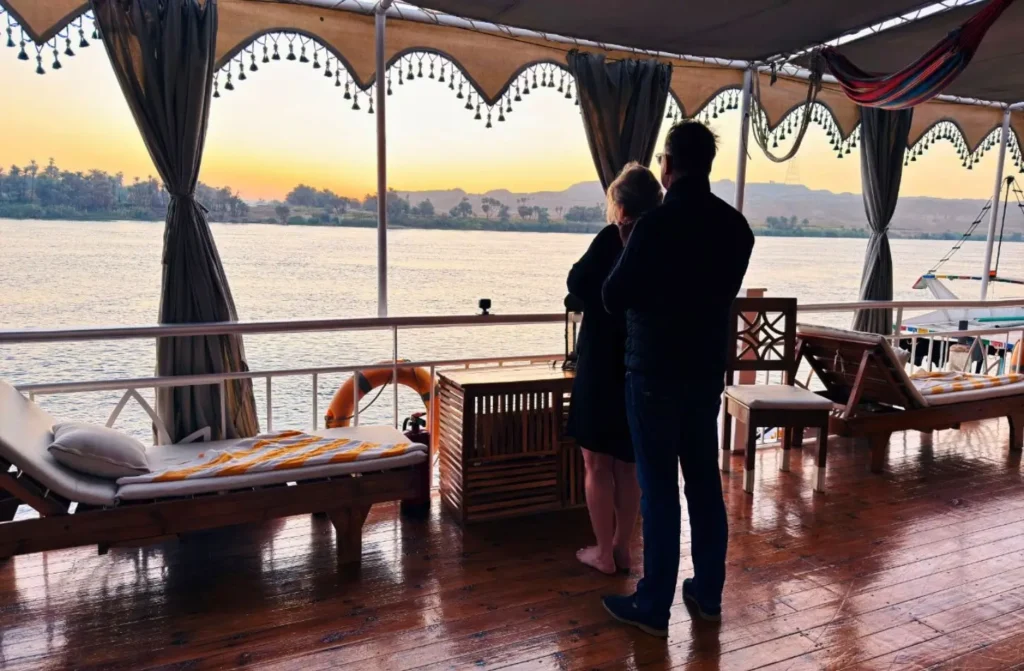
Beyond category, look at what each ship actually offers on board: a sun deck with a small pool and loungers, a lounge bar for evening entertainment, and a restaurant serving set menus with a mix of Egyptian and international dishes.
Cabin location matters too — mid-deck cabins tend to run quieter, since they sit farther from the engine room and the sun-deck bar, while upper cabins usually come with slightly larger windows or a small balcony depending on the ship’s design.
Step 3: Time Your Sailing for the Best Weather
Timing is one of the biggest factors in how to plan a Nile cruise well, since the month you sail changes your experience more than almost any other decision. October through April delivers the most comfortable conditions, with daytime temperatures generally between 20°C and 28°C, making long temple visits far more enjoyable than in summer heat.
December and January are typically the most pleasant months, though they also draw the largest crowds and the highest prices, since this window overlaps with peak season for European and North American travelers
If your schedule is flexible, sailing in May, June, or September can save 30 to 40 percent on cabin rates, provided you are comfortable with hotter days and plan temple visits for early morning. Our detailed best time for a Nile cruise guide breaks the year down month by month, covering weather, crowds, and pricing so you can match your dates to what matters most.
Step 4: Set a Realistic Budget
Budget is where most people get stuck on how to plan a Nile cruise, since prices vary widely depending on cabin class, ship brand, and season, so setting a budget early makes every later decision easier. As a general benchmark, 5-star standard sailings start from around $1,400 per person, deluxe from roughly $1,600, luxury from about $2,000, and dahabiya sailings from $3,000 upward, typically based on double occupancy over 3 or 4 nights. Flights, the Egypt visa, drinks, tipping, and optional extras such as a hot air balloon ride over Luxor are usually charged separately from the base fare.
Booking during shoulder or low season, choosing a slightly shorter itinerary, or picking a standard cabin over a suite are the easiest ways to bring your total cost down without giving up the core temple program. It is also worth checking current Nile cruise offers directly, since operators regularly discount specific sailing dates well ahead of peak season.
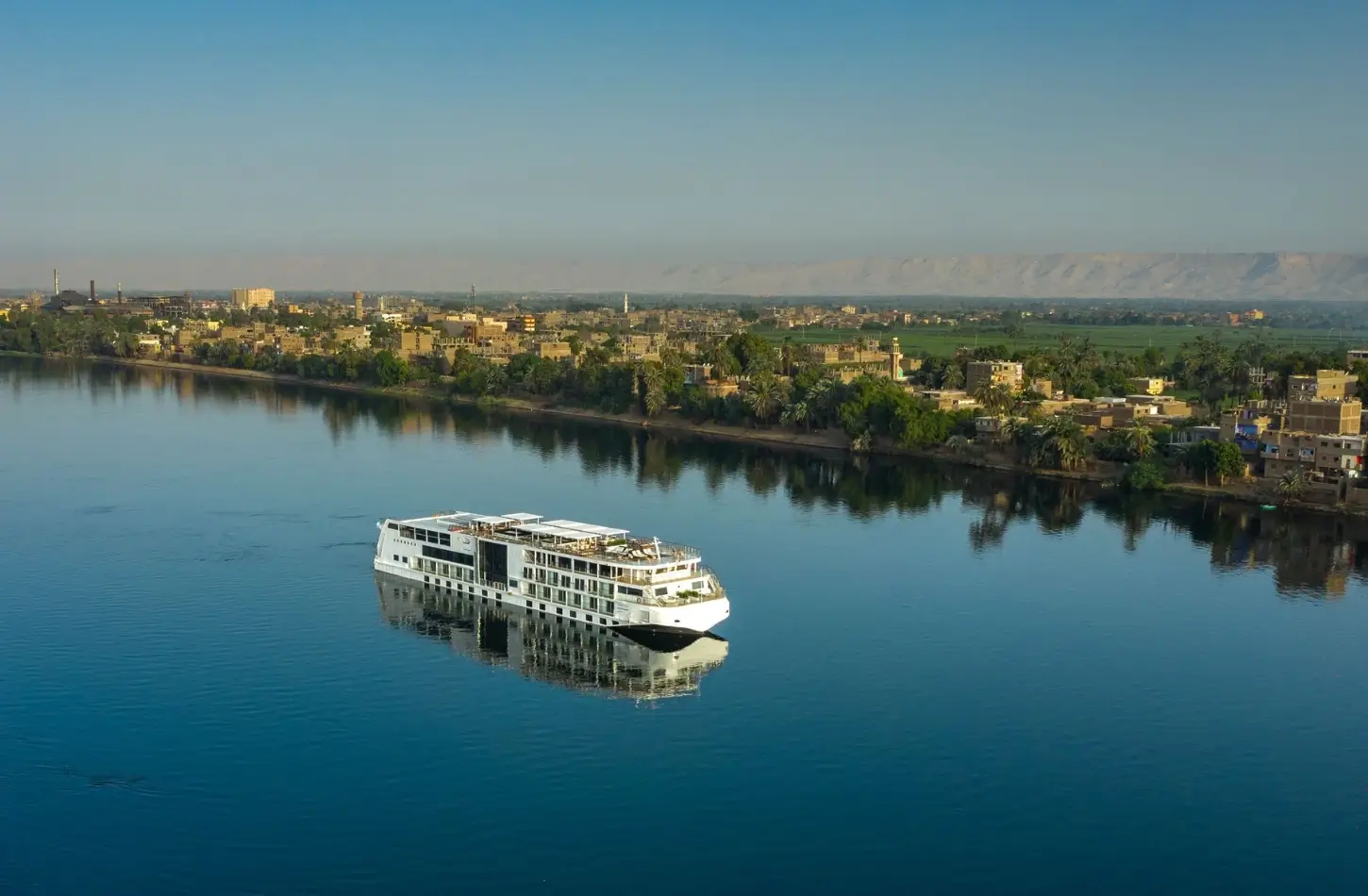
On payment, most operators ask for a deposit of 20 to 30 percent to secure your cabin, with the balance due anywhere from two weeks to two days before arrival, depending on the company’s policy. Get the full cancellation schedule in writing before you pay anything, since refund percentages typically shrink the closer you get to your sailing date, and low-season bookings sometimes carry more flexible terms than peak-season ones.
Step 5: Sort Out Your Visa and Documents
No guide on how to plan a Nile cruise is complete without covering entry rules: most travelers from the United States, the United Kingdom, Europe, Canada, and Australia can enter Egypt on a standard tourist e-visa, applied for online before departure or purchased on arrival at the airport.
As of 2026, the standard single-entry tourist visa costs $30, following a fee increase that took effect in March of that year, and it is valid for a single entry of up to 30 days. Apply at least one week before you fly, since processing can occasionally take longer during busy periods, and always use Egypt’s official visa portal rather than a third-party reseller charging inflated fees. Our Egypt travel guide covers passport rules and entry documents in more depth if you want the full picture before you apply.
Beyond the visa itself, make sure your passport is valid for at least six months beyond your arrival date, since Egyptian immigration will refuse entry without that buffer. Keep a printed or downloaded copy of your visa approval, passport, and booking confirmation together in your hand luggage, and consider travel insurance that covers medical evacuation, since it is rarely included in a standard package.
Step 6: Understand What’s Included
Before you book, it is worth knowing exactly what a typical fare covers — this is a step many guides on how to plan a Nile cruise skip, and the answer varies more between operators than most first-time travelers expect.
In general, your cabin, full-board meals, onboard entertainment, and guided shore excursions with a licensed Egyptologist are included in the base price, while flights, the Egypt visa, alcoholic drinks, tipping, and spa treatments are charged as extras. Our complete guide to what’s included in a Nile cruise walks through every line item so nothing catches you off guard once you are onboard.
Tipping deserves special attention, since it is expected throughout Egypt but rarely built into the upfront price: budget roughly $8 to $10 per person per day for cabin staff and restaurant crew combined, plus small separate tips for your guide and driver on each excursion. Ask your operator for a written breakdown of inclusions before paying a deposit, particularly for entrance fees to sites like the Valley of the Kings, which are sometimes bundled and sometimes charged locally per tomb.
Step 7: Plan Your Temple Visits
The temples are the entire reason most travelers choose a Nile cruise over any other way of seeing Egypt, so knowing how to plan a Nile cruise around the right stops matters more than anything before your ship leaves the dock.
Karnak Temple and Luxor Temple anchor the start or end of every itinerary, followed by the Valley of the Kings on Luxor’s West Bank, where royal tombs cut into the desert cliffs reveal some of the best-preserved wall paintings in the country. Further south, Edfu’s Temple of Horus is widely considered Egypt’s best-preserved temple, and Kom Ombo’s unusual double temple, dedicated jointly to Sobek and Horus, sits directly on the riverbank.
Aswan closes out most itineraries with Philae Temple, reached by a short boat ride, along with the High Dam and, for many travelers, an optional visit to a Nubian village. Our guide to the best temples to visit on a Nile cruise goes deeper into each site’s history and the best time of day to visit, useful for photographers hoping to avoid both crowds and midday sun.
Step 8: Pack Smart for Onboard and Onshore
Packing is the last practical piece of how to plan a Nile cruise trip: it means balancing temple-appropriate clothing with the practical realities of a hot, sunny climate and an active shore-excursion schedule.
Lightweight, breathable layers work best, since mornings on deck can feel cool while afternoons at Karnak or Edfu run hot; a light scarf or shawl is genuinely useful both for sun protection and for covering shoulders and knees at religious sites during a Cairo add-on. Comfortable, closed-toe walking shoes matter more than sandals once you are climbing through tombs and temple courtyards on uneven stone.
Sun protection deserves real priority: a wide-brimmed hat, high-SPF sunscreen, and sunglasses are non-negotiable when you are outdoors for hours at a stretch. Bring prescription medication in its original packaging, basic remedies for an upset stomach, a reusable water bottle, and a small day bag for excursions away from the ship. For a fuller checklist beyond clothing, our Egypt travel guide covers what to pack for the wider trip, not just the days on board.
Evening dress code is usually smart-casual, and many ships host a galabeya party one night, so packing one slightly dressier outfit is worth the small amount of extra suitcase space.
Step 9: Book Through a Trusted, Licensed Operator
The final step in how to plan a Nile cruise the right way is choosing who you book with, and this decision affects everything from the guide standing next to you at Karnak to how quickly problems get resolved if a sailing changes.
Look for an operator that is a licensed Egyptian travel company, works with named, awarded brands such as Movenpick, Oberoi, and Sonesta rather than unnamed generic ships, and provides verified traveler reviews rather than only marketing copy. Read the fine print on cancellation policies and deposit structures before you pay anything, since terms vary meaningfully between operators.
A direct, responsive booking process also matters more than it might seem on paper: you want an operator that answers detailed questions about cabin categories, sailing dates, and included excursions quickly, rather than routing everything through a call center.
You can read more about how our trips are planned on our Egypt Nile cruise packages page.
A Sample 4-Night Itinerary
To put all nine steps of how to plan a Nile cruise together, here is what a typical 4-night Luxor-to-Aswan sailing actually looks like once booked. Day one begins with boarding in Luxor around midday, followed by an afternoon visit to Karnak and Luxor Temple before sailing overnight toward Esna. Day two covers the Valley of the Kings, the Temple of Hatshepsut, and the Colossi of Memnon on Luxor’s West Bank before the ship continues south through the Esna lock.
Day three, a good example of how to plan a Nile cruise day around two temples in one afternoon, brings a morning stop at Edfu’s Temple of Horus, reached by horse-drawn carriage from the dock, followed by an afternoon call at Kom Ombo’s riverside double temple before arriving in Aswan for the evening. Day four closes with a morning excursion to Philae Temple and the High Dam, an optional stop at a Nubian village, and disembarkation before your onward flight or hotel transfer.
This is only one version of the route; a 3-night sailing compresses the same highlights into fewer days, while ships like the Movenpick fleet run the same stops with a slightly different pace and onboard style.
Common Mistakes to Avoid
Even experienced travelers make a few predictable mistakes when they figure out how to plan a Nile cruise, and most are easy to avoid once you know what to look for. The most common one is booking flights before checking the ship’s actual departure day: a 4-night sailing might only leave on Mondays or Saturdays, so a flight booked for the wrong day can force a longer wait in Luxor than planned.
A second frequent mistake is assuming every package includes the same things; two ships at a similar price point can differ significantly in whether drinks, entrance fees, or excursions are bundled in, which is why reading the inclusions breakdown matters more than comparing headline prices alone.
Travelers also sometimes underestimate how early mornings run. Shore excursions to sites like Karnak or the Valley of the Kings frequently start before 8 a.m. to beat both the heat and the crowds, so building in a late-arrival buffer the night before boarding helps avoid starting the trip exhausted.
Finally, skipping travel insurance to save a small amount upfront is a common regret, since medical evacuation and cancellation coverage are almost never included by default, and Egypt’s remoter sites can mean a long transfer to reach adequate medical care if something goes wrong.
Frequently Asked Questions
How far in advance should I plan a Nile cruise?
If you are wondering how to plan a Nile cruise on a tight timeline, book at least 2 to 3 months ahead for peak season sailings between November and February, when the most popular ships and cabin categories sell out first. For shoulder or low season travel, 4 to 6 weeks is usually enough.
Is it safe to plan a Nile cruise as a solo traveler?
Yes — how to plan a Nile cruise solo is actually simpler than planning most of Egypt independently, since the fixed itinerary, onboard guide, and structured excursions remove most of the logistics.
Do I need to book Cairo separately?
Most packages cover only Luxor and Aswan, so Cairo, Giza, and the Egyptian Museum are typically arranged as a separate pre- or post-cruise add-on, either with the same operator or independently.
What is the best cabin category for a first-timer?
A standard double cabin on a 5-star ship covers everything most first-time travelers need when they’re still learning how to plan a Nile cruise, including a private bathroom and a Nile-facing window; suites and premium categories add space and balconies rather than a materially different route.
Can I customize my Nile cruise itinerary?
Yes, within limits. This is one of the more flexible parts of how to plan a Nile cruise: the core temple stops are largely fixed by the ship’s schedule, but optional add-ons like a hot air balloon ride, a felucca sunset sail, or an extra night in Luxor before boarding are usually easy to arrange.
Is this suitable for families with children?
Generally, yes. Most 5-star and deluxe ships welcome children, cabins comfortably fit an extra bed, and Egyptologist guides are used to adjusting the pace of tomb and temple visits for younger travelers, though a dahabiya’s smaller, quieter setting suits families less well than a larger ship.
What happens if my sailing is delayed or changes?
River levels, dock congestion, and occasional scheduling changes can shift departure times or swap the order of stops. Reputable operators communicate changes in advance and keep the same total number of sites, so it is worth booking with a company that has a direct, responsive contact rather than a booking platform with no local presence.
Which currency should I bring, and how much cash do I need?
The Egyptian pound is the local currency, but US dollars and euros are widely accepted for tipping and small purchases at temples and markets. Bring a mix of small denominations for tips, and rely on your onboard bill or a card for larger charges like drinks or spa treatments, since ATMs are limited once you leave Luxor or Aswan’s city centers.
Ready to Book Your Nile Cruise?
That is how to plan a Nile cruise in Egypt: nine decisions covering route and length, cruise style, timing, budget, documents, inclusions, temples, packing, and choosing the right operator. Work through them in that order and the rest of the trip falls into place. If you would rather skip the spreadsheet and talk to someone who plans this every week, our team can put together a personalized itinerary and quote within 24 hours.