What are the best temples to visit on a Nile cruise?
Karnak & Luxor Temple are must-sees; 6–9 temples included overall, entry ~$4–15/site (often separate from tour cost).
- 🏛️ Must-see: Karnak Temple & Luxor Temple — biggest, on every itinerary
- 🚢 Standard route: Karnak, Luxor, Edfu, Kom Ombo, Philae + Valley of Kings/Hatshepsut
- 💰 Entry fees ~$4–15/site; Abu Simbel ~$15, usually a paid optional add-on
- ⏰ Best times: Karnak early AM (cooler, quieter); Luxor Temple after dark
- 🎫 Short on time? Kom Ombo & Edfu are similar — visiting one covers both
A Nile cruise between Luxor and Aswan brings you straight to six to nine ancient temples, such as Karnak, Luxor Temple, Philae, Edfu, and Kom Ombo. Many cruises also offer Abu Simbel as an extra trip. Entrance fees are usually about $4 to $15 per site, paid separately unless your tour includes them.
When you plan a Nile cruise, you are really planning around the temples. The whole route from Luxor to Aswan was designed to connect them. Some temples, like Karnak and Philae, are direct stops on the cruise. Others, such as Abu Simbel, are farther south and offered as optional trips by plane or road. Knowing which temples are included and how much each one costs to visit helps you organize your days on board.
This guide covers every temple you can realistically visit on a Nile cruise, organized by their location along the route. It includes up-to-date entrance prices, practical tips for visiting, and answers to the most common questions travelers have before booking.
Why Temples Are the Heart of Every Nile Cruise Itinerary
Nile cruise routes are about more than just the scenery. Luxor and Aswan are where they are because ancient Thebes and Swenet (now Aswan) were built along the river. The temples left behind are the main reason these routes exist. The Nile was both a way to travel and a powerful symbol. Priests and pilgrims once moved between temples by boat, just like cruise passengers do today.
This is one reason why taking your time at the temples is so rewarding. If you fly in for a day tour of Luxor, you might only have a few hours to see Karnak and the Valley of the Kings. But on a cruise that lasts several nights, you can explore the East Bank one morning, visit the West Bank the next, and arrive in Aswan with enough time to step inside Philae instead of just snapping a photo from a distance.
The Best Temples to Visit on a Nile Cruise
Karnak Temple Complex
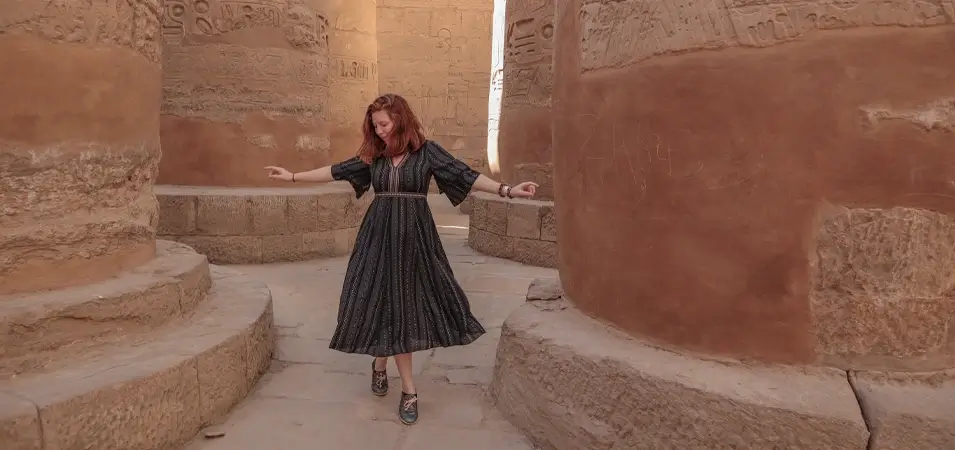
Karnak Temple is the largest religious complex that most travelers will ever visit. It was built over more than 2,000 years by many different pharaohs, all focused on honoring the god Amun-Ra. The Hypostyle Hall is what makes Karnak especially memorable. It has 134 columns, some rising over 20 meters high, covered in carvings of battles and offerings from the New Kingdom.
Pro tip: Karnak opens at 6:00 AM. If you arrive early, you can avoid the midday heat and the crowds that start to gather later in the morning when cruise ships and tour groups show up.
Luxor Temple
Unlike most Egyptian temples, Luxor Temple was not dedicated to just one god. Instead, it was built to celebrate kingship, serving as the place where pharaohs renewed their right to rule. At the entrance, you will see huge seated statues of Ramses II. The temple is also linked to Karnak by the Avenue of Sphinxes, a processional road that stretches for 2.7 kilometers.
Pro tip: Luxor Temple is open until 8:00 PM, and visiting after dark is a unique experience. The floodlights create deep shadows on the carved reliefs, revealing details that are hard to notice during the day.
Philae Temple
Philae Temple, which is dedicated to Isis, can be reached by a short boat ride from Aswan. The temple was originally on a different island, but that land was flooded after the first Aswan Dam was built. In the 1970s, UNESCO moved the entire complex, stone by stone, to Agilkia Island. This project is one of the best-documented restorations in Egyptian archaeology.
Abu Simbel
Abu Simbel is about 280 km south of Aswan, close to the Sudanese border, so it isn’t on the main cruise route. Most cruise operators offer it as an optional half-day flight or a longer overland trip from Aswan. The Great Temple features four 20-meter statues of Ramses II carved into the mountainside, while the smaller temple next to it honors Queen Nefertari. This is unusual, as temples were rarely dedicated to royal consorts. Twice a year, the inner sanctuary is aligned so that sunlight reaches the statues at the back of the temple, showing impressive ancient engineering.
Kom Ombo Temple
Kom Ombo stands right on the riverbank and is unique because it is dedicated to two gods: one side to Sobek, the crocodile god, and the other to Horus the Elder. The temple’s design is perfectly symmetrical, with every feature mirrored along the central axis. The Crocodile Museum next door, included with your ticket, displays mummified crocodiles that were once seen as sacred.
Pro tip: Kom Ombo does not have a set closing time tied to cruise schedules; it stays open until 9:00 PM. Most ships visit in the early afternoon, which is when many vessels dock at the same time. If you can choose when to visit, going later in the afternoon is usually quieter.
Edfu Temple
Edfu Temple, dedicated to Horus, is the best-preserved temple in Egypt. This Ptolemaic-era building offers a clear idea of what a working temple looked like, with much of its original roof still intact. The temple’s inscriptions tell the story of the mythological conflict between Horus and Seth in detail that is rare for Egyptian temples.
Valley of the Kings
On the West Bank, across from Karnak, the Valley of the Kings is home to the royal tombs of the New Kingdom. There are 63 tombs here, including Tutankhamun’s. Most are covered by a general admission ticket, which lets you visit three tombs of your choice.
Temple of Hatshepsut
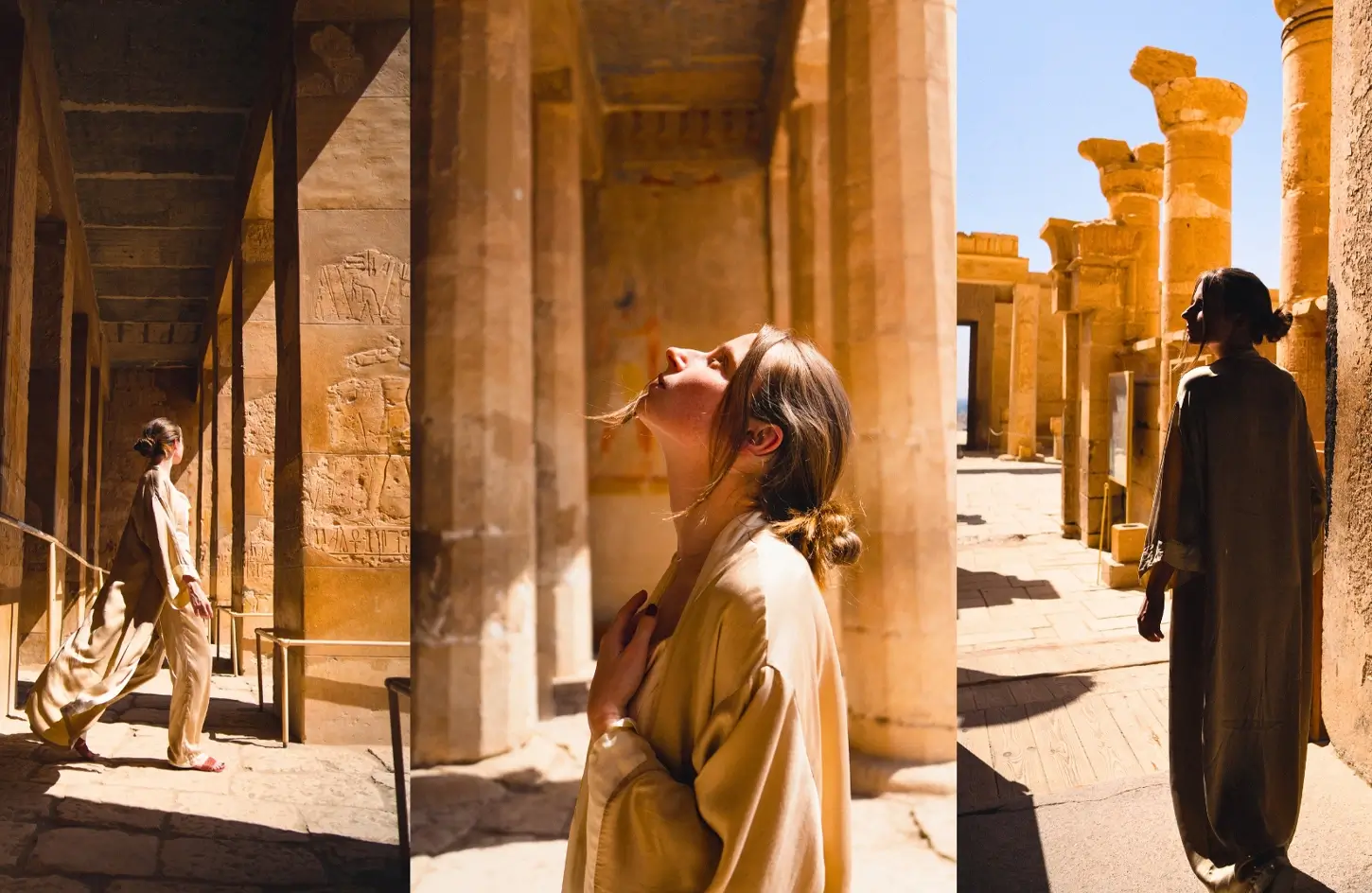
Just a short drive from the Valley of the Kings, the Temple of Hatshepsut at Deir el-Bahari is the only major temple in Egypt built for a female pharaoh. Its three colonnaded terraces are carved straight into the cliffside, making it unique among the temples here. The design is flat and horizontal, blending into the rock instead of standing above it. Hatshepsut ruled as pharaoh herself, and the temple’s reliefs, such as scenes from a trading expedition to the land of Punt, were part of a deliberate campaign to
Colossi of Memnon
The two seated statues of Amenhotep III, each about 18 meters tall, are all that remain of what was once the largest funerary temple complex in Thebes. You can see them for free from the roadside, and most tours include a quick stop here on the way to or from the Valley of the Kings.
Dendera Temple (and Abydos)
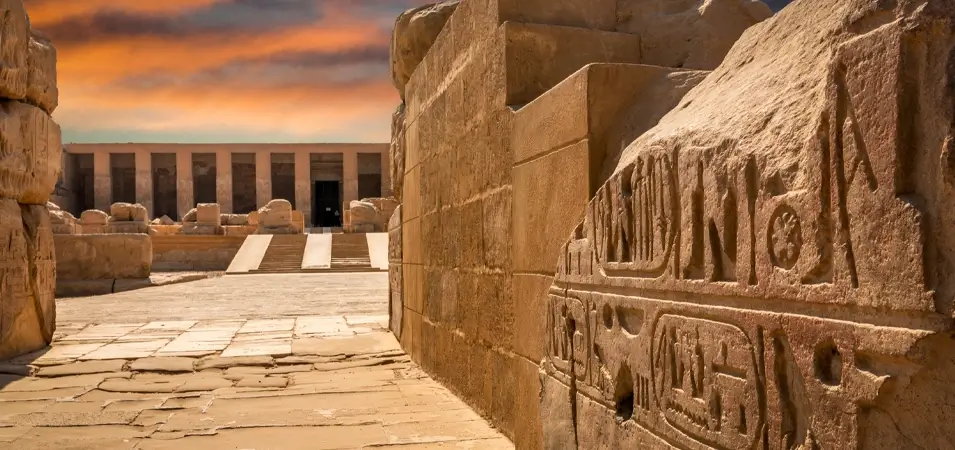
Dendera, dedicated to Hathor, and the nearby Abydos temple of Sety I are not usually included in standard 3–5 night Luxor–Aswan cruises. They are located north of Luxor, near Qena, and are often offered as a full-day add-on for longer trips or as part of a Cairo–Luxor cruise extension. If your itinerary includes them, Dendera is especially worth visiting because parts of its ceiling still have their original painted colors, which is rare for temples exposed to the weather.
Temple Entrance Prices for a Nile Cruise (2026)
The prices listed below are the official entrance fees for foreign adults, as published by Egypt’s Ministry of Tourism and Antiquities. They have been converted to USD using an exchange rate of about 50 EGP per dollar. Please check the latest rates before your trip, as Egypt sometimes changes entrance fees with little warning.
| Temple | Foreign adult (EGP) | ≈ USD | Notes |
|---|---|---|---|
| Karnak Temple Complex | 600 | ~$12 | Temple of Mut is a separate 200 EGP ticket |
| Luxor Temple | 500 | ~$10 | Open until 8:00 PM |
| Valley of the Kings (3 tombs) | 750 | ~$15 | Tutankhamun’s tomb is a separate 700 EGP ticket |
| Temple of Hatshepsut | 440 | ~$9 | |
| Colossi of Memnon | Free | Free | Roadside viewing |
| Temple of Edfu | 550 | ~$11 | |
| Temple of Kom Ombo | 450 | ~$9 | Includes the Crocodile Museum |
| Temple of Philae | 550 | ~$11 | Panorama viewpoint is a separate 200 EGP ticket |
| Abu Simbel Temples | 750 | ~$15 | Optional extension from Aswan |
| Temple of Dendera | 300 | ~$6 | Optional add-on, not on most standard itineraries |
Source: Egypt Ministry of Tourism and Antiquities, official archaeological site ticket price list.
Tips for Avoiding Scams and Checking Guide Credentials at Egypt’s Temples
At most temples, you’ll find unofficial vendors near the entrance selling “skip the line” tickets, offering guiding services you didn’t ask for, or trying to arrange camel and horse-cart rides at high prices. Here are a few habits that can help you avoid common problems:
- Always buy your tickets at the official counter.
- Licensed Egyptologist guides have a laminated ID card from the Ministry of Tourism that shows their photo and license number. Real guides will show you this card right away if you ask.
- Entrance fees are set and clearly posted at the ticket office. If someone at the gate offers you a “special” price, they are not selling an official ticket.
- If you need a photography permit, you can buy it at the same ticket window. Anyone who offers to let you take photos through a side entrance is not making a legitimate offer.
What to Prioritize If You’re Short on Time
Most cruise itineraries don’t leave enough time to visit all nine sites. If you have to choose, Karnak and Luxor Temple are the ones you shouldn’t miss. They’re on almost every itinerary for good reason, and their size is something you really have to see in person.
Philae and Abu Simbel are worth the extra trip because they’re usually less crowded than the sites in Luxor. If you’re short on time, Kom Ombo and Edfu are quite similar, so visiting one will give you a good idea of what the other is like.
The Architecture and Symbolism of Ancient Egyptian Temples
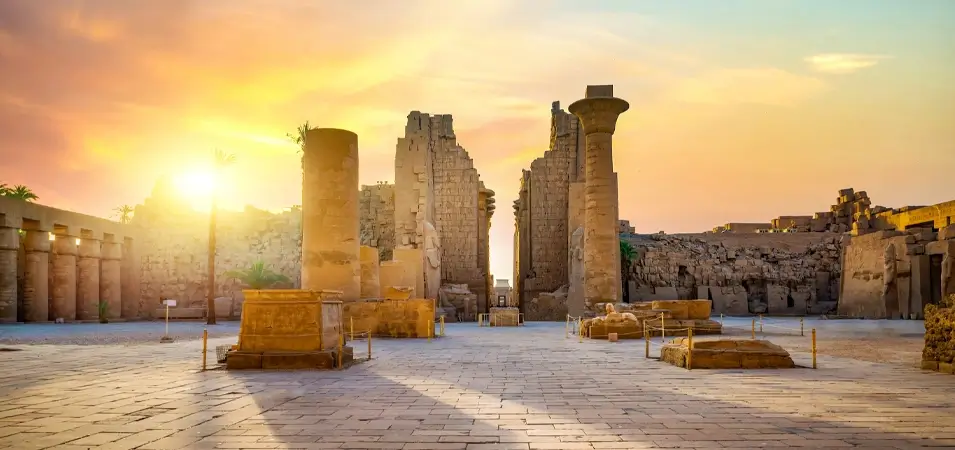
Egyptian temples were built with a clear symbolic meaning that remained consistent across many dynasties. The large pylons at the entrance stood for the horizon where the sun rises between two sacred hills. Hypostyle halls had columns shaped like papyrus and lotus plants to remind people of the marshes from creation stories. The inner sanctuaries were small and dark on purpose, revealing the gods’ secret, mysterious side. Obelisks pointed up as rays of sunlight, and sacred lakes stood for ritual purity.
The accuracy of some of these designs still amazes engineers today. For example, the way Abu Simbel’s inner sanctuary is aligned with the sun so that it lights the statues twice a year required careful planning and astronomical knowledge, all without modern tools. UNESCO named both Ancient Thebes and its Necropolis and the Nubian Monuments from Abu Simbel to Philae as World Heritage Sites because this mix of size, meaning, and engineering skill is so rare.
Frequently Asked Questions About Temples on a Nile Cruise
How many temples do you actually visit on a Nile cruise?
On a typical 3- to 5-night Luxor to Aswan cruise, you’ll visit six main temples: Karnak, Luxor Temple, Edfu, Kom Ombo, Philae, and usually the Valley of the Kings and Hatshepsut Temple on the West Bank. Abu Simbel is offered on most itineraries as an extra option you can pay for, but it’s not usually included.
Do you need to book temple tickets in advance?
Most cruise packages cover entrance fees in the tour price, and the cruise operator or guide usually takes care of the tickets. If you’re planning to visit on your own, you can buy tickets at the site or ahead of time on egymonuments.com, which is the official government website.
Is Abu Simbel worth the extra cost and time on a Nile cruise?
For most travelers, yes. Abu Simbel is the only site on this list that you can’t reach by ship, which makes it stand out from the rest of the itinerary. However, visiting means taking a very early flight or a long drive, so think about whether you’re comfortable with an early start before booking.
Can you pay temple entrance fees in cash, or only by card?
Payment methods can differ by site and sometimes change. Some major sites in Egypt now only accept cards. It’s a good idea to bring both a card and some Egyptian cash, just in case, since each ticket counter may have its own rules.
Which Nile cruise temples are best visited early in the morning versus in the evening?
Karnak is usually best to visit early in the day, when it’s cooler and less crowded. Luxor Temple, on the other hand, is especially nice after dark because it stays open until 8:00 PM and is beautifully lit up.
Do all Nile cruises stop at the same temples?
No. Most cruises stop at the main temples like Karnak, Luxor Temple, Edfu, Kom Ombo, and Philae. Other sites, such as Dendera, Abydos, Medinet Habu, and the Valley of the Queens, depend on your cruise’s length and the company you choose. Always check your itinerary carefully to see which temples are included.
A final note from Yousef Atta
I’ve spent years creating itineraries that take people through Cairo, Luxor, and Aswan, and I always find that the temples are the hardest places to rush. A cruise offers something a day tour can’t give you: the chance to pause and really take in a place like Karnak, instead of just snapping a photo and moving on. If you’re planning this trip, my advice is simple: give yourself some extra time. The most memorable moments at these sites often happen when you’re not following the schedule.