What are the Colossi of Memnon and are they worth visiting?
Two 18m statues of Amenhotep III on Luxor’s West Bank — free entry, worth a quick 15–30 min stop.
- 🗿 Two seatedstatues of Pharaoh Amenhotep III, ~18m (60ft) tall each
- 💰 Entry is completely free — no ticket or booth needed
- 🎵 Nicknamed “singing statues” after ancient Greeks heard eerie sounds at dawn
- ⏱️ Plan 15 min for photos, 25–30 min to see base carvings & digs
- 📍 On the West Bank , usually the first stop before Valley of the Kings
Over the years, I’ve brought hundreds of travelers to the Colossi of Memnon, usually as our first stop before heading to the Valley of the Kings. Even now, it’s the place where I see the most puzzled looks. Most people expect to find a temple, but instead, they see two huge, weathered statues standing alone in a field.
Within the first minute, half the group always asks, “Wait, that’s it?” That reaction is exactly why I made this guide. The Colossi are fascinating if you know what you’re looking at, but easy to overlook if you don’t.
What Are the Colossi of Memnon?
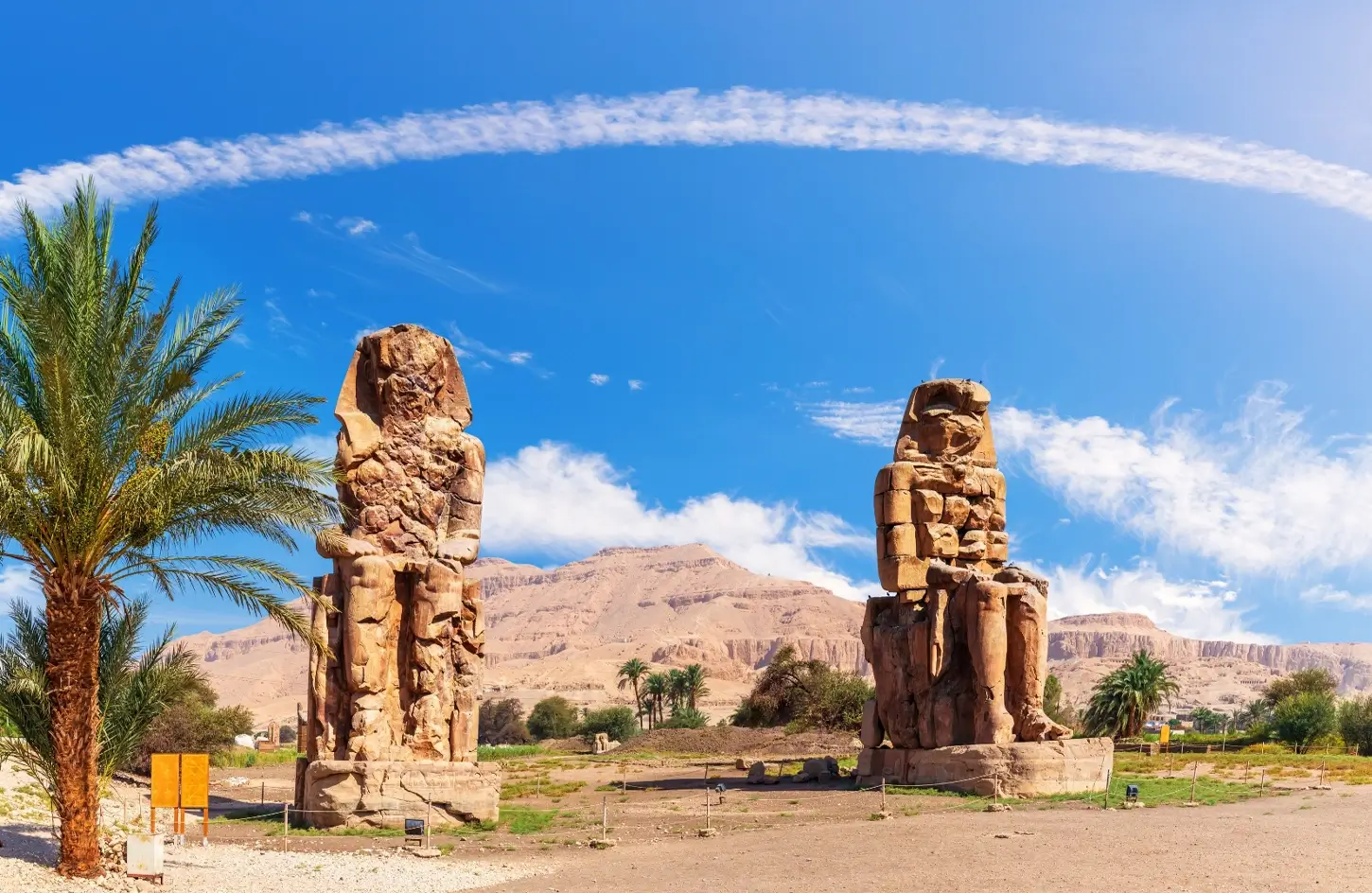
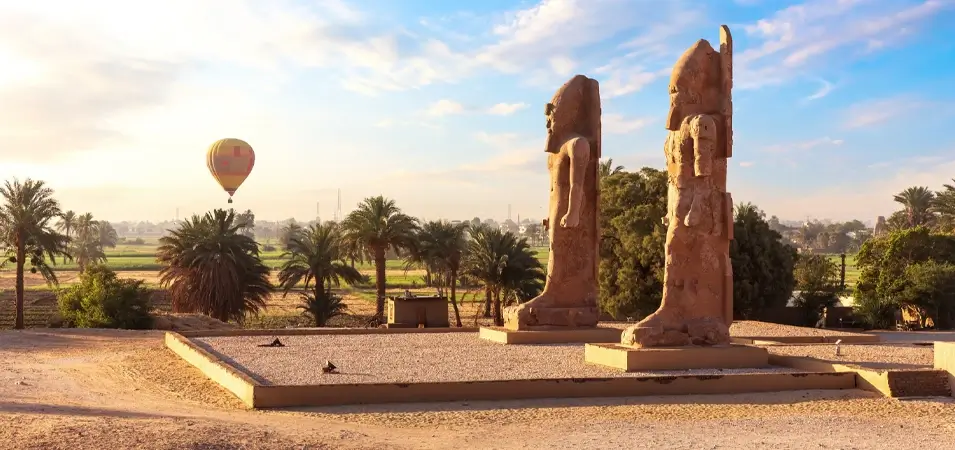
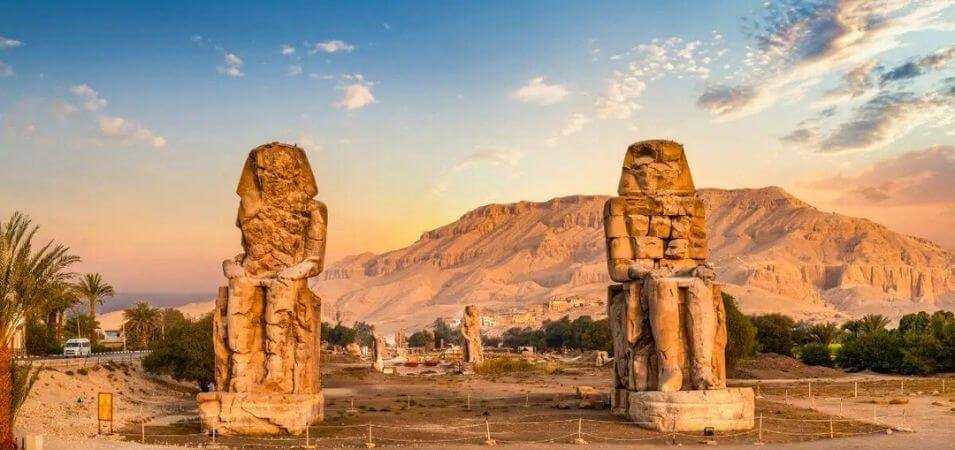
The Colossi of Memnon are two seated statues of Pharaoh Amenhotep III. Each one was carved from a single block of quartzite sandstone and stands about 18 meters (60 feet) tall, including the pedestal. These statues were not meant to stand by themselves. They once marked the entrance to Amenhotep III’s mortuary temple, which was the largest religious complex ever built in Egypt at its peak. At the time, it was even bigger than Karnak.
If you look closely at the base of each statue, you will see smaller carved figures next to the pharaoh’s legs. These are his wife, Queen Tiye, and his mother, Queen Mutemwiya. There was also a third figure between his ankles, which was a carving of a daughter, but it has been destroyed. Many people miss these details because they are in a hurry to take photos, like most tour groups.
Where Are the Colossi of Memnon Located?
The Colossi are on the West Bank of the Nile in Luxor, where the ancient city of Thebes once stood. They are right next to the main road that tours use to reach the Valley of the Kings, so most visitors stop here first before heading to other sites.
How to Get There
- If you are on a Nile cruise, your guide will arrange for you to cross to the West Bank by road or motorboat, depending on where your ship is docked. The transfer usually takes 10 to 20 minutes. The Colossi are usually the first stop on the tour.
- If you are coming from central Luxor on the East Bank, the Colossi are about 10 kilometers away. It takes around 15 to 25 minutes by taxi or private driver. Most drivers know the site as “el-Colossat.”
- If you visit on your own, you will find there is no ticket booth or gate. You can just park by the roadside and walk up to the statues, which is not possible at other major West Bank sites.
The History Behind the Colossi of Memnon
Who Was Amenhotep III?
Amenhotep III ruled during the 18th Dynasty, around 1390 to 1352 BCE, a time often called Egypt’s golden age of peace and wealth. He was Tutankhamun’s grandfather, and during his reign, Thebes became the most powerful city in the ancient world.
The Colossi were not built to honor him while he was alive. Instead, they stood guard over his mortuary temple, which was meant to keep his cult and legacy alive after his death.
Where the Stone Actually Came From
Many guides and articles get this wrong, even older versions of this one: the quartzite did not come from quarries near Luxor or Aswan. Petrographic and neutron-activation analysis published in Science traced the stone to Gebel el-Ahmar (“the Red Mountain”), a quarry near modern Cairo, about 675 km from Thebes.
This means every block, some weighing over 700 tons, was dragged to the Nile, floated south during flood season, and then hauled into place without any mechanical lifting equipment. It is still considered one of the most impressive engineering feats of the New Kingdom.
The Lost Temple of Amenhotep III
The temple behind the Colossi was built too close to the Nile floodplain, and centuries of annual flooding weakened its foundations. Earthquakes, including a major one in 27 BCE that cracked the northern statue, finished the job. Later rulers reused much of the temple’s stone for their own building projects.
Archaeologist Hourig Sourouzian has led decades of excavation at the site, uncovering buried statues, sphinxes, and temple walls that are still being cataloged today.
In December 2025, Egypt’s Ministry of Tourism and Antiquities unveiled two newly restored fallen colossi at the site as part of an ongoing effort to reconstruct what the temple complex once looked like.
The Singing Statue Phenomenon
This story is what made the Colossi famous in ancient times. After an earthquake in 27 BCE cracked the northern statue, Greek and Roman visitors, including Emperor Hadrian in 130 CE, reported hearing a high-pitched sound from it at dawn. They thought it was the mythical hero Memnon calling out to his mother, Eos, the goddess of dawn. That’s how the statues got the name “Memnon,” even though they actually show Amenhotep III, not a Greek figure.
The sound stopped for a simple reason. In 199 CE, Roman Emperor Septimius Severus sealed the crack, and the vibration that caused the noise disappeared. Today, experts say the sound happened because moisture collected in the cracked stone overnight and then quickly evaporated as the sun warmed it, pushing air out through the cracks. There’s no magic involved, just physics, but this detail still makes travelers pause and really look at the statue instead of just taking a photo.
What to Expect When You Visit Today
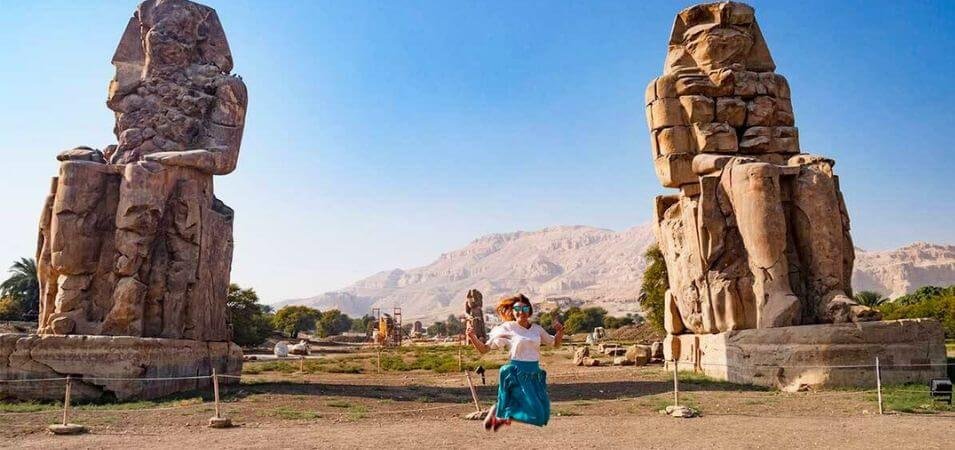
There’s no fence, ticket booth, or building to enter here. This is simply a roadside stop where you park, walk up, and stand in front of two huge statues in the middle of open farmland. Most visitors are surprised by two things: the statues look much bigger in person than in photos, and you can get much closer than you might expect.
The area is quiet and not crowded, especially compared to the Valley of the Kings or Karnak. This is partly because there isn’t much to do here except look, and partly because most tour buses only stop for a quick photo. But that’s a missed opportunity. If you take your time, you’ll notice the carvings at the bases of the statues and the ongoing excavation behind them, both of which are worth a closer look.
How Long You Actually Need
If you just want to take a quick photo, 15 minutes is enough. If you want to read the information panels, see the base carvings, and explore the excavation area behind the statues at a relaxed pace, plan for 25 to 30 minutes.
Entry Fees and Practical Info
| Detail | Information |
|---|---|
| Entry fee | Free — no ticket required |
| Access hours | Open-air site, accessible during daylight hours (best 6:00 AM – 5:00 PM) |
| Typical visit length | 15–30 minutes |
| Distance from Luxor East Bank | ~10 km (15–25 min by car) |
| Distance the stone was transported | ~675 km from Gebel el-Ahmar, Cairo |
| Statue height | ~18 m (60 ft) including pedestal |
| Guided half-day West Bank tour (Colossi + Valley of the Kings) | [Yousef: insert your current quoted price in EGP and USD here] |
Best Time to Visit the Colossi of Memnon
Sunrise vs. Sunset
Sunrise is the best time to visit, and not just because of the light. You’ll get there before the tour buses, which usually arrive after 8:00 AM. The temperature is still comfortable, even in summer, and the soft eastern light—coming from the same direction the statues face—highlights the weathered details that midday sun can’t show. Sunset can work if you’re visiting on your own, but shadows often cover the faces, and there are fewer guided tours then.
Seasonal Notes
From October to April, the weather is pleasant, with temperatures around 15 to 28°C, and this is the busiest time of year. You’ll find more visitors, even at sunrise. From May to September, temperatures in the West Bank often exceed 40°C, so if you visit in summer, arrive early and keep your visit short. March, April, and October offer the best mix of good light, comfortable temperatures, and smaller crowds.
Visiting on a Nile Cruise vs. Independently
If you visit on a cruise, the Colossi are rarely a separate stop. They are usually included in a half- or full-day West Bank tour, with pickup from the ship, a quick visit to the Colossi, and then a trip to the Valley of the Kings and the Temple of Hatshepsut. A guide takes care of transport and shares helpful background information, which is especially useful because there are no detailed information panels explaining the history of the singing statue.
If you are staying in Luxor on your own, you can take a taxi or hire a private driver to go straight to the Colossi. You can spend as much time as you want without having to follow a group schedule. This is a better choice if you want to see the base carvings and the excavation area in detail, instead of just making a quick five-minute photo stop.
What to Avoid — And What’s Overrated
It is important to be clear about what this stop offers. The Colossi are not a temple; there is nothing to walk through, and if you expect something as large as Karnak, you will be disappointed. Many travelers make the mistake of hurrying through the Valley of the Kings or Hatshepsut’s temple just to spend more time here. The Colossi really do not need more than 30 minutes, even if you take your time.
Avoid buying anything from the vendors near the roadside parking area unless you have already checked prices for similar items in Luxor’s markets. The prices here are much higher than what you will find elsewhere on the West Bank.
Nearby Attractions Worth Combining
- Valley of the Kings: With more than 60 royal tombs, including Tutankhamun’s, this site is usually the next stop for most West Bank visitors. It’s just a short drive from the Colossi.
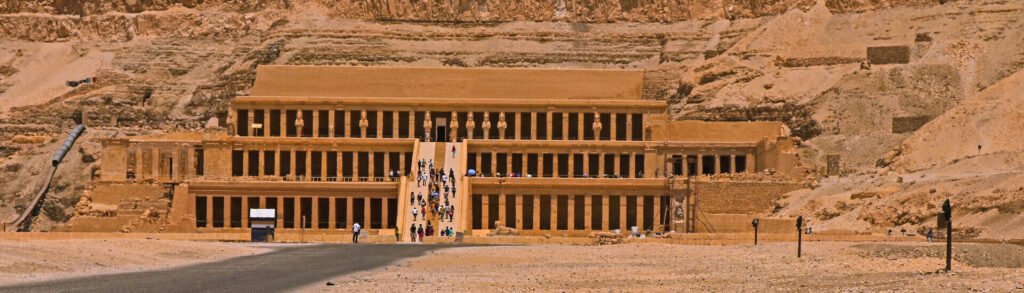
- Temple of Hatshepsut (Deir el-Bahari): This terraced temple, built for one of Egypt’s few female pharaohs, stands out against the limestone cliffs and is among the most photographed places in Egypt.
- Medinet Habu: This mortuary temple of Ramses III is usually less crowded than other sites and features some of the best-preserved battle reliefs on the West Bank.
Frequently Asked Questions
Are the Colossi of Memnon worth visiting?
Yes, especially if you start your visit on the West Bank. The Colossi are quick to see, free to visit, and help you appreciate the scale of Amenhotep III’s reign before you explore bigger sites. While they aren’t as immersive as temples or tombs, they’re still worth a stop.
Why are they called the Colossi of Memnon if they depict Amenhotep III?
Ancient Greek and Roman visitors thought the statues showed the mythical hero Memnon because, after an earthquake in 27 BCE, the northern statue started to “sing” at dawn. The name stayed, even though the statues always represented Amenhotep III.
Do the Colossi still make sound today?
No. The sound stopped after Roman Emperor Septimius Severus repaired the cracked statue around 199 CE. The repairs closed the fractures that were believed to cause the noise.
How much does it cost to visit the Colossi of Memnon?
Entry is free, and you don’t need a ticket. If you’re on a guided West Bank tour, the cost is included in your tour price, not charged separately at the site.
Where were the statues actually quarried?
Scientific studies show the quartzite came from Gebel el-Ahmar, a quarry near modern Cairo about 675 km from the site. Some sources say Aswan, but that’s not correct.
How long should I plan to spend at the Colossi of Memnon?
Plan for about 15 minutes if you just want to take photos. If you’d like to read the carvings at the base and look around the excavation area, give yourself 25 to 30 minutes so you don’t feel rushed.
Final Note from Yousef Atta
I’ve lost track of how many times I’ve stood in front of these statues with a new group, but they always get a reaction. At first, people are usually confused, but once they learn what they’re seeing, it turns to awe. If you only spend five rushed minutes here on your way to the Valley of the Kings, you’ll leave with just a photo.
Give the Colossi fifteen minutes, read the story behind the “singing,” and you’ll see why ancient Roman emperors traveled here just to hear it.
FAQ
What are the Colossi of Memnon?
They are two seated statues of Pharaoh Amenhotep III, each carved from a single block of quartzite sandstone and standing about 18 metres, or 60 feet, tall including the pedestal. They were never intended to stand alone — they marked the entrance to Amenhotep III’s mortuary temple, which at its peak was the largest religious complex ever built in Egypt.
Where are the Colossi of Memnon?
The statues stand on the west bank of the Nile at Luxor, on the site of ancient Thebes. They sit directly beside the main road that tour vehicles take to the Valley of the Kings, which is why most west bank excursions stop here first before continuing to the tombs.
Is there an entry fee for the Colossi of Memnon?
No. Entry is completely free and there is no ticket booth — you simply stop at the roadside. That makes it one of the few major sites on the Luxor west bank you can visit without buying admission, and it is normally folded into a longer excursion rather than visited on its own.
How long should I spend at the Colossi of Memnon?
Around fifteen minutes is enough for photographs. Allow twenty-five to thirty minutes if you want to look properly at the carvings around the bases and at the excavation work behind the statues. Most groups move through in a few minutes, which is exactly why so many visitors miss the detail.
Who are the smaller figures carved at the base?
Look at the legs of each statue and you will find smaller figures carved beside the pharaoh. They are his wife, Queen Tiye, and his mother, Queen Mutemwiya. A third figure of a daughter once stood between his ankles but has since been destroyed. These carvings are the part most visitors walk past without noticing.
Why are they called the singing statues?
Ancient Greek visitors reported hearing an eerie sound coming from the statues at dawn, and the nickname stuck. The name Memnon itself comes from that Greek tradition rather than from anything Egyptian — the statues represent Amenhotep III, not the mythological figure the Greeks associated them with.