How much does Karnak Temple cost and how long should you spend there?
Entry ~$9–12 (240–600 EGP); plan 2–3 hours for the Hypostyle Hall, obelisks & Sacred Lake.
- 💰 Entry ~240–600 EGP (~$9–12); Sound & Light Show extra, ~300 EGP
- ⏱️ 90 min for highlights ; 2–3 hrs typical; 3–4 hrs with Open-Air Museum
- 🏛️ 134 massive columns in the Great Hypostyle Hall — most photographed spot
- 🕕 Opens daily ~6:00 AM — visit early morning to beat crowds & heat
- 🚶 East Bank Luxor , 2.5–3km from Luxor Temple; taxi, carriage or 30–40 min walk
Karnak Temple covers 200 acres in Luxor and includes temples, pylons, and sanctuaries. More than 30 pharaohs built it over 2,000 years, mainly for the god Amun-Ra. Entry is about 600 EGP (about $12 USD) for foreign adults. The site opens every day at 6:00 AM, and most people spend 2 to 3 hours exploring.
I’ve guided clients through Karnak countless times, and it still amazes me, especially at the Second Pylon where the Great Hypostyle Hall opens up, and everyone falls silent. If you’re planning a trip to Luxor, here’s what I always share with my clients: the real costs, how much time to set aside, what’s worth seeing, and what you can skip.
What Is Karnak Temple?
Karnak Temple is not just a single building. It is a walled religious city on the east bank of the Nile, in the modern town of Karnak, just north of central Luxor. The ancient Egyptians called it Ipet-Isut, meaning “the most select of places.” Construction began around 2000 BCE and lasted for about two thousand years, with each pharaoh adding pylons, courts, or shrines. The main precinct is dedicated to Amun-Ra, while smaller precincts for his consort Mut and the war god Montu are nearby.
To give you an idea of its size, the sacred enclosure of Amun-Ra alone covers about 61 acres. That is large enough to fit several European cathedrals within its walls.
Karnak Temple History: From Senusret I to the New Kingdom
The first confirmed construction at Karnak began in the Middle Kingdom, under Senusret I, around the 20th century BCE. However, the Karnak that most visitors know today, with its pylons, obelisks, and Hypostyle Hall, was built during the New Kingdom, between about 1550 and 1070 BCE. During this time, a series of pharaohs, including Thutmose III, Hatshepsut, Amenhotep III, Seti I, and Ramses II, each tried to surpass those who came before them.
Each ruler who contributed to Karnak was making a political statement as well as a religious one. Aligning with Amun-Ra, the king of the gods, helped legitimize their rule. This is why the complex feels layered instead of carefully planned, since it was never intended to be completed by just one person.
By the Ptolemaic period, centuries after the last major New Kingdom additions, Karnak was already regarded as one of the most sacred sites in the ancient world.
Tip: As you walk through, look at the base of the columns and gateways. You will often see cartouches, oval hieroglyphic name-seals, from several pharaohs on the same structure. This shows how later kings sometimes carved their names over or next to those of earlier rulers.
Inside the Temple of Amun-Ra: The Great Hypostyle Hall
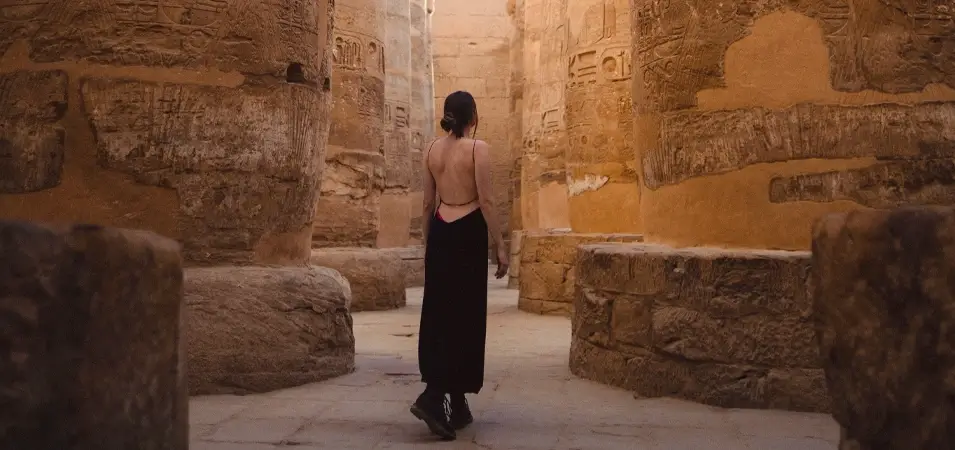
The Temple of Amun-Ra stands at the center of Karnak, and within it lies the Great Hypostyle Hall, which is the most photographed spot in the complex for good reason. The hall contains 134 huge sandstone columns, some reaching over 21 meters high, packed so closely together that it feels like you are walking through a forest made of stone. The tallest columns in the center are shaped like open papyrus flowers and once held up a roof. Now, sunlight streams through the spaces above, making early morning or late afternoon the best times to visit.
Every surface, from the columns to the walls and architraves, is covered with carvings that show royal victories, offerings to the gods, and ritual scenes. Most of the paint has faded over time, but if you look under some architraves or in sheltered corners, you can still spot bits of the original blue and gold colors.
Facts about Karnak Temple that You Should Know
- It took more than 2,000 years to construct, and about 30 pharaohs contributed to its construction.
- The orientation of the main east-west axis of the Amun-Ra sanctuary is in alignment with the sunrise during the winter solstice.
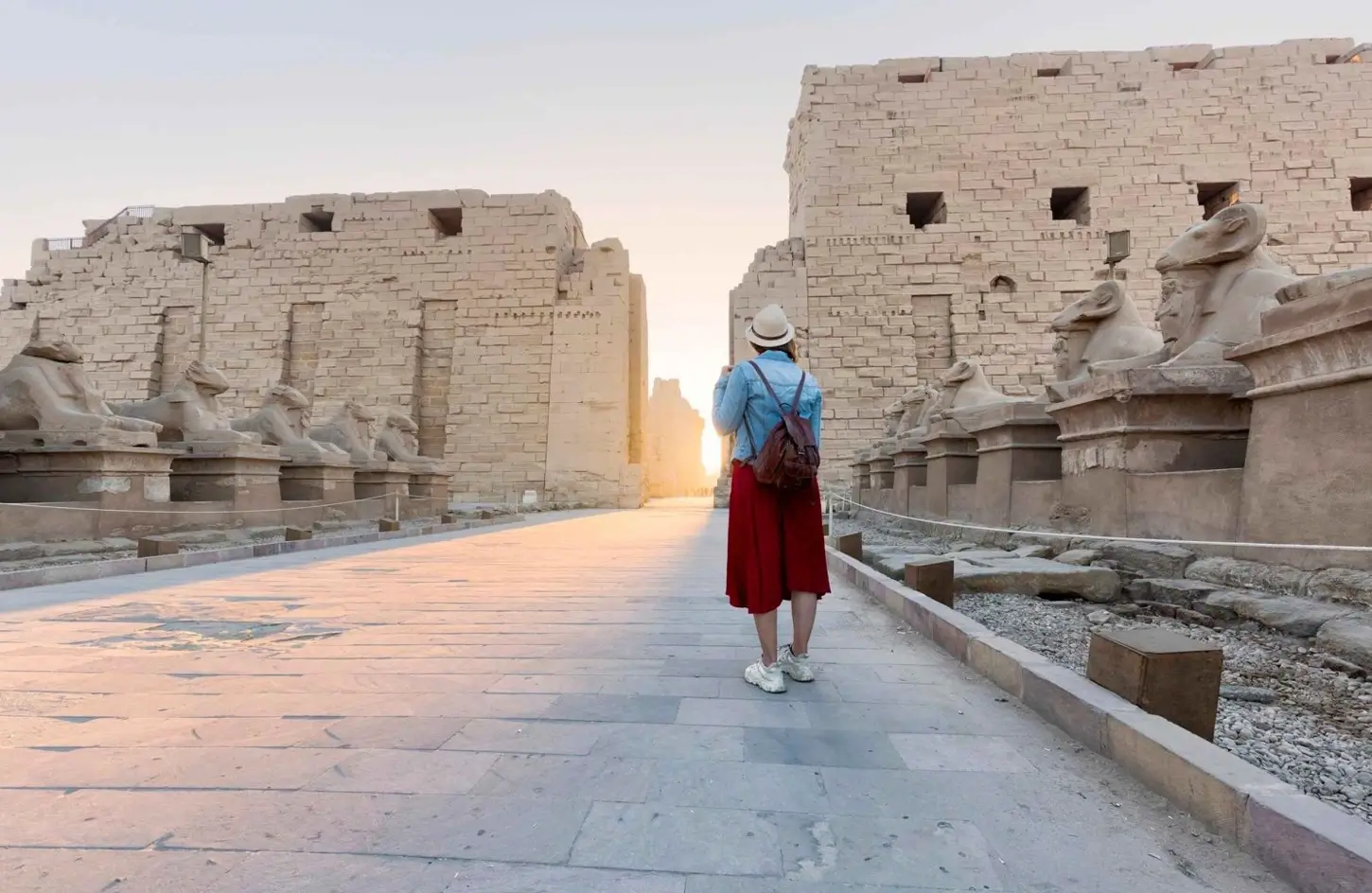
- There was an annual event called the Opet Festival, where the statues of Amun, Mut, and Khonsu would be transported in a sacred boat from Karnak Temple to Luxor Temple through the Avenue of Sphinxes, which was lined with ram-headed sphinxes.
- Karnak Temple Complex has a Sacred Lake, where priests historically conducted ritual purifications. There are smaller temples of Mut and Khonsu as well.
- Karnak is part of the UNESCO World Heritage Site for the Ancient Thebes and its Necropolis, declared in 1979.
Opening Hours, Tickets & Entrance Fees
Opening hours: The site usually opens every day around 6:00 AM, and the last entry is allowed well before closing time. Hours may change depending on the season, so check the official ticketing portal for the latest schedule before you go.
Entrance fee: The current rate for foreign adults varies, but it is usually between 240 and 600 EGP (about $9 to $12 USD), depending on when you check.
Sound & Light Show: This requires a separate ticket, which is usually sold apart from daytime entry. The show lasts about 75 minutes and features narration in different languages. The price is often around 300 EGP.
How Much Time to Spend at Karnak
If you don’t have much time, you can see the highlights in about 1 to 1.5 hours. Start with the First Court, then visit the Great Hypostyle Hall, check out the obelisk area near Hatshepsut’s obelisk, and finish at the Sacred Lake. I’d only suggest this quick tour if you’re planning to visit several other sites on the same day.
Most visitors find that 2 to 3 hours is enough time to really take in what they’re seeing. If you’re interested in the history and want to read the reliefs instead of just passing by, or if you want to spend time in the Open-Air Museum, plan for 3 to 4 hours.
How to Get to Karnak Temple
Karnak is located on Luxor’s East Bank, about 2.5 to 3 kilometers north of Luxor Temple.
- From central Luxor, you can take a taxi (just a few minutes), ride in a horse-drawn carriage, or walk for 30 to 40 minutes along the Avenue of Sphinxes. The walk is enjoyable in cooler months, but it’s best to avoid it at midday during the summer.
- From Cairo, you can fly to Luxor, which takes about one hour, and there are several flights each day. Alternatively, you can take the overnight sleeper train, which takes around ten hours.
- From Aswan, you can drive, which takes about three to four hours by road, or travel as part of a multi-day Nile cruise.
- From Hurghada, the trip takes about four to five hours by road. Most visitors choose to do this as part of an organized day trip.
Karnak Temple Layout: Precincts of Amun-Ra, Mut & Montu
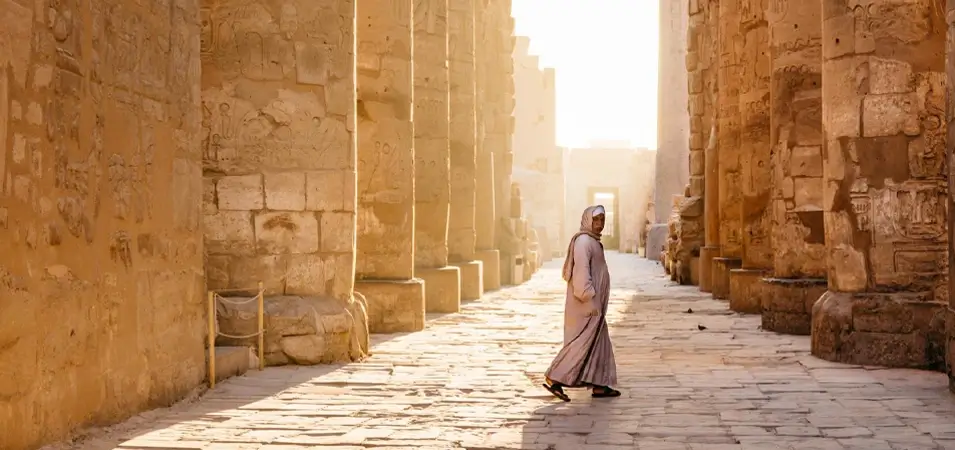
The temple complex is divided into several main precincts. Knowing the layout ahead of time will help you get the most out of your visit.
- Precinct of Amun-Ra: This is the largest and most popular area. Here you’ll find the Hypostyle Hall, the main obelisks, and the Sacred Lake.
- Precinct of Mut: Located south of the main area, this precinct is dedicated to the mother goddess. It features carvings about fertility and protection. It’s less crowded and usually much quieter.
- Precinct of Montu: This is the smallest and northernmost section, dedicated to the falcon-headed war god.
- Temple of Amenhotep IV (Akhenaten): These are the remains of buildings from before Akhenaten moved Egypt’s religious capital to Amarna.
As you walk through, keep this structure in mind. Each precinct shows a different part of Karnak’s political and religious history. Some areas were expanded a lot by later kings, while others stayed mostly the same.
The Karnak Sound and Light Show: Is It Worth It?
Honestly, it depends on what you want from your visit. The show adds narration, music, and dramatic lighting to the temple, so it’s a good choice if you can’t come twice or want to learn the history without a guide. However, it is touristy, costs extra, and you see more detail in the carvings during the day. If you have to pick just one, I recommend visiting Karnak during the day and saving the evening for Luxor Temple, which feels more special at night.
What to Avoid / Most Overrated at Karnak
Don’t trust unofficial “guides” who approach you at the entrance. Instead, book a licensed Egyptologist guide ahead of time through a reputable company, or check their credentials when you arrive. Unlicensed guides at major sites often give overpriced and inaccurate tours.
Try to avoid the rushed 45-minute tour if possible. The biggest regret I hear from clients is treating Karnak like a quick stop. Many leave frustrated because they miss the Open-Air Museum or the Precinct of Mut.
The Sound & Light Show is not a must-see if your schedule or budget is tight. Consider it only if you have time for both a daytime and an evening visit.
There may be restrictions on using tripods and professional photography equipment. Check the current rules with your guide or at the ticket office instead of assuming.
Karnak and the Aswan High Dam: A Modern Connection
Karnak shows how ancient Egypt related to the Nile, while the Aswan High Dam, finished in 1970, shows the modern connection. The dam controls the Nile’s annual flooding and created Lake Nasser, one of the world’s largest artificial lakes. Its construction also led to an international effort to move Abu Simbel before rising water could cover it. Different eras, but the same goal: shaping the Nile to secure Egypt’s future.
Pairing Karnak with a Nile Cruise
Karnak is a great starting or ending point for a Nile cruise that begins or finishes in Luxor. Most of our multi-day trips include visits to Karnak and Luxor Temple, along with West Bank sites like the Valley of the Kings, Hatshepsut Temple, and Kom Ombo further south. This way, you avoid crossing the city more than once. If you’re planning a Luxor-to-Aswan or Aswan-to-Luxor cruise, try to visit Karnak early in the morning before the crowds arrive.
FAQ
How much does it cost to visit Karnak Temple?
Egypt’s Ministry of Tourism and Antiquities sets entrance fees for foreign adult visitors, and these can change from time to time. Egyptian nationals and students with valid ID usually pay less. The Sound & Light Show requires a separate ticket from daytime entry.
How long should I spend at Karnak Temple?
Most visitors spend 2 to 3 hours exploring the Amun-Ra precinct, which covers the Great Hypostyle Hall, the obelisk area, and the Sacred Lake. If you are in a hurry, you can see the main highlights in about 90 minutes. If you want to visit the Open-Air Museum and take your time, plan for 3 to 4 hours.
Is Karnak Temple bigger than Luxor Temple?
Yes, Karnak is much larger. It is a vast religious complex with several sections, covering about 200 acres and built over 2,000 years by more than 30 pharaohs. Luxor Temple, on the other hand, is a single, smaller sanctuary mainly built for the Opet Festival. Many people find Karnak more impressive for its history, while Luxor Temple feels more atmospheric, especially in the evening.
Is the Karnak Sound and Light Show worth it?
The Sound and Light Show is a good choice if you want a guided story without hiring an Egyptologist or if you cannot visit Karnak twice. Keep in mind, it costs extra, and you will see more detail on the carvings and reliefs during the day. If you have to pick just one evening show in Luxor, most people prefer the atmosphere at Luxor Temple.
Can I visit Karnak Temple as part of a Nile cruise?
Yes, Karnak is a regular stop on Nile cruises that start in Luxor. It is usually visited along with Luxor Temple and, depending on your route, West Bank sites like the Valley of the Kings and Hatshepsut Temple. To avoid the busiest times, ask your tour operator about visiting early in the morning.
Final Note from Yousef Atta
Karnak is one of the most rewarding sites I visit with clients in Egypt. Many people just stop for a quick photo on the way from the airport to their cruise, but if you spend two or three relaxed hours here, you can really sense two thousand years of history in one place. If you are planning a Luxor stop as part of your Nile cruise and want help with timing or logistics, that’s what we specialize in. Please feel free to get in touch.