Is the Aswan High Dam worth visiting, and what’s it like?
Yes — it’s a viewpoint, not a monument. Expect 30–60 min seeing the Nile/Lake Nasser contrast, not a museum.
- 🏗️ Completed 1970 ; 111m high, 3.8km long, created Lake Nasser
- 💰 Entry ~EGP 200 (~$4–5) for foreigners — usually bundled in tour price
- 🕐 Best visited early morning (8–10am), 30–60 min is enough
- 🚫 No visitor center or museum — just a crest viewpoint & checkpoint
- 🗺️ Best paired with Philae Temple on the same half-day Aswan tour
Yousef has spent years creating cultural tours in Cairo, Luxor, and Aswan, as well as leisure trips to the Red Sea coast. The High Dam is one of the places he visits most often with travelers on Aswan day tours and Nile cruise stops. Because of this, he pays close attention to how different travelers experience the site, not just its historical importance.
I’ve led groups across the top of this dam more times than I can remember, and it’s one of those places in Aswan where expectations really matter. Many people come expecting a monument, but instead they find a working piece of infrastructure. That’s the main point, and it’s why some background helps make the visit meaningful. In this guide, I’ll explain what the dam is, how much it costs to visit, how to include it in your Aswan plans, and how it compares to the nearby ancient sites.
What Is the Aswan High Dam?
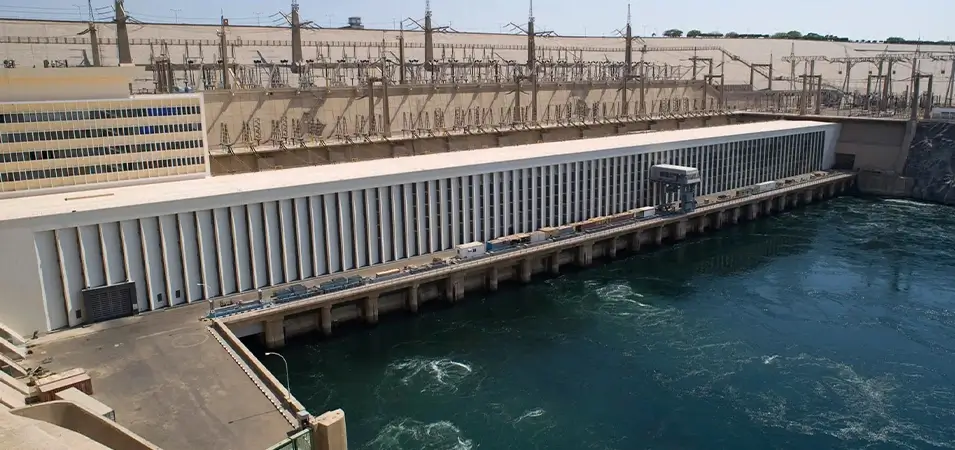
The Aswan High Dam is a huge embankment dam on the Nile River, just south of Aswan in southern Egypt. It was built during the 1960s, finished in 1970, and officially opened in January 1971. The dam was designed to control the Nile’s unpredictable floods, store water for year-round irrigation, and generate hydroelectric power for Egypt.
Before the dam was built, the Nile’s floods were unpredictable. Weak floods caused droughts and crop failures, while strong floods destroyed villages and farmland. The dam changed this by providing a steady, managed water supply. Its reservoir, Lake Nasser, extends south from the dam into Sudan and is now Egypt’s main water reserve during dry years.
NASA’s Earth Observatory says the dam is one of the largest earthen embankment structures in the world. In 1970, its hydropower station provided about half of Egypt’s electricity, bringing power to many villages for the first time.
Aswan High Dam Facts
| Detail | Figure |
|---|---|
| Construction period | 1960–1970 (inaugurated January 1971) |
| Height | 111 meters (364 ft) |
| Length | Approximately 3,830 meters (12,562 ft) |
| Reservoir created | Lake Nasser |
| Lake Nasser capacity | Approx. 169 billion cubic meters |
| Installed power capacity | 2,100 megawatts (12 turbines) |
| Annual power output | Approx. 10 billion kWh |
| Approx. cost | US $1 billion |
| Distance from Aswan city | Roughly 13 km (8 miles) south |
These figures come from Britannica’s engineering summary of the dam and NASA’s Earth Observatory data, both of which are cited above.
Why These Numbers Matter for Travelers
When you stand on top of the dam, it’s hard to grasp its true size just by looking. There’s nowhere you can see all 3.8 kilometers at once, and the concrete top feels more like a broad highway than a monument. Learning about its height, the reservoir’s size, and how much power it generates before you visit helps you appreciate the site. Without that context, it might seem less impressive, especially after seeing the temples.
History — Why Egypt Built It
The Aswan High Dam is closely linked to Egypt’s efforts to modernize during the mid-1900s. Before it, the Aswan Low Dam was finished in 1902, but it couldn’t keep up with Egypt’s growing needs for farming and a rising population. It reduced flooding but didn’t fully control it.
Major construction on the High Dam started in 1960, after years of political negotiations. At first, Egypt sought funding from Western countries, but the US, UK, and the World Bank withdrew in 1956 after President Gamal Abdel Nasser signed an arms deal with Czechoslovakia and recognized China. The Soviet Union then provided money, experts, and equipment, making the dam one of its biggest foreign aid projects at the time.
Nasser presented the dam as a symbol of Egypt’s independence, showing the country could manage its own resources without relying on former colonial powers. About 25,000 Egyptian engineers and workers helped build it, working with Soviet engineers led by Nikolai Malyshev from the Hydroproject Institute in Moscow.
The dam came at a high human cost. When Lake Nasser was filled, about 90,000 to 100,000 people—mostly from Nubian communities—had to leave their ancestral land, which is now underwater. Twenty-two monuments and archaeological sites were also at risk of being flooded.
This prompted an international rescue effort by UNESCO. The most famous result was the relocation of the Abu Simbel temples to higher ground. The Philae Temple complex was also dismantled and rebuilt on nearby Agilkia Island. UNESCO’s World Heritage Center has full details on how it saved Philae, Abu Simbel, and many other threatened sites.
How Much Does It Cost to Visit?
Entrance to the Aswan High Dam is ticketed separately from Philae Temple and the Unfinished Obelisk, though it’s almost always bundled into a broader Aswan sightseeing package rather than bought as a standalone ticket
| Visitor type | Reported entrance fee |
|---|---|
| Foreign visitors | Approx. EGP 200 |
| Egyptian nationals | Approx. EGP 30 |
| Additional access (Soviet-Egyptian Friendship Monument climb) | Separate small fee, where available |
A quick note about these prices: Egypt’s site entrance fees can change from time to time, depending on the season or ministry updates. Check with your tour operator or at the ticket gate for the latest prices before your visit. Use the figures above as a general guide, not a guarantee.
In US dollars, EGP 200 is about $4 to $5, depending on the exchange rate at the time of travel. This is a small expense compared to the cost of a Nile cruise or a multi-day tour, so most operators include it in the package price rather than listing it separately.
How to Visit the Aswan High Dam
- From Aswan city: Most travelers get to the dam by taxi or private car, and the drive takes about 15 to 20 minutes. Since the dam is still in use, you will go through a quick security checkpoint upon arrival, so remember to bring your passport or ID.
- As part of a Nile cruise: The dam is a common stop on most Nile cruise itineraries, often paired with a visit to Philae Temple. The cruise takes care of transport, timing, and guiding, so this is the easiest way to visit.
- Private guide vs. group tour: With a private guide, you have more time to ask questions and go at your own pace. Group tours cost less but follow a set schedule. In both cases, the visit itself is brief. The main benefit of having a guide is the extra background information, since the dam has very little on-site signage or exhibits.
Best Time to Visit
Time of day: Early morning, from 8:00 to 10:00 AM, is the coolest and quietest time, with soft light that’s great for photos. Late afternoon, between 3:00 and 5:00 PM, brings warmer and more dramatic light over the Nile and Lake Nasser. The midday sun on the open dam crest is genuinely uncomfortable because there is almost no shade.
Season: October through April is the most comfortable time to travel in Egypt, making it easier to enjoy the site without feeling rushed. From May to September, the heat is intense, so if you visit during these months, plan for an early-morning stop and try not to stay too long.
What You’ll Actually See There
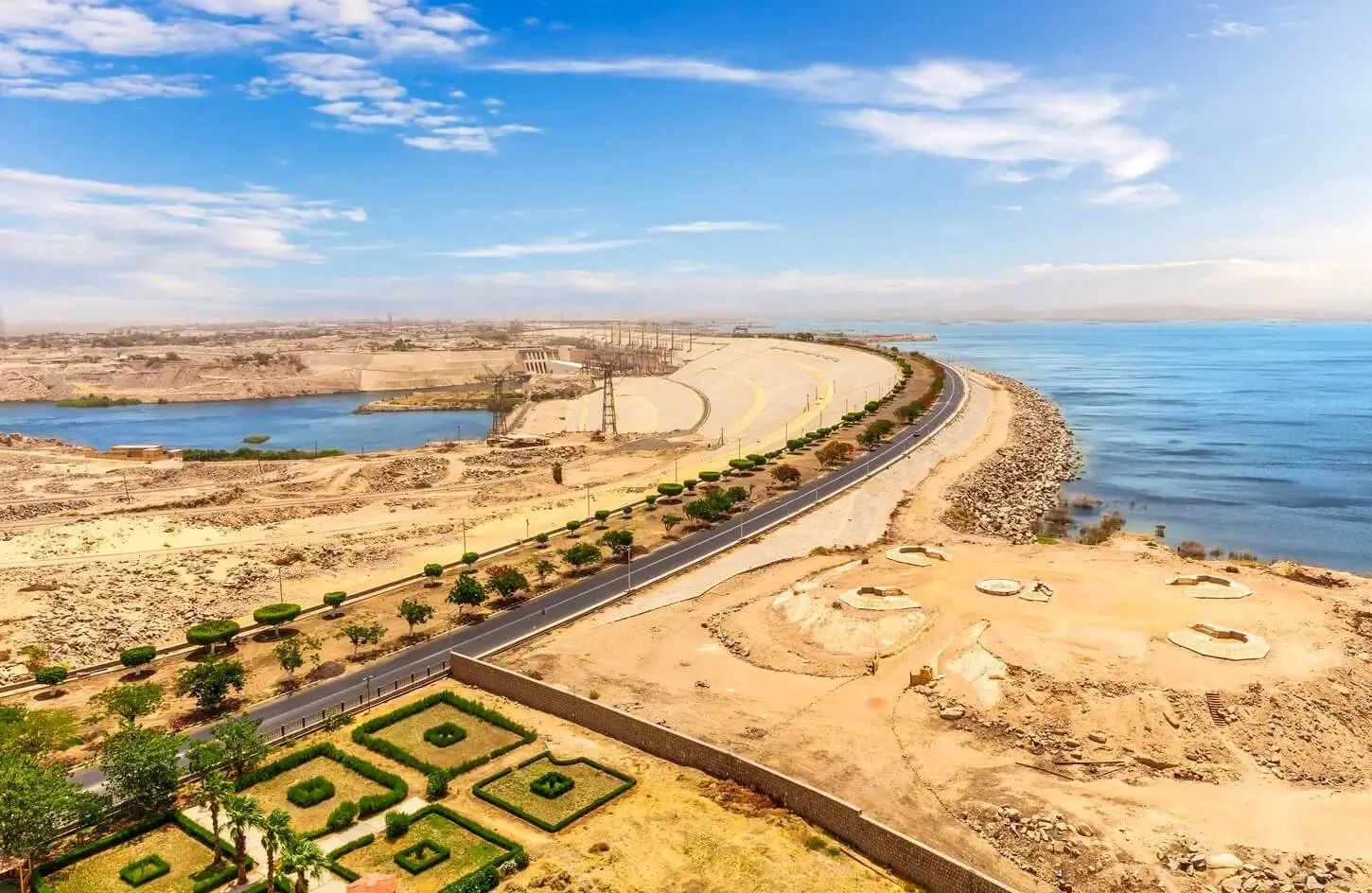
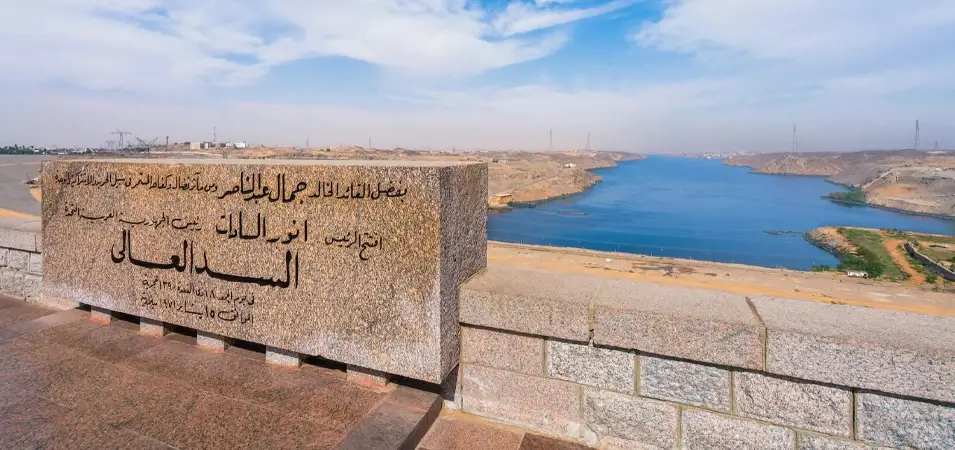
This often surprises first-time visitors: there is no visitor center, no museum, and no long walking route. You simply walk out onto the dam crest to a viewpoint where the Nile stretches away on one side, and Lake Nasser opens up on the other. The real photo opportunity is the contrast between the moving river and the still reservoir, not the dam wall itself.
Nearby, the Soviet-Egyptian Friendship Monument stands as a reminder of the international cooperation behind the project.
Most visits last between 30 and 60 minutes. There is no set amount of time you need to spend, since once you have enjoyed the view and listened to your guide’s explanation, there is not much else to see.
What to Avoid (Or: The Most Overrated Part)
Don’t expect the dam to look as impressive as Philae Temple or Abu Simbel. If you arrive hoping for something on the same level as the temples, you might leave disappointed. Many tour groups skip the Friendship Monument tower for time constraints, but if you can climb it, the higher viewpoint offers a much better view of Lake Nasser than the usual spot. It’s worth the extra few minutes if you have time.
If your schedule is tight and you need to cut one stop from a High Dam, Obelisk, and Philae tour, the dam is usually the best place to cut time, not skip it completely. Ten focused minutes here is enough for most visitors.
How to Combine It With Other Aswan Sites
The dam is best included as part of a half-day tour rather than visited on its own.
- Philae Temple, dedicated to the goddess Isis, is reached by motorboat and was one of the sites saved and moved during the UNESCO campaign mentioned earlier. Visiting both the dam and this ancient riverside temple gives you a clear contrast between modern engineering and ancient history, which is worth including in your plans.
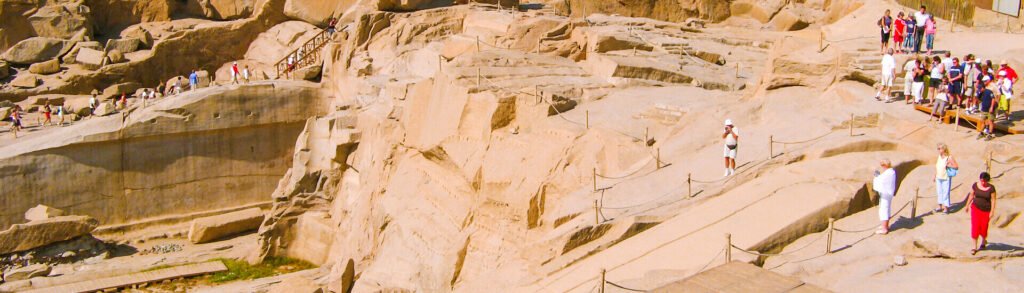
- The Unfinished Obelisk is still attached to the bedrock in its original quarry. This stop lets you see the ancient stone-cutting methods that made monuments like the Philae obelisks possible.
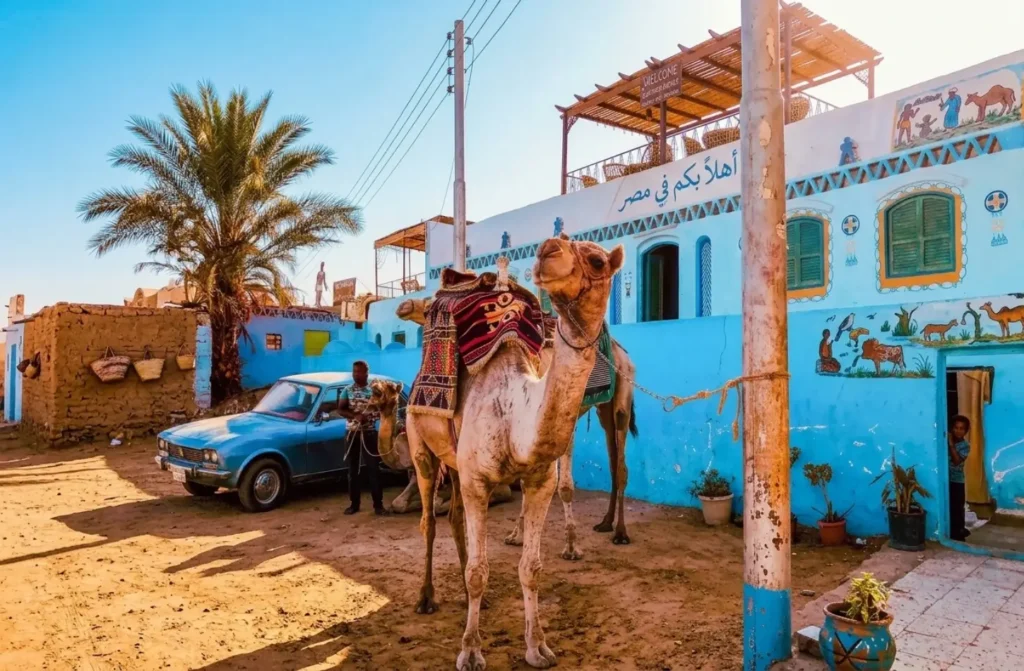
- Visiting a Nubian village adds a living cultural experience to your day, which otherwise moves between modern sites and ancient ruins.
Is the Aswan High Dam Worth Visiting?
Yes, the dam is worth visiting if you know what to expect. It’s not a dramatic archaeological site, so don’t compare it to the temples in Aswan or Luxor. Instead, the dam gives you context. You can see how modern Egypt manages the same river that shaped its ancient civilization, and the scale of the engineering is something you can’t fully understand from photos.
The dam fits best as part of a half-day itinerary, not as a full-day trip. If you are already in Aswan for Philae Temple or about to board a Nile cruise, visiting the dam adds real insight for a small time investment. Spending 30 to 60 minutes here can change how you see the rest of the city.
Frequently Asked Questions
How long does it take to visit the Aswan High Dam?
Most people spend 30 to 60 minutes here. There’s just one main viewpoint and a short walk to the Soviet-Egyptian Friendship Monument, so you don’t need to set aside half a day for this visit.
Can you go inside the Aswan High Dam?
No, regular visitors can’t go inside the turbine halls or power station. You can only visit the crest viewpoint and the area near the Friendship Monument, because the dam is still in use and some areas are off-limits.
How far is the Aswan High Dam from Aswan city?
The dam is about 13 kilometers (8 miles) south of central Aswan. By taxi or private car, it usually takes 15 to 20 minutes to get there, depending on traffic and your starting point in the city.
Is the Aswan High Dam included in Nile cruise itineraries?
Yes, most Nile cruises that start from or pass through Aswan include the dam as a shore excursion. It’s often paired with a visit to Philae Temple on the same day.
What’s the difference between the Aswan High Dam and the Aswan Low Dam?
The Aswan Low Dam was built first, between 1899 and 1902, and helped reduce the Nile’s floods but couldn’t control them completely. The Aswan High Dam, completed in 1970 about 7 km upstream, was designed to regulate the river year-round and created Lake Nasser.
Do I need to book Aswan High Dam tickets in advance?
Usually, you don’t need to book tickets in advance. Entry is handled on-site or included in your tour package, and there isn’t a special advance booking system for the dam, unlike some other sites in Egypt. If you’re visiting on your own, check with your driver or hotel about the latest entry procedures, as checkpoint rules can change.
Final Note from Yousef Atta
If you remember one thing from this guide, let it be this: go in knowing it’s a viewpoint, not a monument, and you’ll enjoy it much more. I’ve seen many travelers leave the dam feeling underwhelmed because no one told them what to expect.
But I’ve also seen people really appreciate the visit when they understood ahead of time what they were seeing and why it matters. Visit it along with Philae Temple, spend a good 30 to 60 minutes here, and use this stop as the moment your Aswan day moves from ancient Egypt to modern Egypt. That contrast is what makes the visit special.