What is Philae Temple and how do you visit it?
An Isis temple moved stone-by-stone to Agilkia Island, Aswan (1972–80) — boat-only access, ~$11 entry.
- ⛴️ Boat-only access — taxi to Shellal Marina, then a short motorboat ride
- 💰 Entry ~550 EGP (~$11); (~$4–5) boat 300–500 EGP per boat (share to save)
- 🏛️ Rescued & rebuilt block-by-block by UNESCO (1972–1980), 40,000+ blocks
- 🌙 Sound & Light Show ~960 EGP — worth it, check for English showtimes
- ⏱️ Plan 1.5–2 hrs at the temple, plus boat time
Philae Temple is an ancient Egyptian sanctuary for the goddess Isis. It was first built on Philae Island near Aswan around 280 BC. When the Aswan Dam threatened the site, UNESCO moved the whole temple, stone by stone, to Agilkia Island between 1972 and 1980. Today, it is one of Egypt’s best-preserved temples.
I’ve spent years designing and creating cultural itineraries in Aswan, and I recommend Philae Temple to almost every traveler who visits the area. It is more than just ancient stones and carvings. The temple tells a story of devotion, survival, and one of archaeology’s greatest rescue missions. Knowing this story before you visit will change how you see the temple when you stand before its first pylon.
The History of Philae Temple
Philae’s story starts with the worship of Isis, one of the most important deities in ancient Egyptian religion. She was known as the protector of Horus and a symbol of magic and motherhood. For centuries, the island was a spiritual center for her followers, and ancient Egyptians believed it was one of the places where Isis mourned Osiris after his death.
Construction of the main temple started around 280 BC under Ptolemy II, and the site continued to grow for centuries. Later rulers added buildings like the Temple of Hathor and the Kiosk of Trajan. Because of this long building period, Philae combines traditional Egyptian religious architecture with Greek and Roman artistic styles. This mix is unique and not found in the same way at Karnak or Luxor Temple.
Worship at this site continued even after Christianity spread across Egypt. Some parts of the temple were adapted for Christian use, with crosses carved into the walls and certain reliefs deliberately altered. Philae is also where the last known hieroglyphic inscription in ancient Egyptian history was carved in 394 AD, before the temple was officially closed by Roman order in the 6th century. There are few places in Egypt that showcase such a rich mix of religious history within a single building.
Where Philae Temple Is Located Today
Today, Philae Temple is on Agilkia Island, in the reservoir of the Aswan Low Dam, just a short boat ride from Aswan. But this was not always true. The temple was first built on Philae Island, a small granite island farther south that people once called one of the most beautiful places in Egypt.
The trouble began in 1902, when the Aswan Low Dam was finished, and Philae Island started to flood for part of each year. The temples were underwater for months at a time. By the 1960s, when the Aswan High Dam was built, the island would have been permanently submerged if nothing had been done.
How Philae Temple Was Moved to Agilkia Island
From 1972 to 1980, UNESCO led one of the biggest archaeological rescue projects of the last century. Workers took apart the whole temple complex into over 40,000 blocks, moved them across the river, and rebuilt everything on Agilkia Island. Engineers even shaped Agilkia to match the old island’s layout, so the temple would keep its original feel and views.
What visitors see today is not a copy based on drawings or guesses. It is the same stones, arranged just as they were, simply moved to a safer place. This is one reason why Philae stands out from many other restored sites in Egypt.
Architecture of Philae Temple
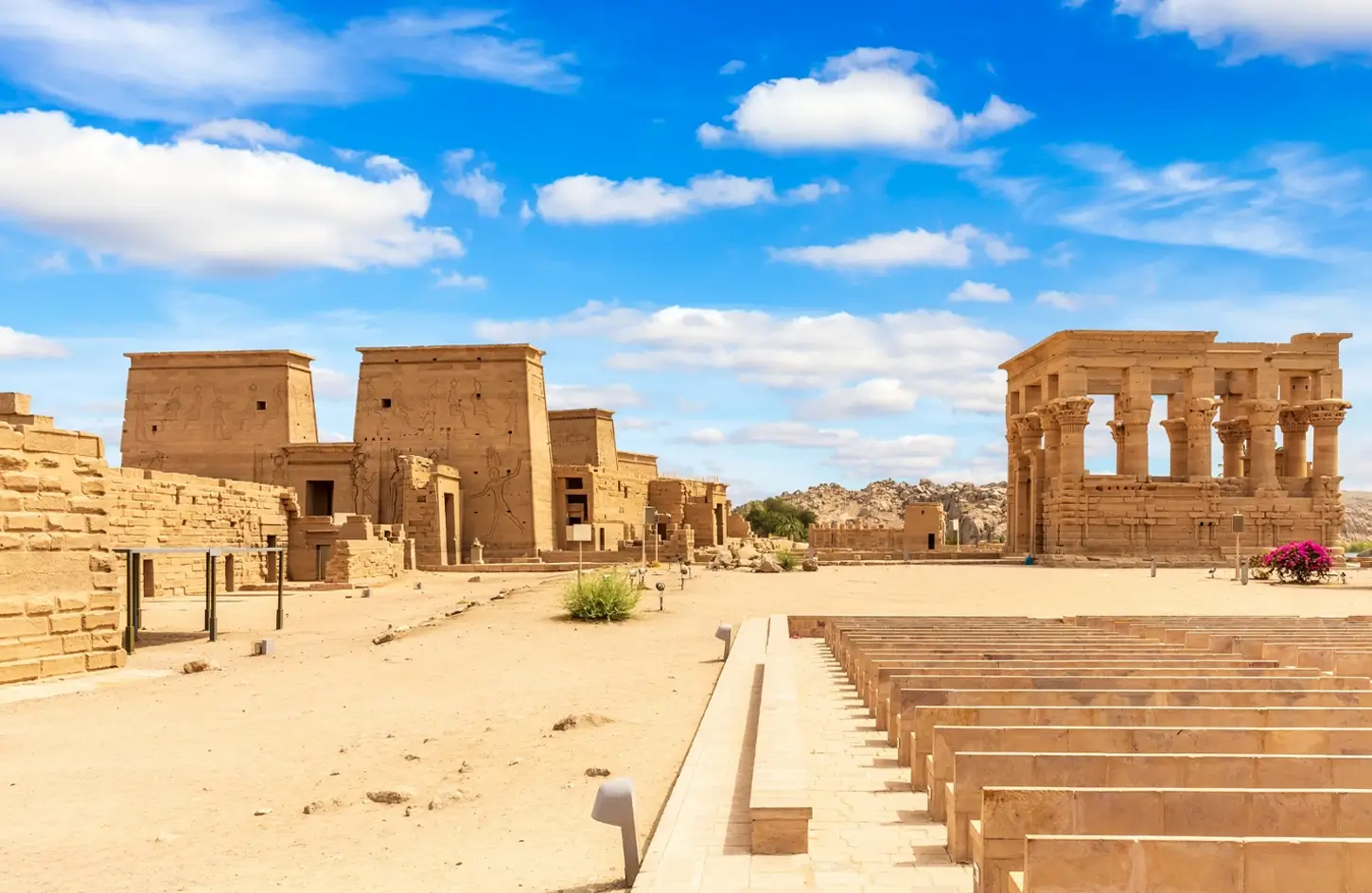
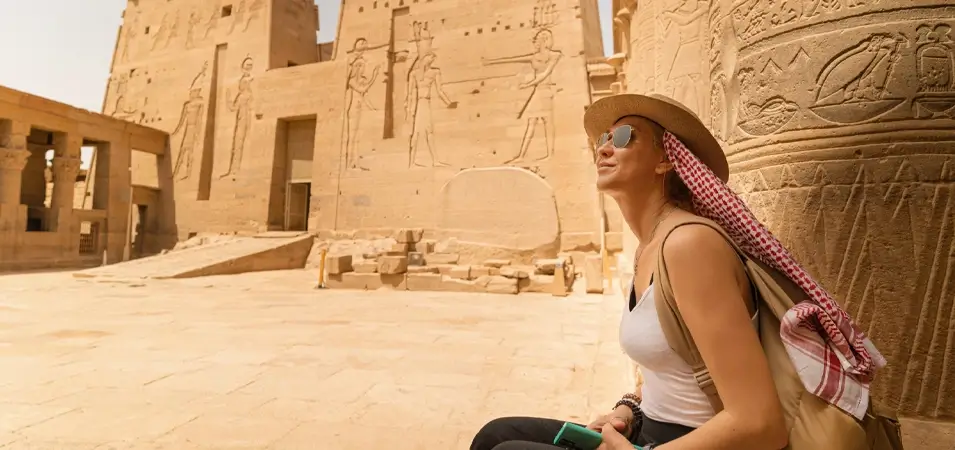
The entrance features a grand pylon carved with scenes of pharaohs making offerings to Isis, Horus, and other gods. These carvings are still sharp, even after centuries. When you walk through the pylon, you enter an open courtyard surrounded by colonnades, with each column topped by detailed floral and geometric capitals.
Nearby is the Kiosk of Trajan, often called “Pharaoh’s Bed,” which is known for its tall, unfinished columns and open design. It is the most photographed structure on the island, especially from the water as your boat approaches. I always tell clients to have their cameras ready before they even land.
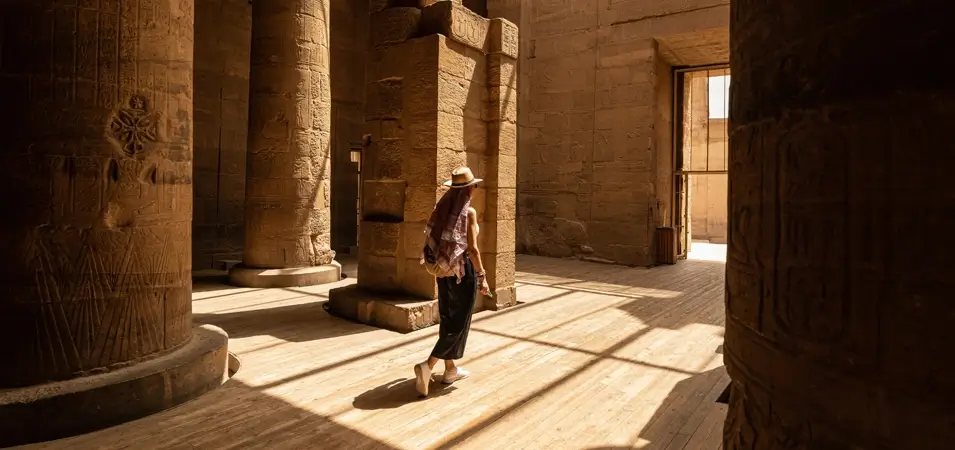
Inside the Temple
As you go deeper into the complex, it gets quieter and darker. The sanctuary of Isis, the most sacred room, once held the bark that carried the goddess during festival processions. The bark is gone now, but you can still see the stone base and the reliefs that show where it stood.
In the smaller side chambers, you can see priests making offerings and performing rituals. The hieroglyphics are so detailed that scholars still study them today. If you look closely at the walls, you will also notice Christian-era additions like carved crosses and changed reliefs right next to the original Egyptian carvings.
Getting to Philae Temple
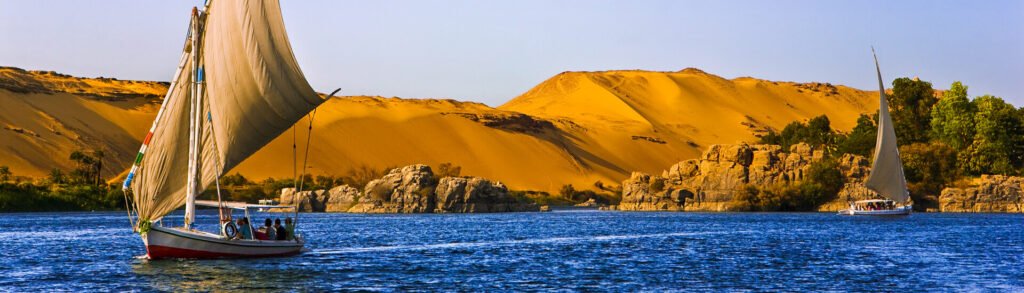
You can only reach Philae Temple by boat. Most people take a taxi to Philae Marina, also known as Shellal Marina, which is about 15 to 20 minutes from central Aswan. From there, you board a motorboat for a short ride to Agilkia Island.
There is no set price for the boat; you agree on a fare for the whole boat, not per person, so sharing with others makes it cheaper. If you want to avoid bargaining, you can join a guided tour from Aswan. The tour usually covers transport, tickets, and the boat ride, and often costs only a little more than going on your own.
Philae Temple Tickets, Prices & Hours
Here’s what to budget for, based on current published rates:
| Item | Price (EGP) | Approx. USD |
|---|---|---|
| General entry (adult) | 550 EGP | ~$11 |
| Student entry (with valid ID) | ~275 EGP | ~$5.50 |
| Sound & Light Show | 960 EGP | ~$20 |
| Boat ride to Agilkia Island (round trip, per boat) | 300–500 EGP | ~$6–$10 |
The site is open from 7:00 AM to 4:00 PM between October and May, and from 7:00 AM to 5:00 PM from June to September. Usually, the last tickets are sold about an hour before closing.
Here’s a tip: temple tickets are now almost always paid by card, but the boat fare is usually cash only. Bring small EGP bills for the boatmen. Entrance fees at Egyptian sites can change, so use these prices as a guide and check the current rate when you book.
Best Time to Visit & the Sound and Light Show
I like to visit in the late afternoon when the light is softer, the crowds are smaller, and the temple’s reflection on the water looks great in photos. If you can, try to catch the evening Sound and Light Show. The temple lights up while a narration tells the story of Isis and Osiris in the courtyards. The show is available in several languages, so check the schedule to see if it’s available in English.
What to Know Before You Go
A few things I tell every client before their visit:
- Don’t skip the guide. Philae’s carvings tell a specific, layered story with Ptolemaic, Roman, and Christian influences that are easy to miss without some background.
- The boat fare is always negotiable. The first price you hear is not set, and bargaining is a normal part of the experience here.
- The temple is definitely worth seeing, but if you’re short on time, just the boat trip might not be the best option. A guided half-day tour that includes Philae, the Unfinished Obelisk, and the High Dam is usually a better way to spend your time in Aswan.
- Mobility can be challenging. There are steps and uneven stone paths everywhere, and there are no ramps, so keep this in mind if you have mobility concerns.
- Dress modestly, since this place is still considered a culturally important and sacred site.
Frequently Asked Questions
What is Philae Temple dedicated to?
Philae Temple honors the goddess Isis, who was one of the most important figures in ancient Egyptian religion. People saw her as a symbol of magic, healing, and motherhood, and believed she protected her son Horus. For centuries, Philae was the main place where her followers gathered, attracting pilgrims from Egypt and Nubia for her festivals and rituals.
Where is Philae Temple located today?
Today, the temple is on Agilkia Island near Aswan in southern Egypt. It used to be on Philae Island, a small granite island further south, but that area often flooded after the Aswan Dams were built. From 1972 to 1980, UNESCO moved the whole temple, block by block, to Agilkia Island. Engineers even shaped the new island to look like the original, so the temple’s surroundings would feel the same.
How much does it cost to visit Philae Temple?
In 2026, general admission costs about 550 EGP (around $11) for adults, and students get a discount with a valid ID. This ticket is just for the temple. To reach it, you need to take a boat, which usually costs 300 to 500 EGP per boat, not per person, so sharing with others makes it cheaper. The evening Sound and Light Show costs an extra 960 EGP. You can pay for temple tickets by card, but bring cash for the boat, as boatmen usually only take EGP.
How do you get to Philae Temple from Aswan?
Most people get to Philae Temple by taking a taxi to Philae Marina, also known as Shellal Marina, about 15 to 20 minutes from central Aswan. From there, you take a short motorboat ride to Agilkia Island. The boat fare can vary, so it’s common to agree on a price with the boatmen before leaving. If you prefer, you can book a guided tour from Aswan, which usually includes a taxi, tickets, and a boat ride in a single package.
Is the Philae Temple Sound and Light Show worth it?
If you have a free evening in Aswan, the extra cost is worth it. The temple lights up at night while a narrated show tells the story of Isis and Osiris, using music, lights, and storytelling throughout the courtyards. The show is available in several languages on different nights, so check ahead to see when the English version is offered if that’s important to you.
How long should you plan to spend at Philae Temple?
Most people spend about 1.5 to 2 hours exploring the main temple, its courtyards, and the Kiosk of Trajan. This doesn’t include the time for the boat ride to and from the island, so plan for extra time, especially if you want to visit other sites in Aswan on the same day.
Final Note from Yousef Atta
Philae is one of the few places in Egypt where you can stand inside a temple that has survived Pharaonic rule, Roman occupation, Christian conversion, and near-complete submersion. You can still see all these layers in the same stone walls.
I have brought many travelers here over the years. It is rarely the most famous stop on an Egypt trip, but it is often the one people remember most when they get home. Try to enjoy the boat ride as part of the experience, not just a hassle, and visit in the late afternoon if you can.