What makes Kom Ombo Temple unique?
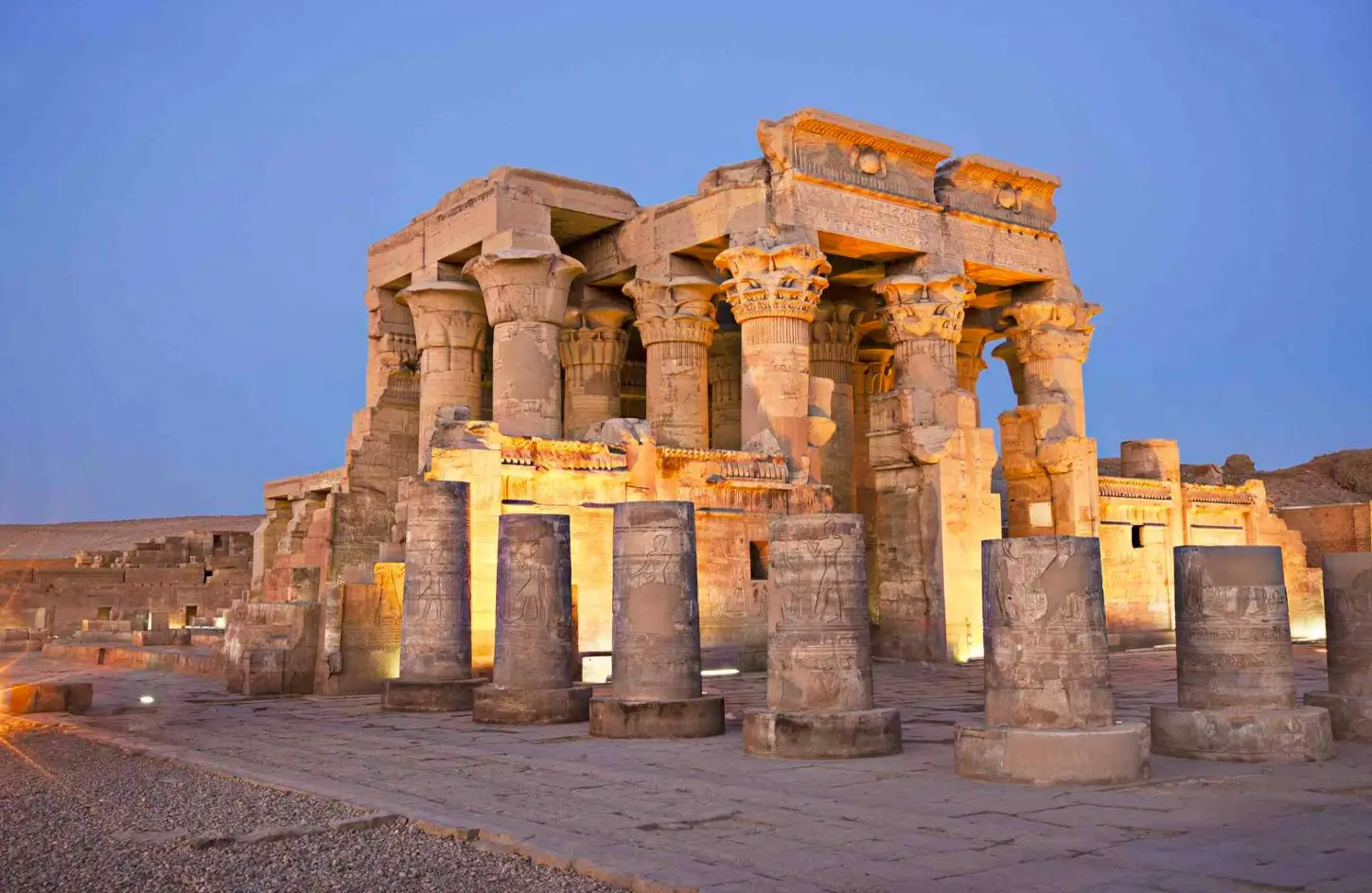
Egypt’s only dual temple — split symmetrically between Sobek (crocodile god) & Horus the Elder, built ~2nd century BC.
- 🐊 Dedicated to 2 gods at once — Sobek (south) & Horus the Elder (north)
- 🏛️ Perfectly mirrored design — twin halls, doorways & sanctuaries
- 🩺 Reliefs show ancient surgical tools — suggests a healing/medical role
- 🐊 Crocodile Museum next door displays mummified crocodiles
- 📍 On the Nile between Aswan & Edfu — a common cruise stop
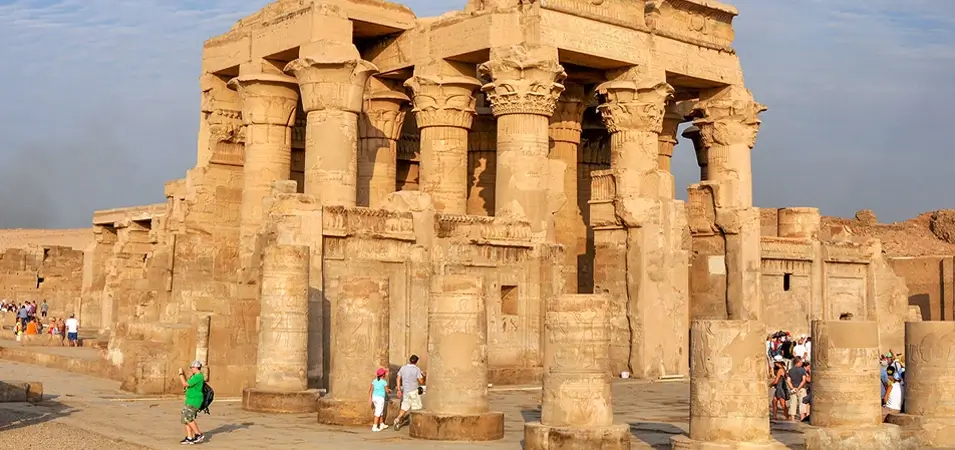
The Temple of Kom Ombo stands on the east bank of the Nile, between Aswan and Edfu. It is the only temple in Egypt dedicated to two gods simultaneously: Sobek, the crocodile god, and Horus the Elder. The temple’s mirrored, symmetrical layout means every hall and sanctuary is duplicated. Entry for foreign adults is EGP 450 (about $9 USD), and this includes access to the Crocodile Museum.
Most people visit Kom Ombo as a stop on a Nile cruise between Luxor and Aswan, often arriving in the late afternoon to catch the sunset on the sandstone columns. If you are planning your own trip by cruise, private car, or train, the practical details below—like current prices, hours, and timing—are the ones that change most often. I have kept them as up to date as possible and highlighted where you should double-check before your visit.
What Makes the Temple of Kom Ombo Unique
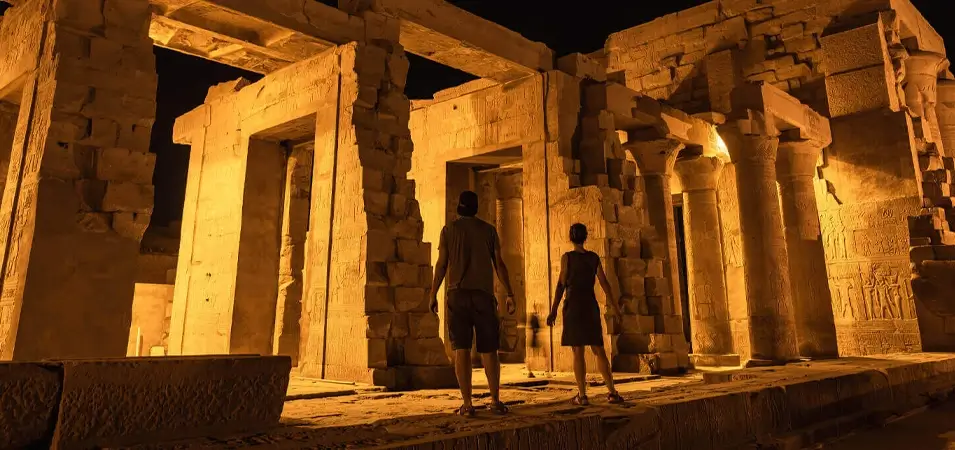
Nearly every temple in Egypt honors a single god. Kom Ombo honors two, side by side, in a single building split along its central axis. The southern half is dedicated to Sobek, the crocodile god associated with fertility and the Nile’s power; the northern half to Horus the Elder (Haroeris), god of protection and kingship.
Because the design had to serve two priesthoods equally, the architects mirrored the layout: two entrances, two hypostyle halls, two sanctuaries, so that neither god’s side would outweigh the other. Walk the courtyard, and you can trace the same scene twice, once on each side, with only the god’s face changed.
History of Kom Ombo Temple
Ptolemaic Origins
Construction started under Ptolemy VI Philometor in the 2nd century BC, using blocks from an older Middle Kingdom building. The temple was dedicated to both Sobek and Horus, who were both popular in this part of Upper Egypt. Bringing them together in one temple made the site more important, both politically and religiously, than most local shrines.
Roman Additions
Ptolemy XII Neos Dionysos, Cleopatra VII’s father, completed much of the temple’s decoration. Later, Roman emperors like Augustus and Tiberius added new architectural features and inscriptions. One of the most talked-about additions from this time is a relief on the outer back wall that depicts what appear to be surgical tools, such as scalpels, forceps, and bone saws.
Some people see these as evidence of ancient medical practice, but many Egyptologists believe they were ritual tools used in temple ceremonies rather than in surgery.
Damage and Restoration
Over the years, the temple was damaged by Nile floods, earthquakes, and stone-robbing. Some blocks were even taken in the 1950s to build a nearby sugar factory. In 1893, the French archaeologist Jacques de Morgan cleared and restored the southern half of the temple dedicated to Sobek.
Restoration work in the twentieth century made the site stable and safe for visitors. Today, people can walk through a complete double temple with its courtyards, halls, and inner sanctuaries still standing.
Pro Tip by Yousef: If you can be flexible with your cruise timing, request an afternoon appointment. There is a rich gold-to-red glow that the sandstone pillars take on right before sunset, and the crowds thin considerably after morning peak hours.
The Crocodile Museum
Just outside the temple complex, the Crocodile Museum (opened in 2012) displays mummified crocodiles found in the area. The collection includes everything from small juveniles to crocodiles over 4 meters long, as well as Sobek statues and burial artifacts.
The Egyptian Ministry of Tourism and Antiquities says the main exhibition hall centers on these mummified Nile crocodiles, which honor Sobek. Entry to the museum is included with your temple ticket. Plan to spend 15 to 20 minutes here in addition to your temple visit. The museum is a short walk from the main courtyard and easy to visit with the same ticket.
Kom Ombo Temple Ticket Prices and Opening Hours
Entrance fees at Egyptian government-run sites are set centrally and may change. The prices below are current as of the last check, but they are not guaranteed. Always confirm the latest prices at the ticket counter or on the official booking platform before you travel.
| Category | Price (EGP) | Approx. USD |
|---|---|---|
| Foreign adult | EGP 450 | ~$9 |
| Foreign student | EGP 225 | ~$4.50 |
| Egyptian adult | EGP 40 | ~$0.80 |
| Egyptian student | EGP 20 | ~$0.40 |
| Car/taxi entry | EGP 25 | ~$0.50 |
| Micro-bus entry | EGP 50 | ~$1 |
| Coaster entry | EGP 75 | ~$1.50 |
| Bus entry | EGP 100 | ~$2 |
Ticket prices are set by the Egyptian Ministry of Tourism and Antiquities. The US dollar amounts are based on an exchange rate of about 50 EGP to 1 USD, but this can change. Foreign visitors pay EGP 450 for an adult ticket and EGP 225 for a student ticket. Egyptian citizens pay EGP 40 for adults and EGP 20 for students. There are also small additional fees for cars, minibusses, coasters, and buses entering the site.
Most places in Egypt, including Kom Ombo, now accept credit or debit cards instead of cash. Before you arrive, check that your card works for international payments.
Kom Ombo Temple is usually open every day from early morning to early evening. It closes earlier during the cooler months from October to April, and stays open later in the summer from May to September. If you are visiting on your own and not with a cruise, it is a good idea to call ahead or check the official booking website that week, as hours may change around public holidays.
How to Get to Kom Ombo Temple
- By Nile cruise (most common): Most 3- and 4-night Luxor to Aswan cruises stop at Kom Ombo for about 1 to 1.5 hours, usually in the late afternoon or at sunset. The dock is right at the base of the temple hill, just a five-minute walk up.
- By private car from Aswan: It takes about 45 minutes to drive along the desert road. Many travelers visit Edfu Temple on the same day; it is about 65 km farther north.
- By private car from Luxor: The drive takes around 2.5 hours. It’s best to visit Edfu along the way and plan to stay overnight in Aswan, instead of trying to fit everything into one day.
- By train: Kom Ombo has its own train station with connections to major Egyptian cities. From the station, it’s a short taxi ride to the temple.
Best Time to Visit Kom Ombo Temple
The best time to visit is in the late afternoon, about two hours before sunset. The light is softer, it’s cooler, and most cruise groups have already gone. If you’re exploring on your own, aim for this time rather than the crowded mid-morning when most tour buses arrive.
What to Avoid / What’s Overrated
- Try not to rush through in just 15 minutes. Some cruise schedules only allow a quick stop between lunch and leaving. If possible, spend at least 45 minutes at the site. Taking your time helps you notice the mirrored reliefs on both sides of the temple.
- Don’t skip the Crocodile Museum just because it seems like a small extra. It’s included with your ticket, only a short walk away, and helps explain the Sobek worship you’ve just seen carved into the temple walls.
- Do not anticipate anything like the preservation of Edfu Temple. The location of Kom Ombo near the river leads to much greater deterioration than at Edfu Temple, especially in the exterior courtyard. That should not discourage you from visiting it, since only at Kom Ombo are such symmetries and medical reliefs found.
Nearby Attractions Worth Visiting
Edfu Temple: Just north of Kom Ombo, the Temple of Edfu is one of Egypt’s best-preserved temples. It is dedicated to Horus and features impressive pylons and detailed reliefs. Many visitors see both temples in one day, especially during a Nile cruise.
Aswan High Dam and Philae Temple: Heading south to Aswan, you will find the Aswan High Dam and the Philae Temple, which is dedicated to Isis. Both are popular stops on most Nile cruise routes.
Nubian Village in Aswan: For a change of scenery, the Nubian Village in Aswan features brightly painted houses and offers an opportunity to experience Nubian traditions and hospitality.
Frequently Asked Questions
How much does it cost to enter Kom Ombo Temple?
Foreign adults pay EGP 450 (about $9 USD), and foreign students pay EGP 225 (about $4.50 USD), according to the latest rates from the Egyptian Ministry of Tourism and Antiquities. Your ticket also covers entry to the Crocodile Museum next door. Egyptian citizens have a different, lower local rate. Since prices are set by the government and can change, it’s a good idea to double-check before your trip.
What are the opening hours of Kom Ombo Temple?
The temple is open every day, usually from early morning until early evening. Hours are a bit shorter in the cooler winter months and longer in summer. If you’re visiting on your own rather than on a cruise, check the exact hours for your dates, as they can change around public holidays.
How do you get to Kom Ombo Temple?
Most people visit by Nile cruise, as almost all Luxor–Aswan trips stop right at the temple’s dock. If you’re coming on your own, it’s about a 45-minute drive from Aswan or a 2.5-hour drive from Luxor. There’s also a train station in Kom Ombo town, just a short taxi ride from the temple.
Why is Kom Ombo Temple dedicated to two gods?
Sobek, the crocodile god, and Horus the Elder were both important in this part of Upper Egypt. That’s why the temple was built as a mirrored double structure, with separate priesthoods, entrances, and sanctuaries for each god. It’s the only major temple in Egypt designed like this.
Is the Crocodile Museum included in the Kom Ombo Temple ticket?
Yes, your regular ticket includes both the temple and the Crocodile Museum next door. The museum displays mummified crocodiles that were part of Sobek’s worship.
How much time do you need to visit Kom Ombo Temple?
Most cruise stops give you 1 to 1.5 hours, which is enough time to see both halves of the temple and the Crocodile Museum at a relaxed pace. If you’re visiting on your own and want to look at the reliefs more closely, plan for at least 45 minutes to an hour inside the temple.
Final Note from Yousef Atta
Kom Ombo is often seen as an extra stop between Edfu and Aswan, and I get it. It’s smaller and not as perfectly preserved as some temples further south. Still, its double design is truly unique on the Nile. If you visit in the late afternoon and give yourself more than a quick look, it can be one of the most memorable stops on a Luxor–Aswan trip.
If you’re planning a Nile cruise or a private road trip and want to make sure Kom Ombo is included properly, that’s exactly the kind of detail I help travelers with.