What are the best places to visit in Luxor and Aswan?
Karnak, Luxor Temple & Valley of Kings in Luxor; Philae Temple, Abu Simbel & Nubian villages in Aswan.
- 🏛️ Luxor must-sees: 4–8 people, no cabin/toilet, Aswan–Kom Ombo only, ~$110–$245/boat
- 🌊 Aswan must-sees: Philae Temple, Abu Simbel, Nubian village, Elephantine Island
- 📅 Spend 2–4days in Luxor, 1–3 days in Aswan for a relaxed pace
- 💳 All sites are card-only — cash isn’t accepted at ticket counters
- 🎈 Don’t miss: sunrise balloon in Luxor, felucca sunset sail in Aswan
Some of the top places to visit in Luxor are Karnak Temple, Luxor Temple, the Valley of the Kings, and the Temple of Hatshepsut. In Aswan, don’t miss Philae Temple, Abu Simbel, and the Nubian villages. Most travelers spend about 2 to 4 days in Luxor and 1 to 3 days in Aswan to see everything well.
I’ve walked through the Hypostyle Hall at Karnak before the tour buses showed up, watched the sun light up the huge statues at Abu Simbel just as it was designed to, and shared tea with Nubian families in their colorful homes along the Nile. Luxor and Aswan are more than just stops on a trip. They are places where you really feel what “ancient” means. This guide leaves out the usual postcard talk and shares what I would honestly tell a friend: what’s truly worth your time, what it costs, and what you can skip.
How Many Days Do You Need in Luxor and Aswan?
If you want to see the East Bank temples and the West Bank tombs in Luxor without feeling rushed, plan to spend 2 to 4 days there. For Aswan, 1 to 3 days is usually enough, depending on whether you want to visit Abu Simbel as a day trip.
If you’re taking a Nile cruise between the two cities, most trips last 4 days from Aswan to Luxor or 5 days from Luxor to Aswan, which gives you time to see all the main sites mentioned here. If you only have a long weekend, focus on Karnak, Luxor Temple, and the Valley of the Kings in Luxor, plus Philae Temple in Aswan. Visiting just these four places makes the trip worthwhile.
Best Places to Visit in Luxor
Luxor stretches across both sides of the Nile, and this division is important. The East Bank was where people worshipped during their lives, while the West Bank was where the dead were prepared for the afterlife. Visiting both sides gives you a full sense of Luxor, instead of just feeling like you’ve seen one big temple.
Karnak Temple
Karnak Temple is the largest religious complex ever built. Over nearly 2,000 years, many pharaohs added to it, so it feels more like a city than a single building. The Great Hypostyle Hall, with its 134 columns—some over 70 feet tall—is the most photographed spot in Luxor, and it’s easy to see why.
General admission is EGP 450 (about $9 USD) according to the latest pricing from the Ministry of Tourism and Antiquities. Payment is by card only, as most major sites in Egypt now use cashless payment.
Luxor Temple
Luxor Temple was built by Amenhotep III and later expanded by Ramesses II. It stands right on the modern corniche and is beautifully lit at night, making it one of the few ancient sites worth visiting twice—once during the day and again after dark. The temple was the center of the Opet Festival, an annual event celebrating the renewal of kingship. The Avenue of Sphinxes once connected it directly to Karnak, two miles away.
Admission is EGP 400 (about $8 USD). If you can only visit one site in Luxor at night, choose this one. The lighting completely transforms the atmosphere.
Valley of the Kings
On the West Bank, the Valley of the Kings has over 60 royal tombs carved into the rock. They were built this way to hide and protect the pharaohs as they traveled to the afterlife. Tutankhamun’s tomb is the most famous. It’s smaller than most of the others, but it stands out because Howard Carter found it almost untouched in 1922. Nearly every other tomb here was looted long ago.
General entry costs EGP 750 (about $15 USD) and lets you visit three tombs of your choice. Tutankhamun’s tomb requires a separate ticket for EGP 700 (about $14 USD). I would skip the Tutankhamun add-on unless you are really interested in Egyptology. The tomb is small, and the tombs of others, like Ramesses VI or Seti I, have much more impressive decorations for the same base ticket price.

Temple of Hatshepsut
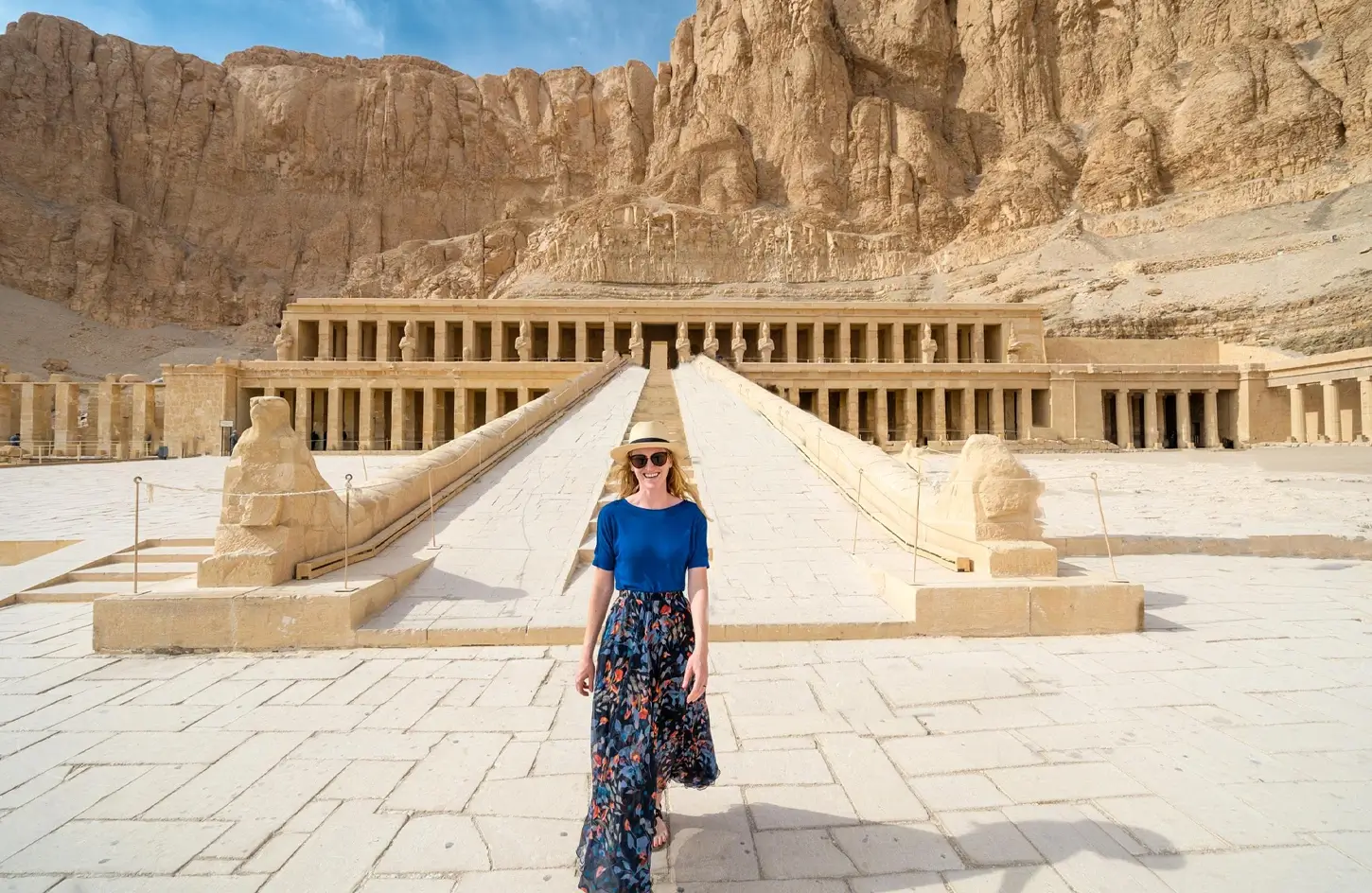
The Temple of Hatshepsut at Deir el-Bahari is built right into the cliffs. Its clean, terraced lines look almost modern against the desert. Hatshepsut was one of Egypt’s few female pharaohs, and the reliefs inside focus on justifying her right to rule. They include the famous scenes of her trading expedition to Punt.
Admission is EGP 360 (about $7 USD). Most people visit this, along with the Valley of the Kings and the Colossi of Memnon, in one morning on the West Bank.
Colossi of Memnon
Two weathered statues of Amenhotep III stand alone at the edge of the West Bank road. You can see them for free, and no ticket is needed. They are worth a quick five-minute stop on your way to or from the Valley of the Kings. These statues once guarded the entrance to a mortuary temple that has mostly disappeared, but ongoing excavation is slowly revealing more of it.
Hot Air Balloon Ride Over Luxor
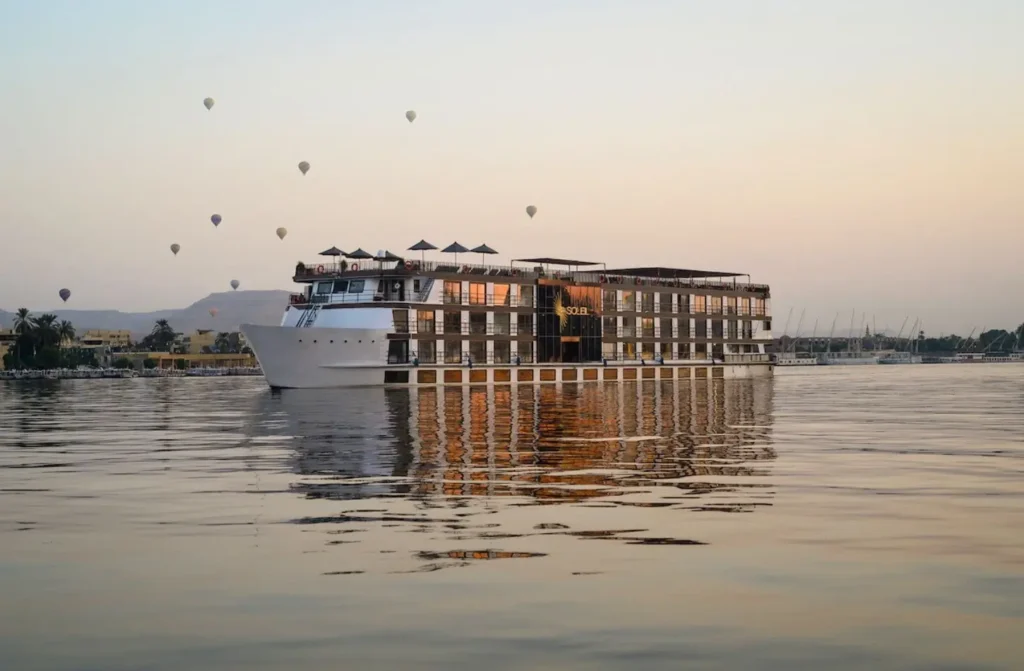
This is not an ancient site, but it has become one of the top experiences in Luxor. A sunrise balloon flight over the West Bank gives you a view of the Valley of the Kings, Hatshepsut Temple, and the Nile that you cannot get from the ground. Flights cost about $90-$130 USD per person, depending on the operator and group size.
Pickup is usually around 4:30 to 5:00 AM. Make sure to book with a licensed operator. Balloon safety rules in Luxor are now much stricter after past incidents, and licensed companies can show you their current certification.
Best Places to Visit in Aswan
Aswan has a slower rhythm than Luxor. The area is smaller, the granite-quarry scenery stands out from Luxor’s flat desert, and the city’s Nubian roots add a unique cultural touch you won’t find in Luxor.
Philae Temple
Philae Temple, dedicated to Isis, was moved piece by piece to Agilkia Island in the 1970s as part of a UNESCO rescue effort after the Aswan High Dam put the original site at risk of flooding. You can only get there by boat, which makes the trip feel a little more special than most temple visits.
Entry costs EGP 550 (about $11 USD), and you’ll also need to pay a small boat fare, usually EGP 100 to 150 (about $2 to $3), which you can split with other passengers. If you have time, try to catch the evening Sound and Light Show. It’s actually one of the best in Egypt, not just a standard show like at some other sites.
Abu Simbel Temples
Abu Simbel is about 280 km south of Aswan, near the Sudanese border. At the entrance, four massive 65-foot statues of Ramesses II show his power. Beside them stands a smaller temple for Queen Nefertari, which is unusual because it honors her as an equal to the king, not just as a supporting figure.
In the 1960s, the entire complex was relocated to avoid flooding from Lake Nasser, as happened to Philae. The team rebuilt it so precisely that the special solar event, when sunlight reaches the inner sanctuary on February 22 and October 22, still takes place almost as it did before.
Standard admission is EGP 750 (about $15 USD). On the two solar alignment dates, tickets can cost up to EGP 1,200 (about $24 USD) because of the special event. Most visitors go by road convoy from Aswan, which takes about 3.5 to 4 hours and leaves around 4:00 AM. If you have room in your budget, you can take a 45-minute domestic flight instead. Flying is a good option if you want to save time.
Nubian Village
A visit to a Nubian village, usually reached by motorboat from central Aswan, is more about the experience than about seeing a single landmark. You can expect brightly painted domed houses, Nubian coffee, handmade textiles, and conversations with families whose culture goes back before the pharaohs in this region. Boat trips cost about EGP 300–500 (around $6–10 USD) round trip, depending on your group size and how well you negotiate.
To tell if your visit is authentic or just a tourist trap, look for a real household or a small, family-run guesthouse, not a staged “cultural center” made only for tour groups. Ask your guide whether the family lives there year-round. Most genuine operators will answer yes right away.
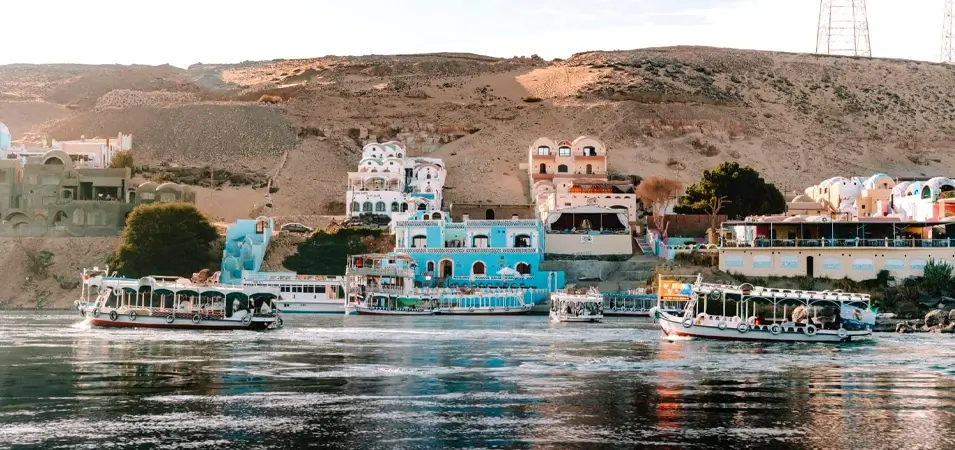
Elephantine Island and the Aswan Museum
Elephantine Island is home to some of Aswan’s oldest continuously lived-on land. Here, you’ll find a Nilometer that once measured the Nile’s flood levels and the Temple of Khnum. The small Aswan Museum displays artifacts found nearby, and the island is one of the rare spots in Aswan where you can simply relax and watch feluccas sail past with no set plans.
Unfinished Obelisk
Just outside town, the granite quarries hold the Unfinished Obelisk, still connected to the bedrock from which it was carved almost 3,500 years ago. When a crack appeared during construction, the project was left unfinished. If completed, it would have been the largest obelisk ever made, weighing over 1,000 tons. Entry costs EGP 200 (about $4 USD), and it’s one of the few places where you can see the real tool marks left by ancient workers.
Aswan High Dam
The High Dam was finished in 1970 with help from Soviet engineers. It stopped the centuries-old pattern of Nile floods and droughts and created Lake Nasser, now one of the world’s largest reservoirs. While it may not look as impressive as a temple, learning about the dam helps explain why Philae and Abu Simbel had to be relocated. Entry to the viewing area is free, but there’s a small fee if you want to walk on the dam itself.
Kom Ombo and Edfu Temples
Most travelers visit these two temples while traveling between Luxor and Aswan, often as part of a multi-day cruise. They’re sometimes skipped, but if you have the chance, they’re well worth seeing. Kom Ombo Temple is unique because it’s dedicated to two gods—Sobek, the crocodile god, and Horus—and has a perfectly symmetrical double design. Entry is EGP 450 (about $9 USD). Edfu Temple is one of Egypt’s best-preserved temples, protected for centuries under desert sand. Entry is EGP 550 (about $11 USD), and you usually reach it from the river by horse-drawn carriage. Be sure to agree on the carriage price before you get in.
Luxor vs. Aswan: Which Should You Prioritize?
If you have to choose — most travelers shouldn’t, but limited time happens — here’s how the two compare directly.
| Luxor | Aswan | |
|---|---|---|
| Recommended stay | 2–4 days | 1–3 days |
| Best for | Temple density, tomb art, history depth | Scenery, Nubian culture, slower pace |
| Signature experience | Hot air balloon at sunrise | Felucca sail at sunset |
| Standout site | Karnak Temple | Philae Temple |
| Day-trip option | None major | Abu Simbel (full day) |
| Pace | Busier, more ground to cover | Relaxed, fewer must-see stops |
When you have just 3–4 days to spend in Upper Egypt, I would recommend allocating most of your time to Luxor for its numerous attractions. But I believe that Aswan is where you will experience a more relaxed atmosphere and visit Nubian villages.
Sailing the Nile: Felucca and Cruise Options Between Luxor and Aswan
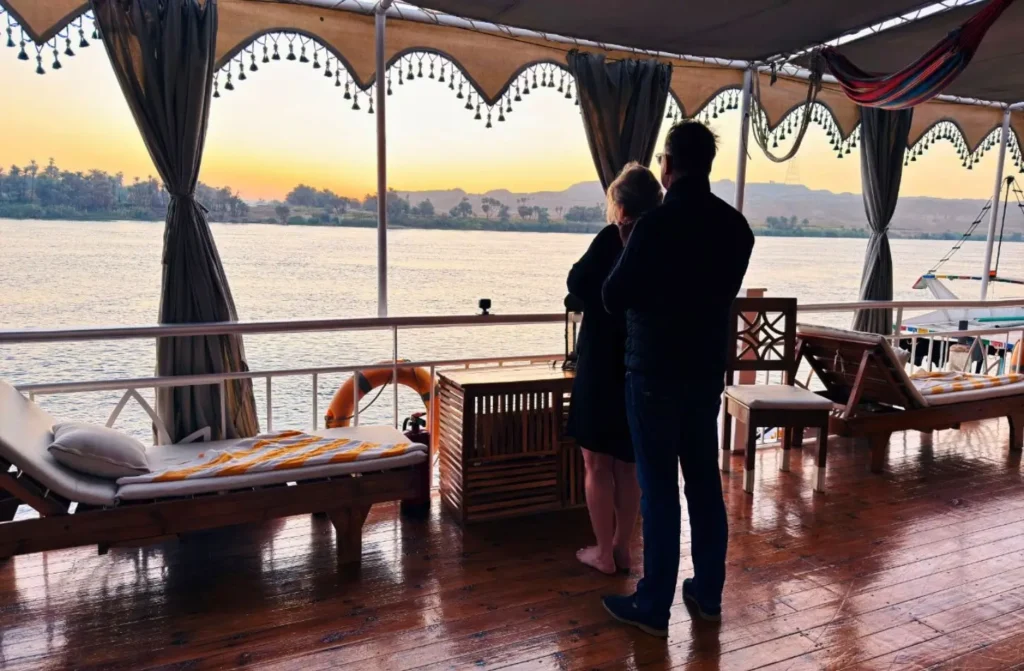
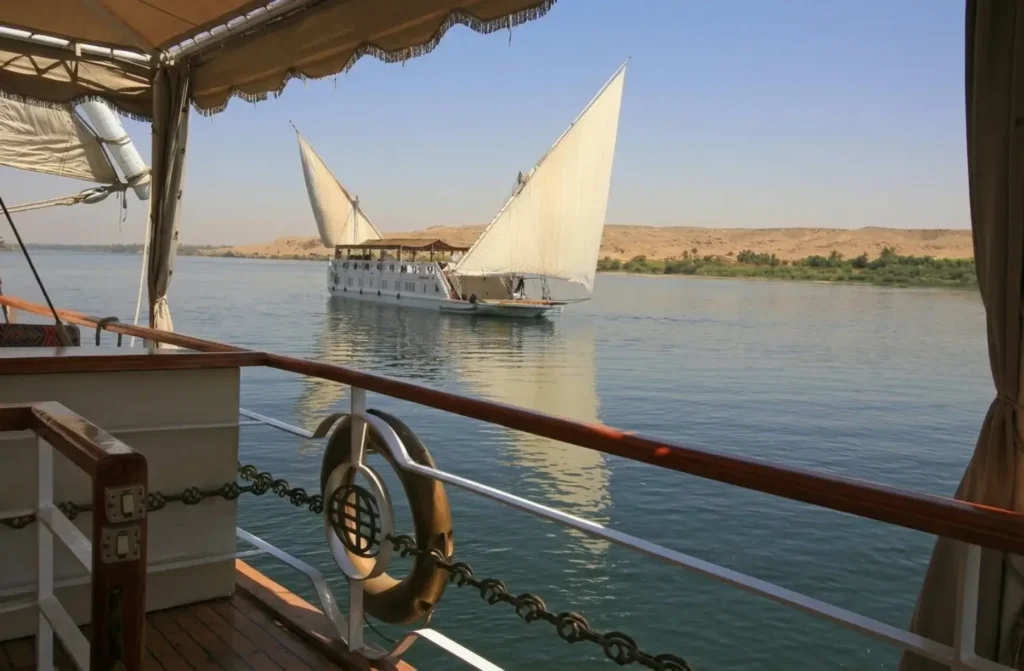
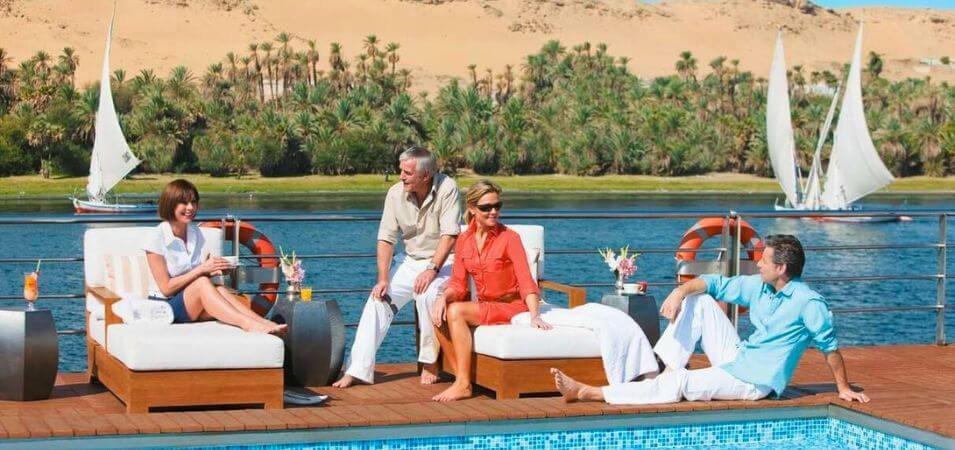
A traditional felucca, which is a wooden sailboat without an engine, offers the most authentic way to experience the Nile. A short sunset sail in either city usually costs about EGP 250–400 per person (around $5–8 USD) for one or two hours. If you want to travel the full distance between Luxor and Aswan, most people choose a multi-day Nile cruise.
These cruises take 4 days from Aswan to Luxor or 5 days from Luxor to Aswan, and include visits to most of the temples mentioned in this guide. Prices for cruises vary widely depending on the ship, but budget cabins on standard 4–5-star cruisers usually start at $80–100 USD per person per night, with meals included.
Best Time to Visit Luxor and Aswan
The best time to visit Luxor and Aswan is from November to February, when daytime temperatures range from 70 to 80°F (21–27°C). This weather is perfect for spending full days outside at places like Karnak and Abu Simbel, which have little shade.
March, April, October, and November are also good options if you prefer fewer crowds and lower hotel prices. Try to avoid visiting from June to August unless you are comfortable with extreme heat, as temperatures often go over 104°F (40°C) at midday and most outdoor sites offer little relief from the sun.
Prices, Tickets, and a Practical Reference Schedule
All prices listed below reflect the official rates set by the Ministry of Tourism and Antiquities as of the latest published update. Payment is accepted by credit or debit card only – cash is no longer accepted at most major sites. Please check current prices before booking, as prices at Egyptian sites are subject to periodic review.
| Site | EGP (Adult) | Approx. USD |
|---|---|---|
| Karnak Temple | 450 | $9 |
| Luxor Temple | 400 | $8 |
| Valley of the Kings (general) | 750 | $15 |
| Tutankhamun tomb add-on | 700 | $14 |
| Temple of Hatshepsut | 360 | $7 |
| Philae Temple | 550 | $11 |
| Abu Simbel (standard) | 750 | $15 |
| Abu Simbel (alignment dates) | 1,200 | $24 |
| Unfinished Obelisk | 200 | $4 |
| Kom Ombo Temple | 450 | $9 |
| Edfu Temple | 550 | $11 |
Source: Egyptian Ministry of Tourism and Antiquities official fee schedule.
Frequently Asked Questions
What to visit in Luxor and Aswan?
In Luxor, make sure to see Karnak Temple, Luxor Temple, the Valley of the Kings, and the Temple of Hatshepsut. In Aswan, don’t miss Philae Temple, Abu Simbel, and a visit to a Nubian village. These highlights give you a good mix of temples, tombs, and local culture, and you can see them all in about 5 to 7 days.
Which is nicer, Luxor or Aswan?
It depends on what you’re looking for. Luxor has more famous sites and a lot of history, so it’s best if you want to focus on temples and tombs. Aswan is quieter and has a softer landscape with granite hills, islands, and a more peaceful stretch of the Nile. It also offers Nubian culture, which you won’t find in Luxor. Most travelers I know remember Aswan more fondly, even though Luxor has the most impressive monuments.
What are the must-see places in Luxor?
The four main places to see in Luxor are Karnak Temple, Luxor Temple, the Valley of the Kings, and the Temple of Hatshepsut. The Colossi of Memnon is a good free stop on your way to the West Bank sites, and taking a sunrise hot air balloon ride is the top experience outside of visiting temples.
What are the top 3 tourist attractions in Egypt?
Most lists, and most travelers, rank the Pyramids of Giza, Abu Simbel, and Karnak Temple as Egypt’s top three attractions. Each one stands for a different era and region of ancient Egypt: the Old Kingdom (Giza), New Kingdom royal power (Abu Simbel), and New Kingdom religious life (Karnak).
Can I pay for entrance tickets in cash?
No, you can’t pay with cash at most major sites as of 2026. Egypt’s Ministry of Tourism and Antiquities now uses card-only payments at ticket counters for the main temples and tombs in Luxor and Aswan. Be sure to bring a credit or debit card instead of relying on cash.
Final Note from Yousef Atta
If I were recommending just four places for a first-time traveler between these two cities, I would choose Karnak at sunrise, Luxor Temple at night, Philae by boat, and Abu Simbel, even though it’s a long drive. Everything else in this guide is truly worth your time if you can fit it in, but those four are the ones people remember for years.
Try to plan your days around the heat, not the other way around. And take your time at Karnak; it’s the one place in Upper Egypt where slowing down really pays off.