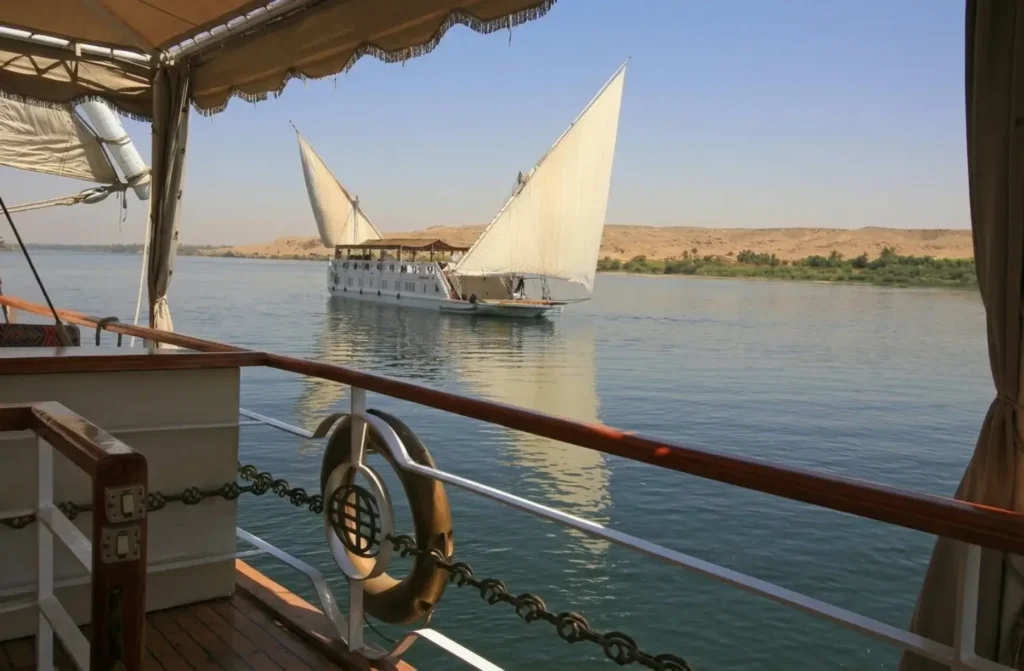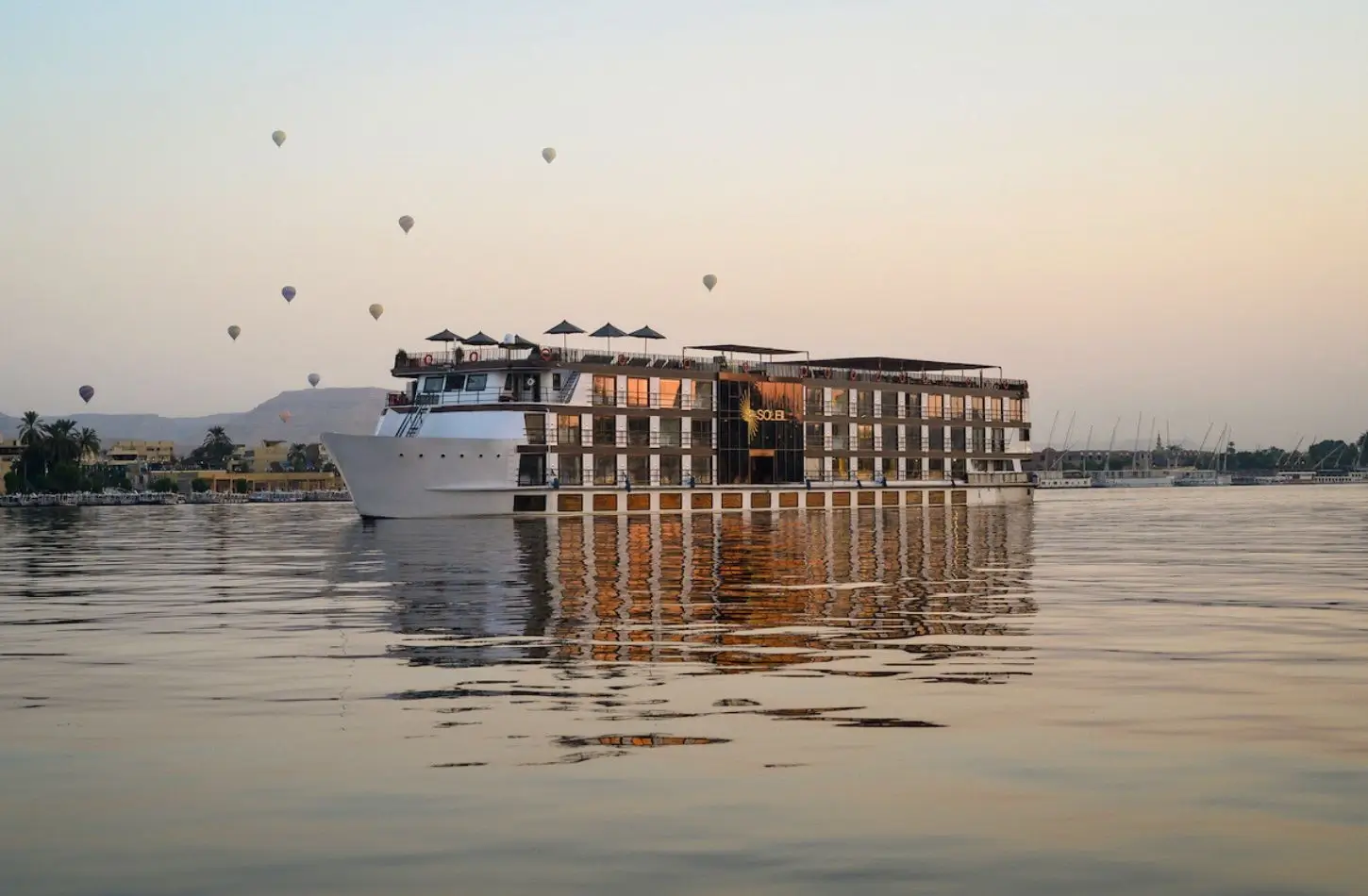
Is it safe to go on a Nile cruise in 2026? Yes. The Luxor-to-Aswan corridor is one of the most closely guarded tourist routes in Egypt, with tourist police stationed at every dock and temple, licensed operators following strict vessel inspections, and a security record that has held steady for years. That said, “safe” doesn’t mean “no precautions needed” — the real risks on a Nile cruise are rarely dramatic, they’re practical: sun exposure, slippery decks, unfiltered tap water, and picking an operator who cuts corners.
This guide breaks down exactly what keeps a Nile cruise safe, what still deserves your attention, and how to plan a trip with confidence. If you’re ready to compare options, our Nile cruise packages range from standard sailings to fully deluxe Nile cruises, and every itinerary we list runs the same well-established Luxor to Aswan route that authorities and cruise lines have refined for decades. Travelers who want the extra space and privacy of a smaller vessel often ask about our luxury Nile cruises as well, which follow the same secure itinerary with a more boutique feel.
Below, we’ll walk through security on board and on land, health considerations you actually need to plan for, safety for solo travelers and families, and how to spot a cruise operator that takes safety seriously — not just one that says it does.
Is a Nile Cruise Safe in 2026? The Short Answer
The short answer is yes. Nile cruise routes between Luxor and Aswan sit inside one of Egypt’s most controlled tourism zones. Every vessel checks in with river authorities before departure, tourist police accompany shore excursions to Karnak, the Valley of the Kings, Kom Ombo, Edfu, and Philae, and access points at each temple are monitored. Egypt’s tourism sector accounts for a significant share of the national economy, which is exactly why security at these sites has become so consistent — a single incident would carry an outsized cost, so authorities treat the corridor as a priority.
None of this means the trip is risk-free in the way a hotel stay at home isn’t risk-free either. It means the risks are manageable, well understood, and mostly the same ones you’d plan around on any international trip: heat, hydration, road transfers, and choosing reputable providers over the cheapest listing you can find.
Security Measures Onboard and at Tourist Sites
Every legally operating Nile cruise vessel passes through Ministry of Tourism inspections before it’s cleared to carry passengers, covering everything from lifeboats and fire equipment to crew certification. Boats travel in daylight along fixed, well-traveled sections of the river, and at each stop — whether that’s docking in Luxor or pulling in near Kom Ombo — local tourist police are present at the gangway and around the temple grounds.
Shore excursions are guided, which matters more for safety than most travelers realize. A licensed Egyptologist guide knows which entrances to use, how to keep the group together in crowded courtyards, and how to flag anything unusual to site security. Wandering solo away from a temple’s marked paths is where most avoidable problems happen — not because the areas are unsafe, but because unmarked terrain, uneven stone steps, and the midday sun don’t forgive carelessness. If you’re weighing a cruise against exploring on your own, our comparison of a Nile cruise vs. felucca sailing breaks down exactly how much of that structure and security you give up with each option.
Is the Water Safe? Health Precautions on a Nile Cruise
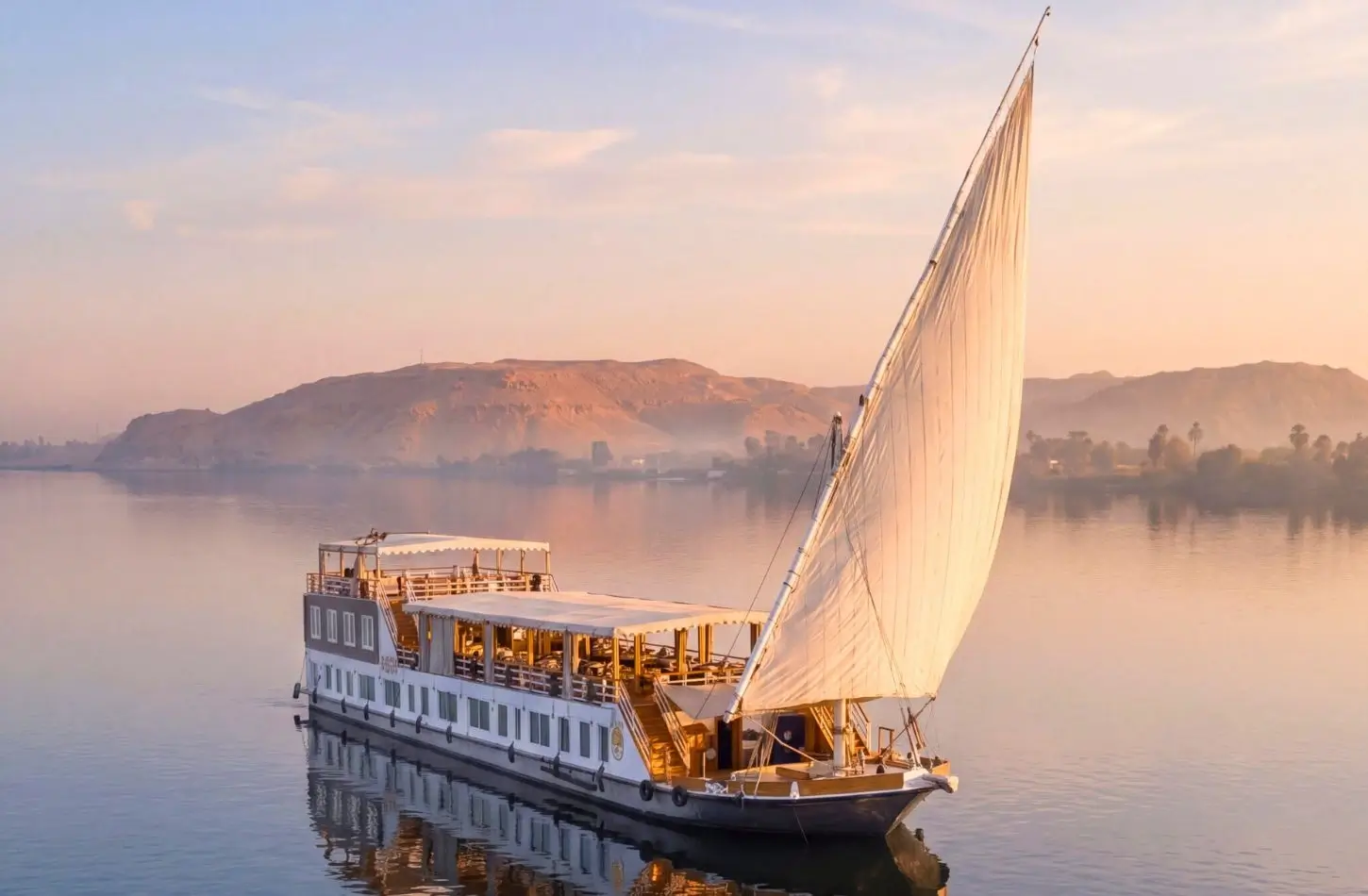
This is where most real Nile cruise risk actually lies — not in security, but in health. Tap water in Egypt, including onboard, isn’t safe to drink; stick to bottled or filtered water, which every reputable cruise ship supplies in cabins and dining areas. Ice in drinks at licensed cruise restaurants is generally made from filtered water, but it’s worth asking on smaller or budget operators.
Swimming or wading in the Nile itself is not recommended. The river can carry schistosomiasis, a parasitic infection contracted through prolonged skin contact with untreated freshwater — it isn’t a reason to panic, but it is a reason to use the cruise ship’s swimming pool instead of the river. Sun exposure is the more common issue: Upper Egypt regularly hits 35–40°C between May and September, and dehydration or heat exhaustion sends more travelers to the ship’s doctor than anything else. Pack accordingly — our guide on what to pack for a Nile cruise covers sun protection, electrolytes, and the small first-aid items worth carrying. Most mid-range and upscale cruise ships carry a doctor or have one on call, and pharmacies are accessible in Luxor and Aswan for anything beyond the basics.
Onboard Safety: Decks, Railings, and Everyday Precautions
The single most common Nile cruise injury has nothing to do with crime or terrorism — it’s a slip on a wet deck. Sun decks are hosed down early each morning, and the tile can stay slick well past sunrise, especially near the pool and railings. Wear shoes with real grip rather than flip-flops when you’re out on deck, and take the stairs between decks slowly, particularly if the ship is docked alongside another vessel and there’s a short gangway crossing involved.
Cabin balconies and sun-deck railings are built to standard safety height, but they’re not something to lean or sit on, and this matters more with kids aboard. Keep a copy of your passport details (a photo on your phone is enough) separate from the physical document the crew holds for immigration checks during the cruise, so you’re never without ID if you need it onshore.
Is a Nile Cruise Safe for Solo Female Travelers?
Yes — a guided Nile cruise is actually one of the more comfortable ways for a solo woman to see Egypt, precisely because so much of the trip is structured. Transfers, meals, sightseeing, and even most evening entertainment happen within the group, which removes a lot of the guesswork that comes with independent travel. Dressing modestly at temples and in towns (shoulders and knees covered) earns more comfortable, respectful interactions, and sticking with the group during shore excursions rather than exploring markets alone after dark is the same common-sense advice that applies in most countries.
Cabin doors lock from the inside, the crew is used to solo travelers, and dining is communal, so meeting other passengers happens naturally. If you’re weighing whether to go it alone, our piece on the solo Nile cruise experience goes deeper into cabin choices, social dynamics onboard, and how to plan the trip end-to-end as a single traveler.
Is a Nile Cruise Safe for Families and Kids?
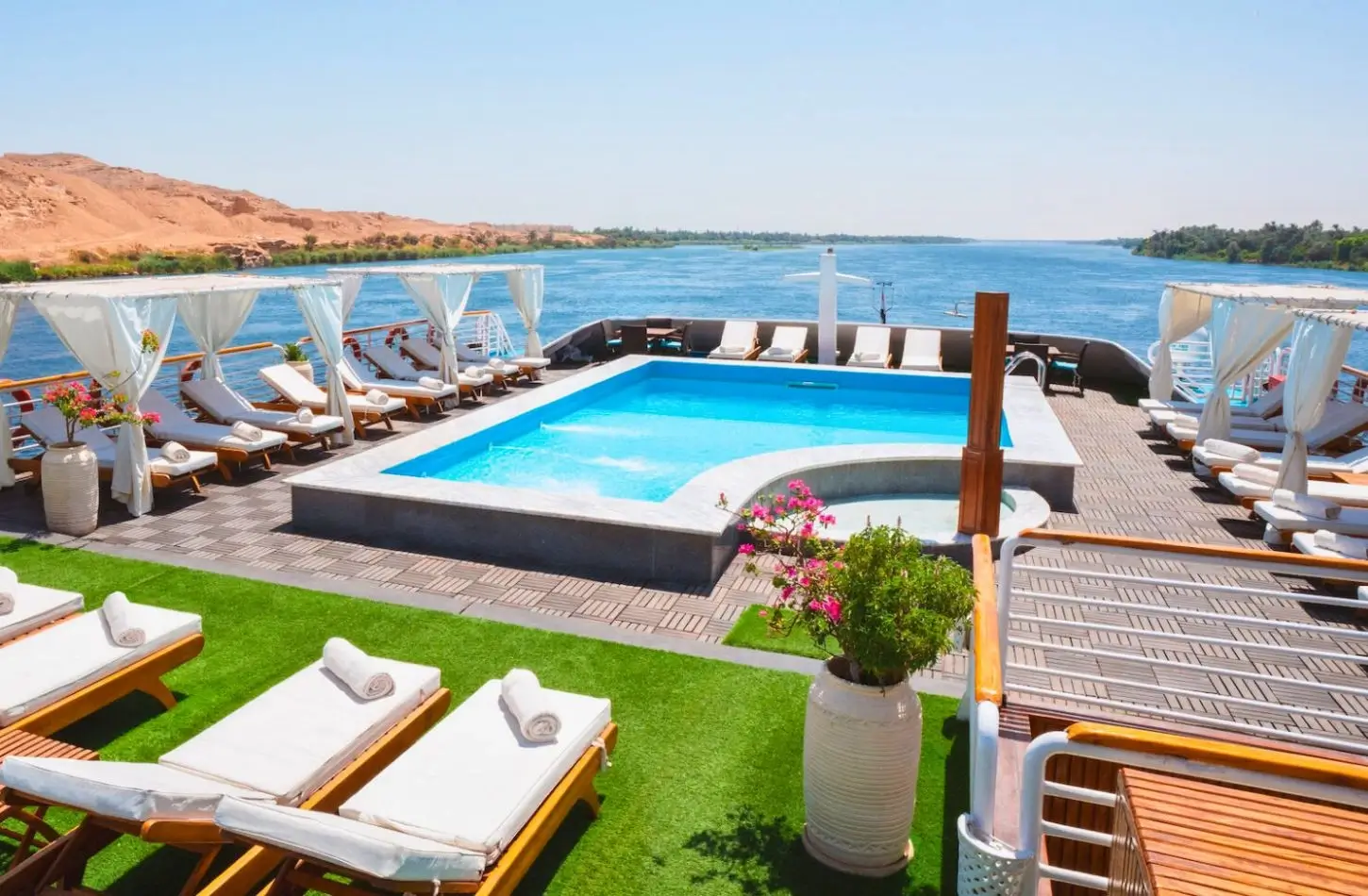
Families do very well on Nile cruises, largely because the itinerary is predictable and supervised. The main things to watch are the same ones that apply on any cruise ship: don’t let children climb or lean on deck railings, keep them out of the midday sun between roughly noon and 3pm, and hold hands through crowded temple courtyards where it’s easy for a small child to slip out of sight for a moment. Most ships in the standard-to-deluxe range have shallow pools rather than open water access, and staff are generally attentive to families without being intrusive.
Temple visits involve real walking on uneven stone and sometimes steep or narrow passages (the Valley of the Kings tombs, for instance), so a stroller isn’t practical for every stop — a child carrier works better for younger kids. For a full breakdown of what to expect age by age, see our guide to taking a Nile cruise with kids.
How to Choose a Safe, Licensed Nile Cruise Operator
Most of the safety difference between a great Nile cruise and a disappointing one comes down to which company you book with, not the river itself. A few checks go a long way:
- Confirm the vessel is licensed by Egypt’s Ministry of Tourism — legitimate operators list this without hesitation.
- Check how recently the ship was refurbished. Older vessels aren’t automatically unsafe, but well-maintained fittings, railings, and fire systems matter.
- Ask who leads shore excursions. A qualified, licensed Egyptologist guide is standard on reputable cruises and is a genuine safety asset at crowded sites.
- Read recent reviews, not just star ratings — specifically ones that mention crew responsiveness, cleanliness, and how issues were handled.
- Avoid booking through unlicensed street agents in Luxor or Aswan promising same-day discounts; work with an established operator instead.
Our guide on how to pick the best Nile cruise walks through vessel classes, cabin types, and what’s typically included, so you know exactly what you’re comparing before you book.
Practical Safety Tips for Every Nile Cruise Passenger
A few habits make the whole trip smoother, regardless of which cruise you choose:
- Carry a photocopy or photo of your passport and keep the original with the crew as required for immigration checks.
- Drink bottled or filtered water only, and carry a refillable bottle to top up from the ship’s supply rather than buying plastic bottles constantly.
- Wear closed-toe shoes for temple visits — ancient stone floors are uneven, and sandals offer little protection against stubbed toes or heat.
- Pace yourself in the heat, especially between May and September; schedule strenuous sightseeing for early morning departures rather than midday.
- Keep small bills on hand for tipping guides, drivers, and cabin crew — it’s expected and appreciated, and our tipping guide for Nile cruises has suggested amounts by role.
- Register your trip with your embassy’s traveler program if one is available, and note the nearest consulate for Luxor or Aswan before you sail.
- Buy travel insurance that covers medical evacuation — a genuinely useful safety net given how far Upper Egypt is from major hospitals in Cairo.
None of these are Egypt-specific paranoia; they’re the same habits that make any international trip smoother, applied to the specifics of a Nile itinerary. If you’re still mapping out the rest of the trip, our Nile cruise itinerary guide and notes on the best time for a Nile cruise are worth reading alongside this one.
Frequently Asked Questions
Is it safe to go on a Nile cruise right now?
Yes, Nile cruises are currently operating without disruption along the Luxor-to-Aswan corridor, one of Egypt’s most secured tourism zones. Tourist police are stationed at docks and temples, and licensed vessels undergo regular safety inspections before sailing.
Is it safe to drink the water on a Nile cruise?
Tap water isn’t safe to drink anywhere in Egypt, including onboard. Reputable cruise ships supply bottled or filtered water throughout cabins and dining areas, so stick to that and avoid tap water even for brushing your teeth.
Can you swim in the Nile River during a cruise?
Swimming in the Nile isn’t recommended due to the risk of schistosomiasis, a parasite found in untreated freshwater. Use the cruise ship’s pool instead, which is chlorinated and included on nearly every standard-to-luxury vessel.
Is a Nile cruise safe for solo female travelers?
Yes, a guided Nile cruise is one of the more comfortable ways to see Egypt solo, since transfers, meals, and sightseeing are all organized within a group. Dressing modestly and staying with the group during shore excursions are the main precautions worth taking.
Is a Nile cruise safe for families with young children?
Families generally do well on Nile cruises thanks to the structured itinerary. Keep kids away from deck railings, plan around the midday heat, and hold hands through crowded temple courtyards where footing can be uneven.
What’s the biggest safety risk on a Nile cruise?
The most common issues are practical, not security-related: heat exhaustion, dehydration, and slips on wet sun decks early in the morning. Booking a licensed operator and following basic sun and hydration precautions covers most of the risk.
CONCLUSION
A Nile cruise in 2026 is as safe as any well-run, guided trip through a heavily monitored tourism corridor can be — the real work is choosing a licensed operator and following the same common-sense habits you’d use on any trip abroad: hydrate, protect yourself from the sun, stick with your guide at sites, and keep your documents secure. Once you’re comfortable with the safety picture, the only decision left is which ship fits your trip. Browse our full range of Egypt Nile cruises to compare routes, cabin classes, and departure dates, and reach out if you’d like help matching an itinerary to your travel dates.