Is a solo Nile cruise safe, and what does it cost?
Yes — very safe. Costs $100–$500/night plus a 20–100% single supplement (often waived off-season).
- 💰 Budget $100–$150/night 111m high, 3.8km long, created Lake Nasser
- 🛏️ Single supplement 20–100% extra — ask about waivers May–Oct
- 🛡️ Safe for solo & female travelers — guided tours, assigned dining, 24hr crew
- ⛵ Dahabiyas (8–20 guests) offer the friendliest solo social experience
- 📅 Best value season: late April–early December for lower supplements
A solo Nile cruise between Luxor and Aswan usually costs between $100 and $500 per night, depending on the type of ship. Most companies charge a single supplement of 20 to 100 percent on top of the regular rate for two people. If you book during the shoulder season, from late April to early December, you can often get this extra fee reduced or even waived. This is the best way for solo travelers to save money on the trip.
I’ve spent years planning Nile trips for people who arrive on their own. Some feel nervous, but most are excited for the experience. The question I hear most isn’t “what should I see,” but “how much will this really cost, and will it feel awkward to travel alone?” Most articles about solo Nile cruises don’t give clear answers to these questions. This one does, and also covers safety, ship options, and which parts of the usual itinerary are truly worth your time.
Why a Solo Nile Cruise Adventure Works (and Who It’s Best For)
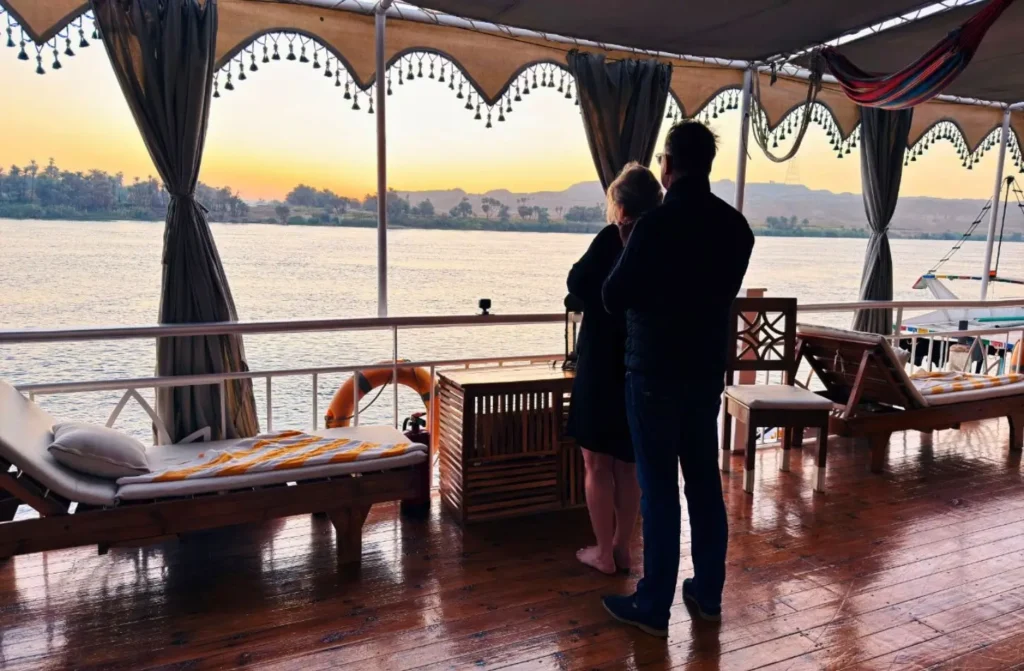
A Nile cruise takes care of the two biggest challenges of traveling independently in Egypt: getting from place to place and eating dinner alone in a city where you may not speak the language. Once you’re on the boat, your cabin, meals, and daily trips are all arranged for you. You can still pick which extra activities you want and decide how much time you spend with others or how much time you spend relaxing on deck. Most of the travel hassles that make solo trips tiring in other countries are taken care of here.
This option works well for two main groups: people visiting Egypt for the first time who want some structure but don’t want to join a big group tour, and travelers who have already seen Cairo and now want a slower, more thoughtful experience on the river. It’s less ideal for those who prefer large group tours. If you want to be surrounded by people all the time, a bigger land tour that includes a Nile cruise might be a better fit than a smaller ship.
The Single Supplement: What It Really Costs and How to Avoid It
This is usually the first thing solo travelers want to know, but most Nile cruise guides omit it. Cabins are set up and priced for two people. If you’re traveling alone, you’ll pay a single supplement because the operator is missing out on selling that cabin to a couple.
In reality, the single supplement can be anywhere from about 20% up to 100% of the regular double rate, depending on the ship and the time of year. Here are a few ways to reduce that extra cost:
- Tour Egypt during the low season (May-October). There will be fewer people, and the operator will often be happy to cut or eliminate the supplement to fill the cabins rather than sail with them empty.
- Inquire about special solo departures. Operators offer certain solo trips with no supplement on particular days; it’s worth asking about.
- Consider traveling on a smaller dahabiya. There are a few smaller or older boats that offer genuine single cabins at the price of one passenger, rather than reduced rates for doubles.
Reference: Approximate Nile Cruise Costs by Category (per person, per night, mid-2026)
| Category | EGP (approx.) | USD (approx.) | What’s typically included |
|---|---|---|---|
| Budget cruise ship | 4,900 – 7,400 | $100 – $150 | Cabin, 3 meals/day, guided shore excursions |
| Mid-range cruise ship | 7,400 – 12,300 | $150 – $250 | Upgraded cabin, more excursions, some onboard extras |
| Luxury cruise ship | 12,300 – 24,600+ | $250 – $500+ | Spacious cabin/suite, full-board dining, Egyptologist-led tours, spa/pool access |
| Single supplement (typical range) | — | +20% to +100% of base rate | Waived or reduced on some off-season and solo-specific departures |
Exchange rate used: approximately 49 EGP to 1 USD (July 2026). Rates fluctuate — always confirm the current rate before booking, and check with your bank about any foreign transaction fees.

Choosing Your Ship: Luxury, Dahabiya, or Standard Cruise
The ship you choose has a bigger impact on your trip than almost any other choice.
- Large standard cruise ships, which usually have 60 or more cabins, are the most common and often the most affordable. They’re a good choice if you want to be part of a bigger group, meet lots of different people at shared meals, and don’t mind following a set schedule.
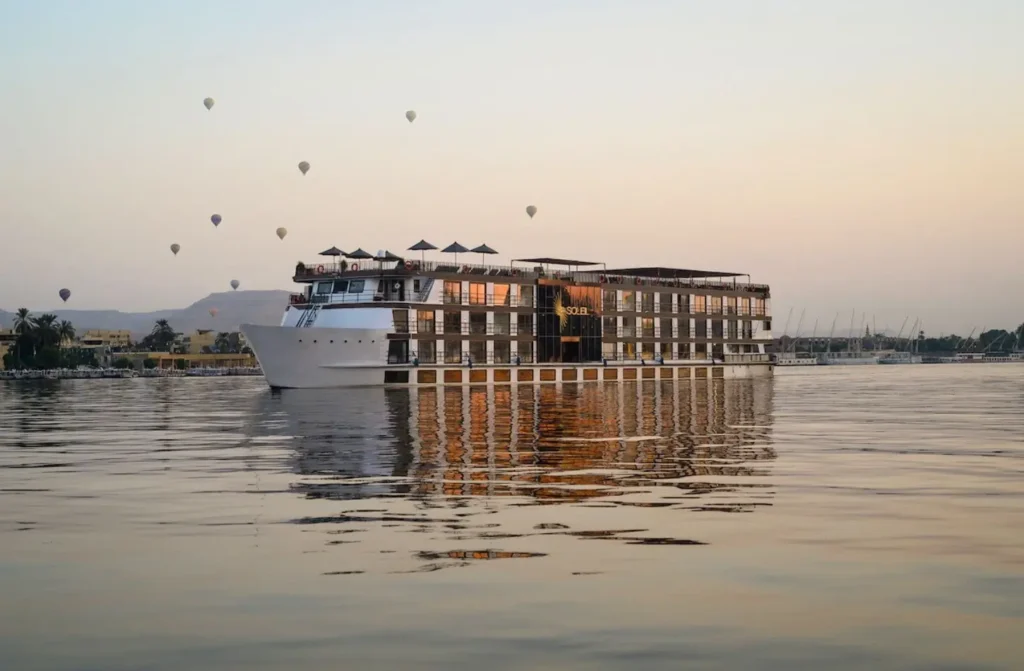
- Boutique or luxury ships have fewer but larger cabins. They cost more per night, but you get quieter spaces, more personal service, and often more freedom to plan your day between excursions.
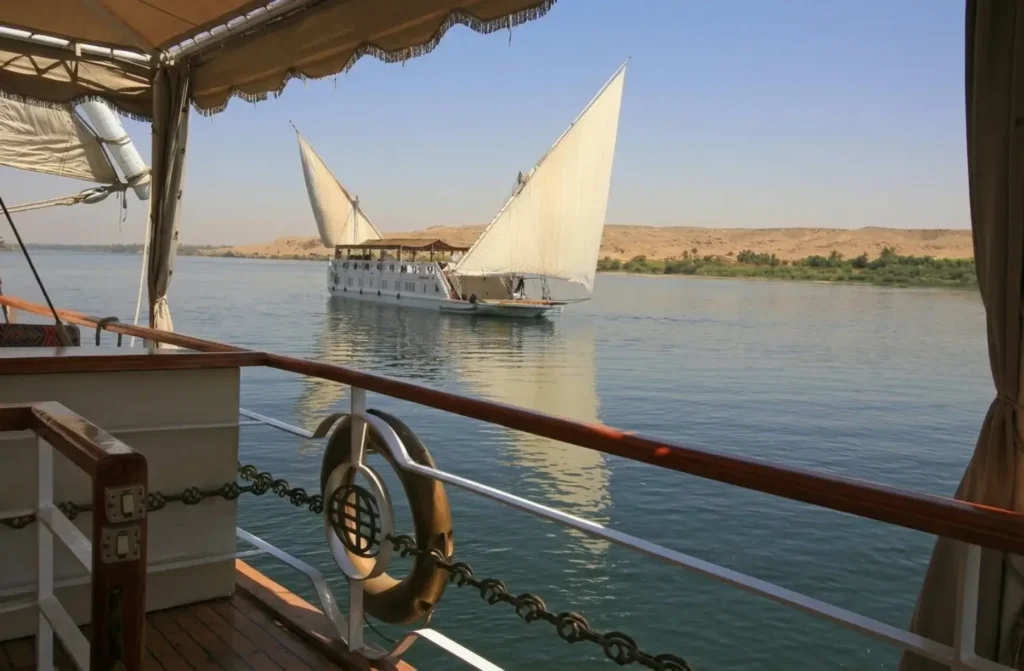
- Dahabiyas are traditional sailboats that carry about 8 to 20 guests. They offer the most intimate experience, with the same small group at every meal. This setup is often friendlier for solo travelers, since the group is small enough that everyone gets to know each other.
Pro tip from Yousef: If your main goal is to meet people, a smaller dahabiya usually offers a more genuine social experience than a 60-cabin ship. On bigger ships, it’s easy to end up eating with the same two people all week and not meet anyone else.
Is a Solo Nile Cruise Adventure Safe? What to Actually Expect
A Nile cruise is a well-organized and supervised way to see Egypt, which makes it a comfortable choice for solo travelers. Transfers, meals, and daily excursions are planned ahead of time, and a guide usually joins you for almost every trip off the ship.
Here are some practical tips to help you prepare:
- Egypt’s Ministry of Tourism and Antiquities now requires card payments instead of cash at most major archaeological sites. Bring a card without foreign transaction fees, since you will need it for entrance tickets.
- At temples and religious sites, make sure to cover your shoulders and knees. This rule is for both men and women, and guides will remind you if needed.
- Evenings along the main waterfront areas in Luxor and Aswan are usually calm, especially where tour groups gather. Like in any city, it is best to avoid walking alone on poorly lit side streets late at night.
- Write down your ship’s cabin number and dock location somewhere other than your phone. In bigger ports, many ships can be docked together, and it is easy to forget which gangway is yours after dark.
Your Route: Luxor to Aswan, Stop by Stop
The itineraries range from three to seven days and travel between Luxor and Aswan, two great river cities in Egypt. Let’s look at what is in store for you at each location, including entry fees.
Luxor: Temples, Tombs, and Timeless History
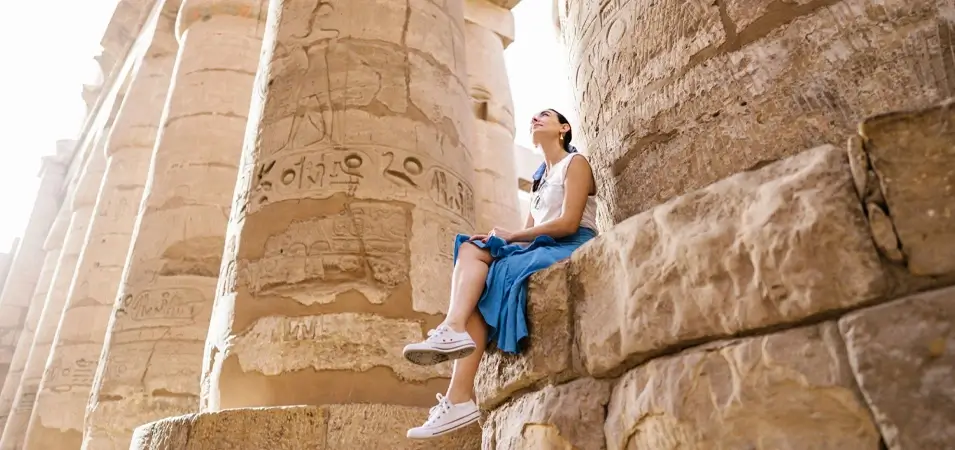
On the East Bank, the Karnak Temple complex is the largest religious site in Egypt. If you visit early in the morning before the tour buses arrive, you might have its central colonnade almost to yourself. Entrance costs about 300 to 600 EGP (roughly $6 to $12).
The Luxor Temple is beautifully illuminated after dark and costs around 250-500 EGP (about $5-$10). If you have time, it is worth visiting both during the day and at night when it is lit up.
In the West Bank, a ticket to the Valley of the Kings costs about 750 EGP (roughly $14-$15) and lets you choose three tombs to visit. The Tutankhamun tomb needs a separate ticket, usually 700 EGP (about $14) in addition to the main fee.
The Temple of Hatshepsut also requires a separate ticket, around 200 to 440 EGP ($4 to $9). You can see the Colossi of Memnon from the road for free, making it one of the best no-cost stops on the West Bank.
Edfu: The Temple of Horus
The Temple of Edfu, dedicated to the falcon god Horus, is one of Egypt’s best-preserved temples. It survived so well because it was buried in sand for centuries, which protected its walls and reliefs. Entrance costs about 550 EGP (about $11). Visiting Edfu usually takes less time than Karnak or the Valley of the Kings, so it is often a quieter place to explore on your own.
Kom Ombo: Dual Temple of Sobek and Horus
The Temple of Kom Ombo is the only temple in Egypt dedicated to two gods simultaneously. Entry costs about 450 EGP ($9). Its spot by the river makes it a great place for sunset photos, and the Nilometer, once used to measure flood levels, is worth spending an extra ten minutes to see, even though most groups walk right by it.
Aswan: Serenity and Cultural Immersion
Philae Temple, dedicated to Isis, is reached by a short boat ride and is part of the Nubian Monuments UNESCO World Heritage site, along with Abu Simbel. Entry costs about 300 to 450 EGP ($6 to $9), plus a small boat fare, usually under 100 EGP ($2) for a round trip.
The Unfinished Obelisk is a smaller, less expensive stop (about 100 to 150 EGP, or $2 to $3), and it offers a better idea of ancient quarrying methods than any museum display.
A guided walk through a Nubian village is usually part of standard itineraries, with no extra cost except for tipping your guide. Kitchener’s Island, also known as the Aswan Botanical Garden, is a quieter and less-visited stop. Entry is a small fee, usually under 100 EGP, and it is one of the few truly peaceful green spaces along the route.
Abu Simbel: Monumental Temples
If you visit Abu Simbel, the entrance fee is about 800 EGP for foreign adults (around $16). Most solo travelers join a shared group tour from Aswan rather than arranging private transport, so the total cost for transport, a guide, and entrance fees is usually $80 to $120 for the day. Sunrise here is especially memorable.
Twice a year, direct sunlight briefly illuminates the inner sanctuary on solar alignment dates, and every day it illuminates the facade. Watching guests experience this has been one of the most impressive moments I’ve seen in Egypt.
Solo Female Travelers: What’s Different
In recent years, Egypt’s Nile cruise industry has made real changes to welcome solo female travelers. With guided excursions, assigned dinner tables, and a 24-hour ship crew, you are rarely alone unless you want to be. Here are a few helpful details:
- If you want more privacy, ask for a cabin that is not near the crew or staff quarters. Most ships can arrange this easily if you mention it when you book.
- A light scarf or shawl is handy for more than just temple visits. Decks can get cool in the evenings, and it also works well for covering your shoulders at religious sites.
- On larger ships, dining tables are usually assigned. If you would like to sit with different people instead of staying at the same table all week, just ask the ship’s host on your first day. This is a common request.
What’s Overrated (and What’s Worth Your Time)
Overrated: Many standard tours include stops at perfume, papyrus, or alabaster “demonstration” shops. These are often presented as cultural experiences, but they are really just retail stops that take time away from the main sites. If your tour includes one, ask your guide if you can skip it.
Overrated: The hot air balloon ride is beautiful when it goes ahead, but wind-related cancellations are common, especially outside the cooler months. I would treat it as a bonus rather than a must-do. Plan to spend $60–$120, and be prepared for a possible last-minute cancellation.
Worth your time: Watch the sunrise for free from outside Karnak’s perimeter before the site opens. You don’t need a ticket, and the light on the pylons is often better than what you see in most daytime photos taken inside. Also worth visiting are the quieter West Bank tombs beyond Tutankhamun’s. These get far fewer visitors and are much cheaper per tomb.
How to Verify You’re Booking a Legitimate Operator
The Nile cruise market in Egypt ranges from well-known, licensed companies to informal options that may leave you with no support if problems arise. Before you pay any deposit, keep the following in mind:
- Check that the operator or ship is licensed by Egypt’s Ministry of Tourism and Antiquities. Legitimate companies will confirm this right away if you ask.
- Look up reviews on at least two independent websites, not just the testimonials found on the operator’s own site.
- Make sure you get your itinerary, cabin type, and total cost (including any single supplement) in writing before you pay a deposit. If a verbal quote does not match the written confirmation, consider it a warning sign.
- Be careful with prices that are much lower than those listed in the table above. If a deal seems too good, it often means you will get a smaller cabin, an older ship, or extra charges for later-added excursions.
Nile Cruise FAQs for Solo Travelers
Are river cruises good for solo travelers?
Yes. Taking a Nile river cruise is an easy way to try solo travel for the first time, since your meals, transport, and daily excursions are all organized for you. If you like your own company but also enjoy meeting others at meals or on tours, this option usually works well.
Do Nile cruise ships charge a single supplement for solo travelers?
Most cruise lines do charge a single supplement, usually between 20% and 100% of the double-occupancy rate. This fee is often lower or even waived during the off-season (May to October) or on trips aimed at solo travelers. It’s a good idea to ask directly, since the listed price may not be final.
Is a Nile cruise safe for someone traveling alone?
Yes, in general. Your transfers, meals, and most excursions are included in the itinerary, and a guide accompanies you on almost every shore visit. As with any travel, take basic precautions: keep your valuables safe, dress modestly at religious sites, and avoid walking alone in unlit areas at night.
What is the best time of year for a solo Nile cruise?
The shoulder season, from late April to early December, usually means fewer crowds and better deals for solo travelers, since ships have more empty cabins. However, May to October is also the hottest and sometimes wettest time of year, so be ready for the heat if you go then.
Can solo female travelers safely join a Nile cruise in Egypt?
Yes. Nile cruises are often seen as one of the most comfortable ways for women to travel alone in Egypt, thanks to the organized excursions, assigned dining, and the crew always being around. It’s completely normal to ask for a cabin or dining setup that makes you feel comfortable.
Final Note from Yousef Atta
If you’re thinking about taking a solo Nile cruise, my main advice is to remember that while traveling alone does cost more than going with someone, the difference is often less than you might expect. This is especially true if you ask about off-season deals and trips designed for solo travelers.
The temples, the river, and the peaceful time on deck are all just as special whether you go alone or with a companion. Check the real prices, choose a trustworthy operator, and the rest of your trip should go smoothly.