What is a Dahabiya Nile cruise?
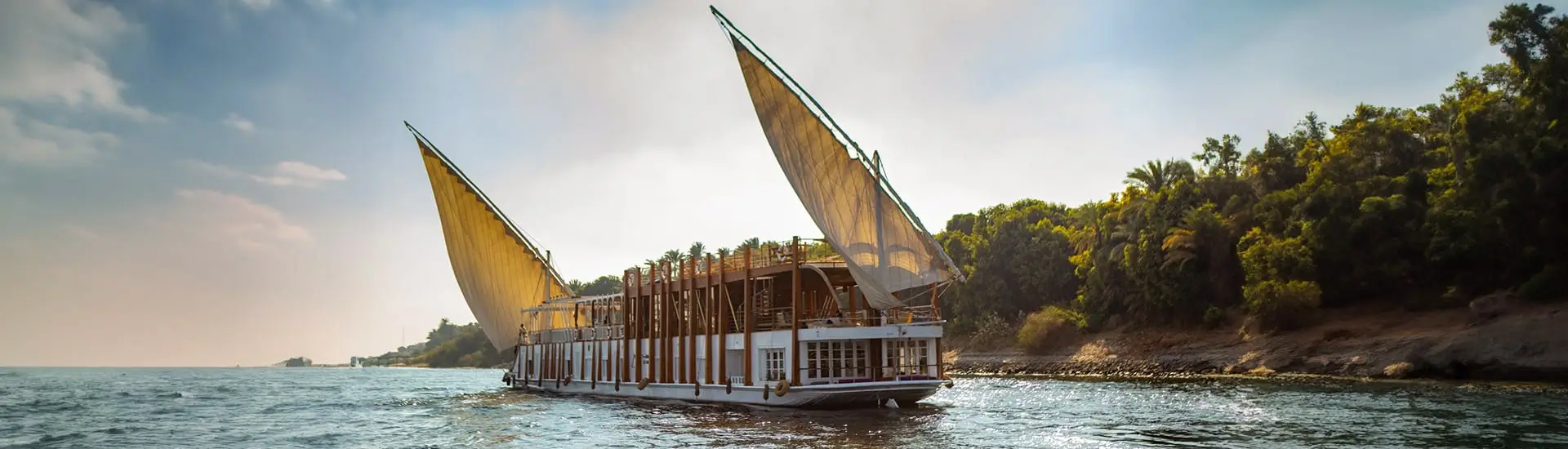
A Dahabiya is a traditional, wind-powered Egyptian sailboat with
4–8 private cabins (8–16 guests), sailing between Luxor and Aswan —
quieter, slower, and more intimate than a standard Nile cruise ship.
- ⛵ Wind-powered & near-silent — no engine noise, no crowds
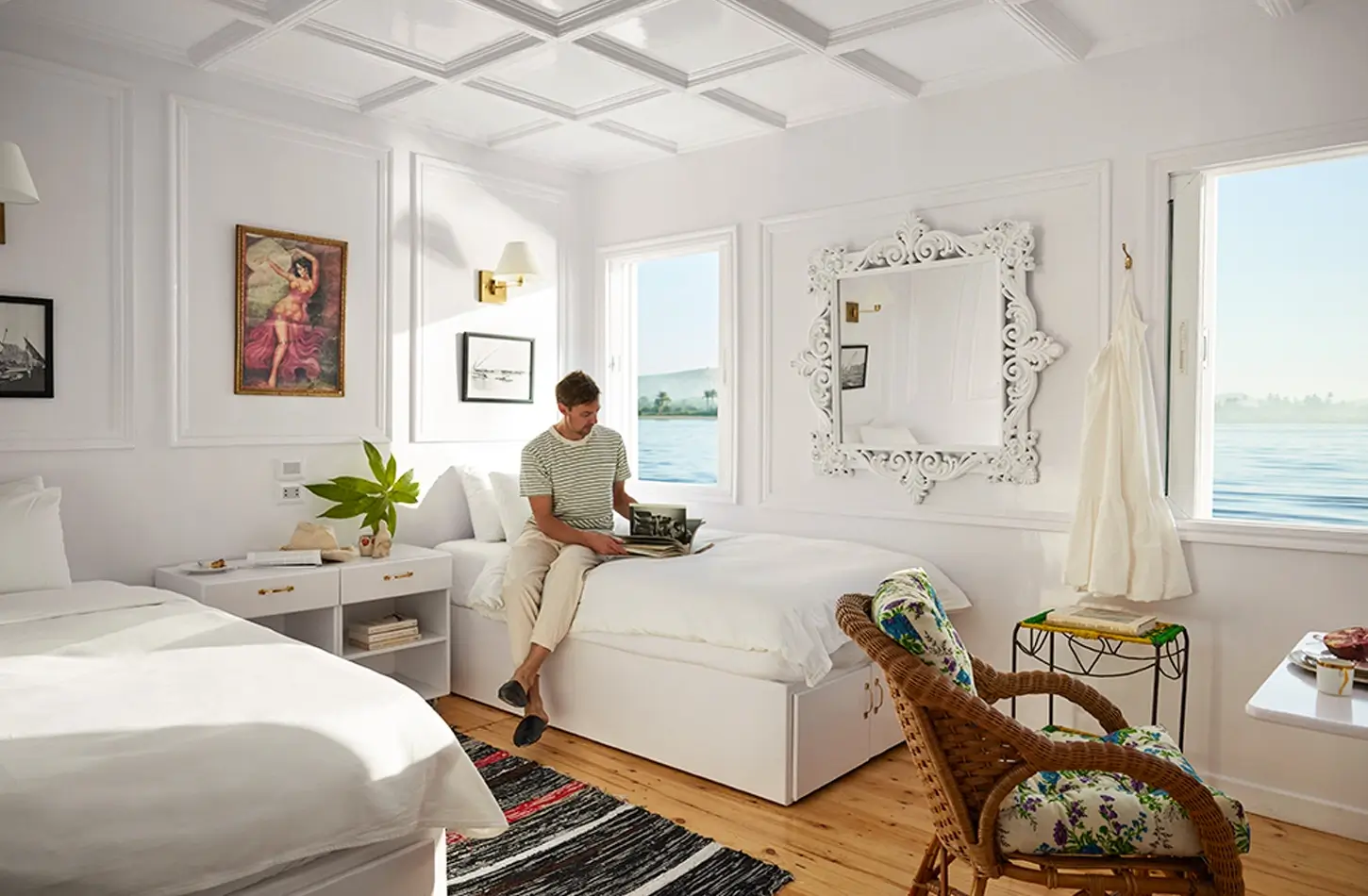
- 🛏️ Just 4–8 cabins, 8–16 guests — true boutique-hotel feel
- 🏛️ Docks at hidden sites like Gebel el-Silsila, past the crowds
- 💰 $150–$600+ per person/day ; best value on 4–7 night trips
- 📅 Book Oct–Apr — Oct & Nov bring the best light and weather
If there is one way to experience Egypt that I genuinely believe changes how you see the world, it is sailing the Nile on a dahabiya. Not on a floating hotel with 200 other tourists, not on a rushed shore excursion bus, but on a traditional, wind-powered vessel with a handful of cabins, a dedicated crew, and the Nile moving silently beneath you at the pace of a long afternoon.
In this guide, I am going to tell you everything — what a dahabiya actually is, where the word comes from, how it compares to a standard Nile cruise, what your days look like on board, how much it costs, and exactly how to choose the right boat for your journey.
What Is a Dahabiya — and What Does the Name Mean?
The word dahabiya comes from the Arabic word dahab, meaning gold. The name traces back to the gilded state barges that carried Egypt’s Muslim rulers along the Nile during the medieval period — vessels so opulent they were described as floating palaces.
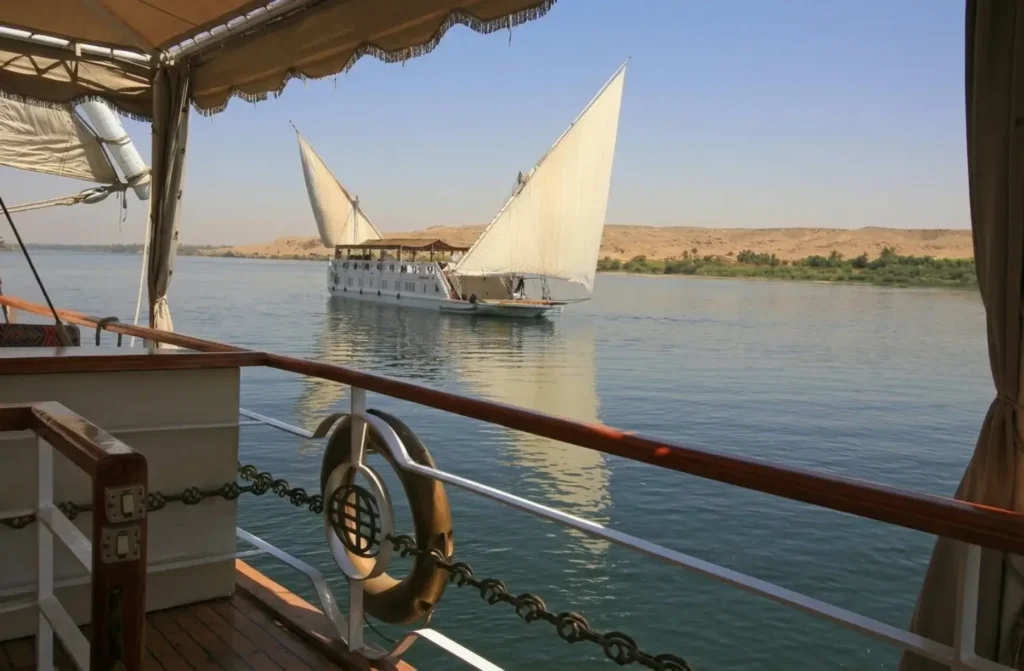
Today, a dahabiya is a traditional two-masted Egyptian sailing boat with four to eight private cabins. It moves along the Nile using wind power — and when the wind is calm, a small tugboat provides a gentle assist. What it does not have is a noisy engine, a crowded buffet dining room, or 150 strangers jostling for the same view. What it does have is silence, elegance, and the distinct feeling that the Nile belongs entirely to you.
The Remarkable History of the Dahabiya
Dahabiyas have existed in some form since the time of the pharaohs, but the vessels that inspire today’s luxury boats trace their golden age to the 19th century. Between the 1840s and 1900s, wealthy European and American travelers — the original “grand tourists” — would charter private dahabiyas in Cairo and spend forty to fifty days sailing south to Luxor and Aswan, stopping at temples that had not yet been cataloged by archaeologists.
The passenger list of those Victorian-era sailings reads like a literary hall of fame. Agatha Christie famously drew inspiration for Death on the Nile from her own Nile journey. Florence Nightingale wrote extensively about her dahabiya voyage in her private letters. Gustave Flaubert documented his passage in vivid, sensory detail. For all of them, the dahabiya was not just transport — it was the experience itself.
Then, in the early 1900s, Thomas Cook introduced the first steamboat service on the Nile, the railway expanded south to Aswan, and dahabiyas slowly faded from fashion. It was not until the late 20th century that these intimate floating boutique hotels began their revival — and today, I believe they offer something no other form of Egyptian travel can match.
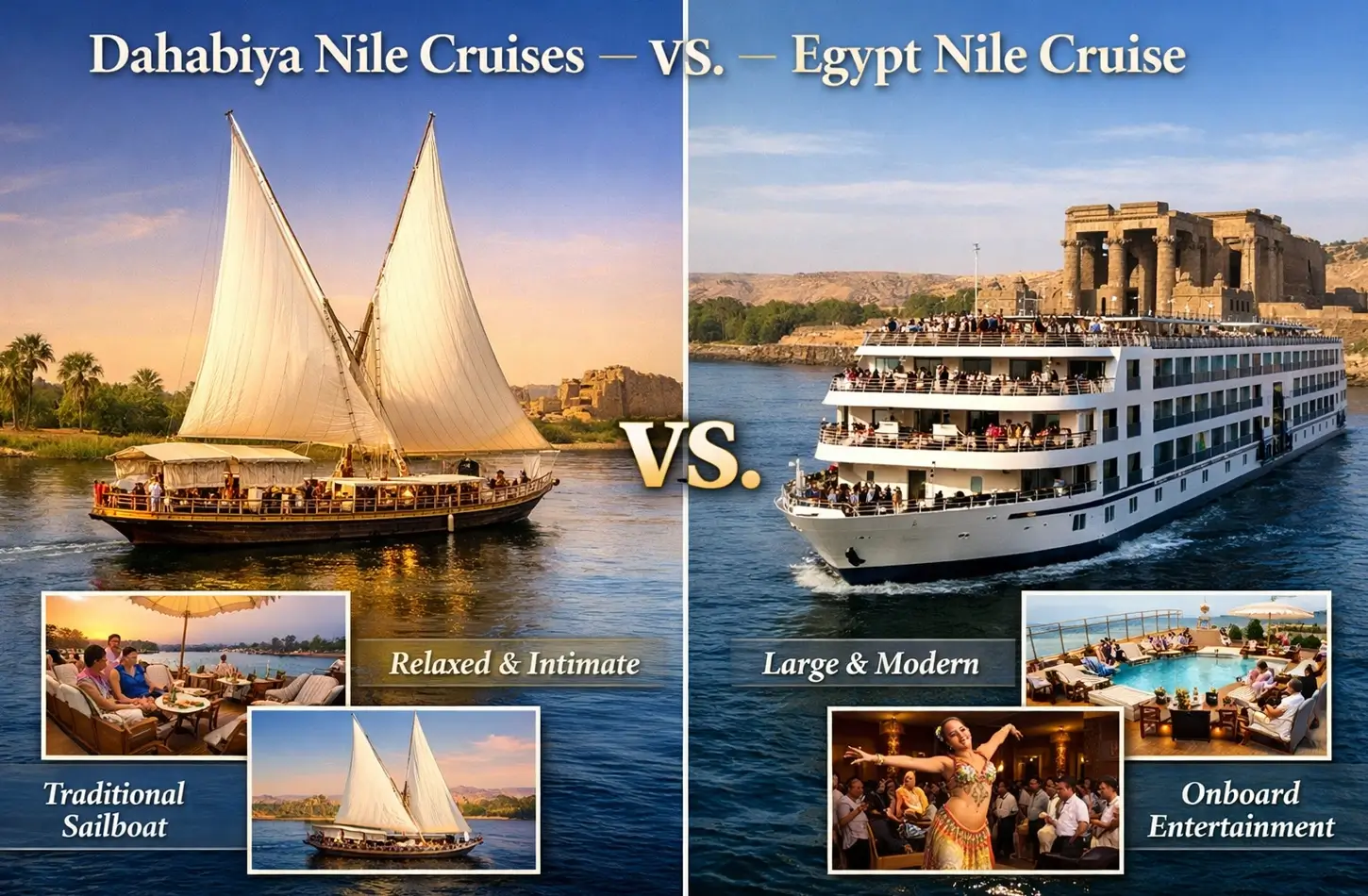
Dahabiya vs. Standard Nile Cruise: The Real Differences
I am often asked whether a dahabiya is “worth it” compared to a standard Nile cruise. My honest answer is: it depends entirely on what kind of traveler you are.
Here is how the two genuinely compare:
| Dahabiya Nile Cruise | Standard Nile Cruise | |
|---|---|---|
| Size | 4–8 cabins, 8–16 guests | 30–70+ cabins, 60–150+ guests |
| Pace | Slow, flexible, unhurried | Fixed, structured schedule |
| Dining | Freshly prepared, à la carte or table d’hôte | Buffet-style, cafeteria setting |
| Access | Small jetties, hidden sites, Nubian villages | Main tourist docks only |
| Atmosphere | Intimate, quiet, boutique hotel feel | Social, lively, hotel-style |
| Power | Wind-sailed (eco-friendly, near-silent) | Motor/engine-powered |
| Best For | Couples, honeymooners, small groups, cultural travelers | Families, solo travelers, social groups, budget travelers |
| Price | Higher per person | Wide range (budget to luxury) |
A standard Nile cruise — whether standard, deluxe, or luxury — offers fantastic value, professional excursions, and a lively social atmosphere. But if you are the kind of traveler who finds magic in stillness, who wants to dock at a sandbank and watch the sun set over the desert in complete silence, a dahabiya is in a different category entirely.
What Your Days Look Like on Board a Dahabiya
People often ask me what a typical day on a dahabia is like. The honest answer is: slower and richer than you expect, in the best possible way.
- Morning: You wake up to the sound of the Nile, not an alarm clock. Breakfast is served on the open deck in the sun—strong Egyptian coffee, fresh bread, ful medames, local cheese, and seasonal fruit. It’s hard to describe the beauty of the light over the water at this time. The crew knows your preferences by the second day. No one rushes you anywhere.
- Mid-morning: A guided trip to a temple—but not the usual way. Because dahabias sail slowly and dock at less busy times, they often arrive at places like Edfu or Kom Ombo before the big cruise buses. Your guide walks at your own pace, answers your questions in detail, and tells you stories you won’t find in the travel books.
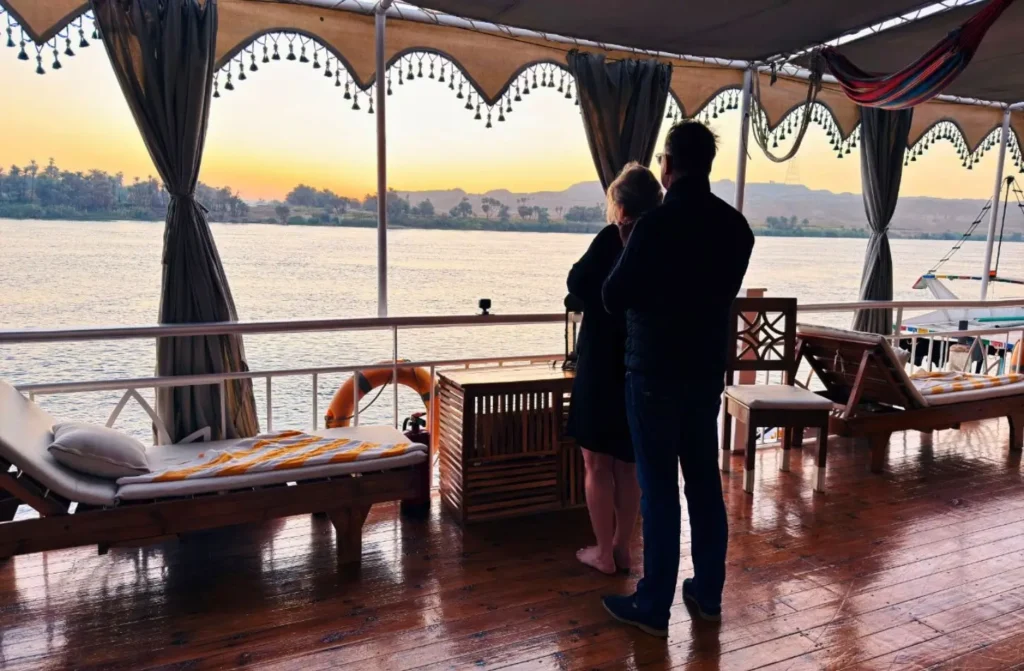
- Afternoon: We return to the ship, and lunch is served in the shaded dining area, or on the deck on cooler days. After lunch, the ship continues its voyage. This is my favorite time—to lounge in a sun lounger, watching the palm-fringed banks of the Nile, occasionally hearing the sound of a donkey on a distant bank or a fisherman casting his net. Life on the Nile here remains unchanging in its rhythm.
- Evening: Cocktail time on the upper deck as the sun dips behind the desert cliffs and the sky paints a breathtaking array of colors. Dinner is served—truly excellent food, not a cheesy buffet, but dishes prepared with fresh ingredients. Some evenings, the tour guide explains the archaeological site for the next day. Other evenings, there is nothing but the stars.
Temples and Ancient Sites You’ll Explore
One of the greatest advantages of dahabiya trips is the ease of access to archaeological sites. Thanks to their small size, dahabiyas can dock in locations inaccessible to larger cruise ships. Here’s what a typical trip from Luxor to Aswan includes:
Luxor (Thebes): The starting point for most dahabiya trips. You’ll visit Karnak Temple, one of the largest religious complexes ever built, and Luxor Temple, which is dazzlingly illuminated at night. Visiting the Valley of the Kings and the Temple of Hatshepsut at Deir el-Bahari are also morning excursions that I find incredibly moving, even on the return trip.
Esna: The Temple of Khnum in Esna lies below modern street level, in a deep pit 9 meters deep, creating a unique experience where you feel as if the ancient world is right beneath your feet.
Edfu: The Temple of Horus in Edfu is one of the best-preserved archaeological sites in Egypt. Standing inside its hypostyle hall is an experience that makes you feel both small and magnificent.
Kom Ombo: The twin temples of Sobek and Horus sit right on the riverbank, visible from the boat before docking. This unique double temple, dedicated to the crocodile and falcon gods, is architecturally stunning and inspires new reflections with each visit.
Gebel el-Silsila: A sandstone quarry often overlooked by large cruise ships. Dahabiya passengers frequently stop here to stroll among the ancient inscriptions and sculptures.
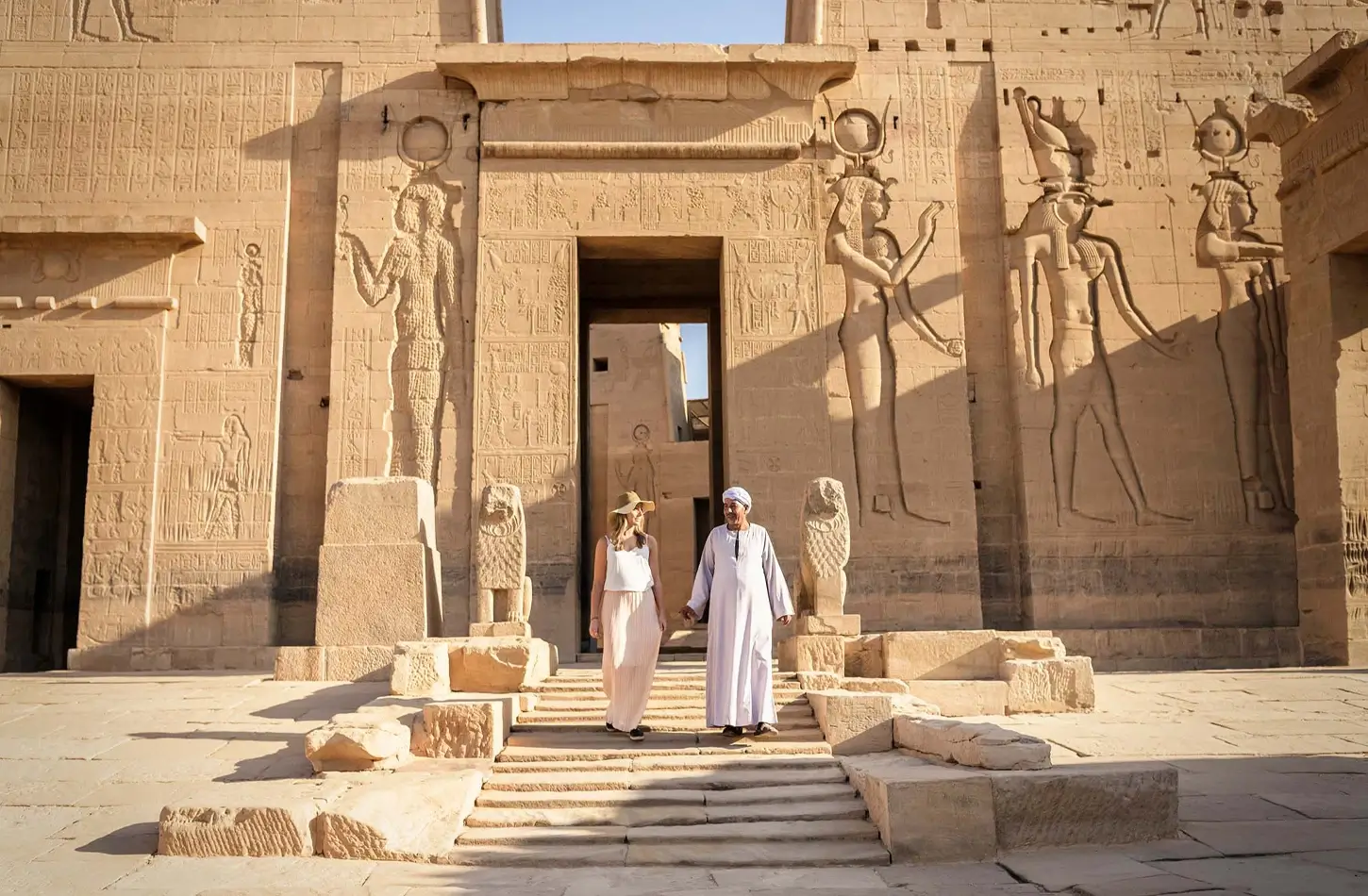
Aswan: The final destination, a city I adore. The Philae Temple, dedicated to the goddess Isis, is situated on an island and is accessible by a short boat ride, adding to its mystique. The surrounding Nubian landscape possesses a different, more delicate beauty.
Best Time to Book Your Dahabiya Cruise
The peak season for a dahabiya cruise runs from October through April, when temperatures across Upper Egypt are comfortable, ranging from around 18°C (64°F) at night to 28°C (82°F) during the day. This is the window I recommend for most first-time travelers, particularly those coming from the UK, USA, Canada, or Europe.
- October and November are my personal favorite months. The light is extraordinary — warm and golden without being harsh — and the Nile feels calm and reflective in the mornings.
- December to February is the peak tourist season and the coolest period. I recommend booking early, particularly for the most sought-after dahabiyas, as they sell out months in advance.
- March and April offer wonderful weather and the added cultural richness of the Sham el-Nessim spring festival — one of Egypt’s oldest celebrations, dating back to pharaonic times and still observed across all religious communities.
- May and September are shoulder season — quieter, with daytime temperatures beginning to climb (35°C+), but often offering better availability and slightly lower rates.
- June to August is summer, and the heat in Upper Egypt is serious — consistently above 40°C (104°F). I do not recommend it for anyone not accustomed to extreme heat, though rates are at their lowest.
How Much Does a Dahabiya Cruise Cost?
I want to give you honest numbers here, because vague pricing frustrates me as a traveler, and I assume it frustrates you too.
Per person per day, a dahabiya cruise typically ranges from $150 to $600+ USD, depending on the factors below. Here is how it breaks down in practice:
| Cruise Duration | Approximate Price Per Person |
|---|---|
| 2–3 nights | $300 – $700 |
| 4–7 nights | $700 – $1,800 |
| 8–14 nights | $1,800 – $4,000+ |
| Cabin Type | Approximate Price Per Person |
|---|---|
| Standard Cabin | $300 – $800 |
| Deluxe Cabin | $600 – $1,400 |
| Suite / Panoramic | $1,100 – $3,500+ |
What is typically included: All meals on board, guided temple excursions, airport/hotel transfers, bottled water, tea and coffee, crew service.
What is typically NOT included: International flights, Egyptian visa (currently $25 USD on arrival), personal alcohol (some dahabiyas are dry or charge separately), tips for your crew and guide (I recommend budgeting $10–$15 USD per person per day for crew, and $10–$20 per day for your guide — this matters enormously to local staff), and personal travel insurance.
My advice: Book early, especially for October–February departures. The best dahabiyas — those with 4–6 cabins and exceptional guides — sell out 4–6 months in advance during peak season.
Is a Dahabiya Right for You?
A dahabiya is an extraordinary experience, but it is not for everyone. Let me be direct:
You will love a dahabiya if: you value intimacy and quiet over large-scale amenities; you are traveling as a couple, a small group of friends, or on a private charter; you want flexibility and genuine cultural immersion rather than a fixed itinerary; and you have at least 4–5 nights available.
A standard Nile cruise may suit you better if you are traveling solo and want to meet fellow travelers easily, have a tight budget, are bringing children under 10 who need structured activities, or prefer the security of a very fixed schedule.
How to Choose the Right Dahabiya
When I help travelers select their dahabiya, I think about four things: the boat’s size (smaller boats are more intimate but have fewer amenities), itinerary flexibility (can the route be customized?), guide quality (ask specifically about your guide’s background and languages), and the operator’s reputation.
Do not book a dahabiya based on photos alone. Ask your operator: How many guests maximum? What is the Wi-Fi situation? Is the boat fully air-conditioned? What is the cancellation policy? Can dietary requirements be accommodated?
Top 5 Dahabiya Cruises I Recommend
Based on the dahabiyas I work with most closely, here are my top recommendations:
- Amoura Dahabiya — My top pick for honeymooners and couples. Exceptionally well-appointed cabins, outstanding food, and a crew that anticipates needs before you voice them.
- Princess Farida Dahabiya — A beautiful vessel for travelers who want a more heritage-inspired aesthetic. The upper deck is perfect for evening dining under the stars.
- Sonesta Amirat Dahabiya — Backed by the Sonesta brand, this is an excellent choice for travelers who want dahabiya intimacy with the assurance of a recognized operator.
- Meroe Dahabiya — Ideal for small groups (up to 10 guests) who want a private charter feel. The Meroe also offers particularly strong archaeological guiding.
- Malouka Dahabiya — A good choice for travelers who want solid value at the dahabiya level without compromising on the core experience.
What to Pack for Your Dahabiya Cruise
Packing for a dahabiya is simpler than you might think — and getting it right makes a real difference to your comfort on board.
- Clothing: Lightweight, breathable fabrics are essential. Pack neutral colors that won’t show dust from temple visits. For evenings and dinner on deck, bring one or two smart-casual outfits — nothing formal, but a step above beach wear. When visiting temples and mosques, shoulders and knees must be covered — a light linen shirt and loose trousers work perfectly and double as sun protection.
- Sun protection: I cannot overstate this. A wide-brimmed hat, UV-protection sunglasses, and SPF 50+ sunscreen are non-negotiable. The Nile sun reflects off the water, making it significantly more intense than in most European or North American climates.
- Footwear: Comfortable walking shoes or sandals for temple visits. Flip-flops for the boat deck.
- Health: Pack any prescription medications, a basic first-aid kit, and antacid tablets. Bottled water is provided on board, but carrying a personal reusable bottle for excursions is practical. I also recommend bringing a small torch for early-morning or late-evening temple visits where lighting can be limited.
- Electronics: A power adapter for Egyptian sockets (Type C and F), a portable power bank, and a camera with extra memory cards. The light on the Nile at dawn and dusk is genuinely exceptional — you will take more photographs than you plan to.
Frequently Asked Questions:
What does Dahabiya mean?
The word “Dahabiya” is derived from the Arabic word “dhahab,” meaning “gold.” It originally referred to the gilded royal boats used to transport the rulers of Egypt along the Nile River. Those medieval barges were opulent enough that contemporaries described them as floating palaces, and today’s boats inherited the name rather than the gilding.
How many cabins are there on a Dahabiya?
Most Dahabiyas have 4 to 8 cabins and can accommodate 8 to 16 guests. This makes the Dahabiya experience quite different from traditional Nile cruises, which carry between 50 and 150 passengers. The practical effect is that you travel with a handful of people rather than a full ship, and the crew knows your name by the first evening.
How long is a Dahabiya cruise?
Most Dahabiya cruises last between 4 and 8 nights and sail between Luxor and Aswan (or vice versa). Some luxury cruises extend to 12-14 nights and include a visit to Abu Simbel or Lake Nasser. Four to seven nights tends to give the best value, because the fixed cost of chartering a small vessel is spread across more sailing days without the itinerary feeling stretched.
Are Dahabiyas environmentally friendly?
Yes. Dahabiyas rely primarily on wind power, making them one of the lowest-carbon forms of Nile transportation. The smaller passenger capacity also reduces their environmental impact on sensitive archaeological sites. A small tugboat assists only when the wind drops, so for most of the journey the boat is moving under sail alone rather than under engine power.
Can I book a private dahabiya trip?
Absolutely. For small groups of 4 to 8 people, the price of a private trip is often comparable to that of a group trip, with complete flexibility in choosing the route, schedule, and pace. Because the whole boat is yours, mooring times and shore visits are arranged around your group rather than around a fixed timetable shared with strangers.
What is the difference between a dahabiya and a felucca?
A felucca is a small, open-sided sailboat without cabins, typically used for short trips of two to four hours. A dahabiya, on the other hand, is a full-size vessel with private cabins, en-suite bathrooms, air conditioning, and a fully equipped kitchen. They are two completely different experiences.
Should I tip on a dahabiya trip?
Yes, and it’s important. I recommend allocating $10-$15 per guest per day for the crew and $10-$20 per day for the tour guide. These amounts are distributed among all crew members and represent a significant portion of the local income.
Ready to Sail the Nile the Way It Was Meant to Be Explored?
I have helped hundreds of travelers plan their dahabiya experience, and I can say with genuine confidence that it is unlike anything else available in Egypt — or, for that matter, anywhere in the world. If you are ready to trade the noise of mass tourism for the silence of the Nile at dusk, I would love to help you find the perfect boat.
FAQ
What is a dahabiya Nile cruise?
A dahabiya is a traditional two-masted Egyptian sailing boat with four to eight private cabins, carrying eight to sixteen guests between Luxor and Aswan. It moves under wind power, with a small tugboat giving a gentle assist when the wind drops. There is no engine noise, no buffet crowd and no queue for the view.
What does the word dahabiya mean?
It comes from the Arabic word dahab, meaning gold. The name traces back to the gilded state barges that carried Egypt’s Muslim rulers along the Nile in the medieval period — vessels so opulent that contemporaries described them as floating palaces. The modern boats inherit the name rather than the gilding.
How is a dahabiya different from a Nile cruise ship?
Scale and pace. A dahabiya takes eight to sixteen guests where a cruise ship takes a hundred and fifty, and it sails rather than motors. That means silence on board, and the ability to moor at smaller sites such as Gebel el-Silsila that larger vessels cannot reach or do not schedule.
How much does a dahabiya cruise cost?
Rates run from about $150 to $600 or more per person per day, depending on the boat and the season. Trips of four to seven nights tend to give the best value, since the fixed costs of chartering a small vessel are spread across more sailing days without the itinerary feeling stretched.
When is the best time for a dahabiya cruise?
The season runs from October to April. October and November are the strongest months, combining the best light on the river with comfortable temperatures. Because a dahabiya depends on wind rather than engines, the sailing conditions in those months matter more than they would on a motorised ship.
Are dahabiyas a modern invention?
No. Vessels of this kind have existed in some form since pharaonic times, but the boats that inspire today’s luxury dahabiyas belong to the nineteenth century. Between the 1840s and 1900s wealthy European and American travellers chartered private dahabiyas in Cairo and spent forty to fifty days sailing south to Luxor and Aswan.