How do you pick the best Nile cruise?
Choose by route, ship tier & season. Best for first-timers: 4-night deluxe, Luxor–Aswan, Oct–Apr, ~$650–$1,900pp.
- 🚢 4 ship tiers: Standard $100–150/night, Deluxe $180–320, Luxury $400–900+, Dahabiya from $1,500 (4–5 nights)
- 📅 3 nights = highlights only; 4 nights = ideal balance; 7+ nights = Cairo to Aswan
- 🌡️ Best season: Oct–Apr; shoulder months (Mar–Apr, Sep–Oct) save 15–25%
- 🧾 Budget separately: $30 e-visa, entrance fees, tips & Abu Simbel ($85–120)
- ✅ Check: ship renovation date, guide type (private vs. shared), operator license
Choosing the right Nile cruise comes down to three main choices: your route (Luxor to Aswan or the other way around), the type of ship (standard, deluxe, luxury, or dahabiya), and the time of year you travel. For most first-time visitors, a 4-night deluxe cruise between Luxor and Aswan from October to April gives you a great mix of comfort, price (about $650 to $1,900 per person), and easy access to Egypt’s top temples.
I’ve spent years helping travelers plan their trips to Egypt, especially those arriving in Cairo feeling overwhelmed by the Nile cruise options. The truth is, there isn’t one cruise that’s best for everyone. The right choice depends on your schedule, what level of comfort you want, and when you can travel. Here’s how I help my clients decide, using real numbers instead of general advice.
Nile Cruise Routes: Luxor to Aswan vs. Aswan to Luxor
Nearly all Nile cruises travel the same 230-kilometer (143-mile) stretch between Luxor and Aswan. The direction you pick does not affect which temples you visit, but it does shape how you experience the journey.
Most people cruise from Aswan to Luxor, and this route is usually a bit shorter, lasting 3 nights. You begin in the peaceful city of Aswan, where you visit the High Dam, Philae Temple, and the Unfinished Obelisk before heading north. This option is great if you prefer a relaxed start before exploring Luxor’s impressive temples.
Cruising from Luxor to Aswan usually takes about 4 nights and is a little more expensive. You start by visiting Luxor and Karnak Temples on the first day. I recommend this route if you want to see the most impressive sites right away. Both directions include stops at Edfu and Kom Ombo, so you will see the same sights, just in a different order.
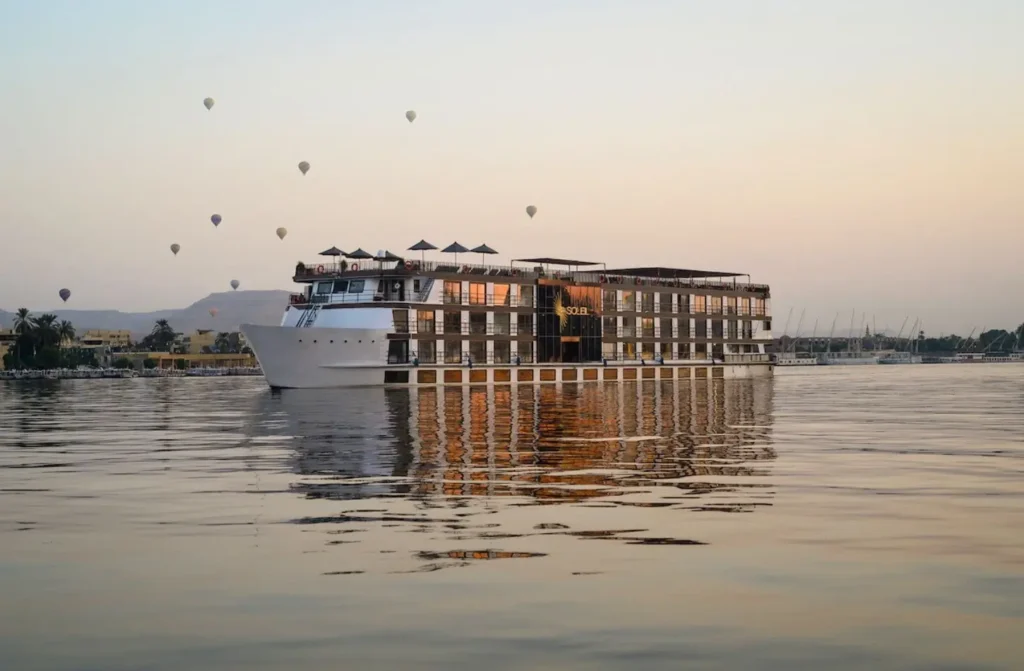
Pro tip from Yousef Atta: If you want to take a hot air balloon ride over the Valley of the Kings, plan to do it at sunrise before your cruise leaves Luxor. Trying to fit the balloon ride and a full day of sightseeing into one day can be exhausting.
How Many Nights Do You Need?
That’s what most people want to know, and here’s the simple truth: the number of nights is determined by how many days you’re going to be in Egypt overall, not simply because of your enthusiasm for temples.
- 3 nights / 4 days: all the highlights — Karnak, Luxor Temple, Valley of the Kings, Edfu, Kom Ombo, Philae. Perfect for those doing a combined beach holiday in either Hurghada or Sharm El Sheikh and having 7-10 days in Egypt in total.
- 4 nights/5 days: ideal for most tourists. Gives some leeway after each excursion and often includes an evening sail on a felucca.
- 7 nights and more: usually starts in Cairo and takes you down the river to Aswan, with stops in Dendera, Abydos, and more. Good for those interested in history and planning to spend 2 weeks or more.
Types of Nile Cruise Ships: Standard, Deluxe, Luxury, and Dahabiya
The type of ship you choose will shape your experience more than almost anything else. Many first-time travelers are surprised by how much prices can vary between categories.
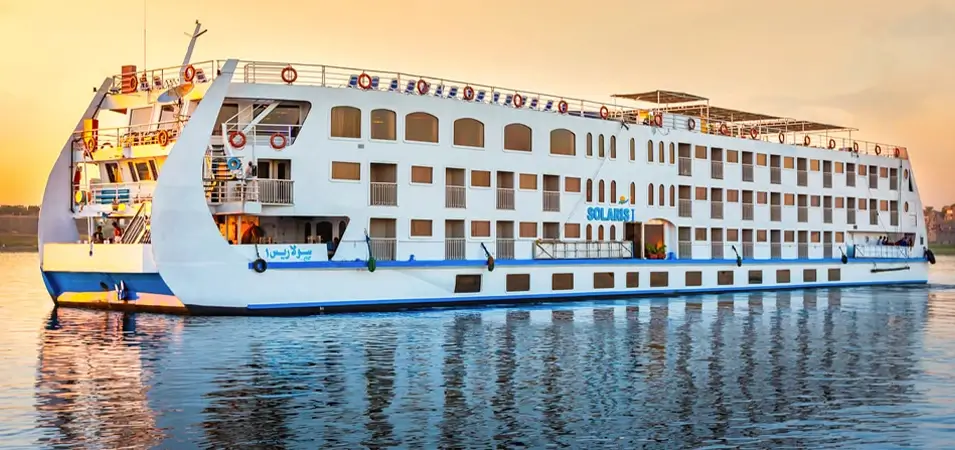
Standard / Budget Ships
Standard ships offer clean cabins, air conditioning, buffet meals, and a shared Egyptologist guide for group tours. Prices are usually $100 to $150 per person per night (about EGP 5,000 to 7,500), so a 4-night cruise costs around $450 to $800. Ships such as A Sara or Radamis I are good examples. This option works well if your main focus is visiting the temples rather than the ship itself.
Deluxe (High-End 5-Star)
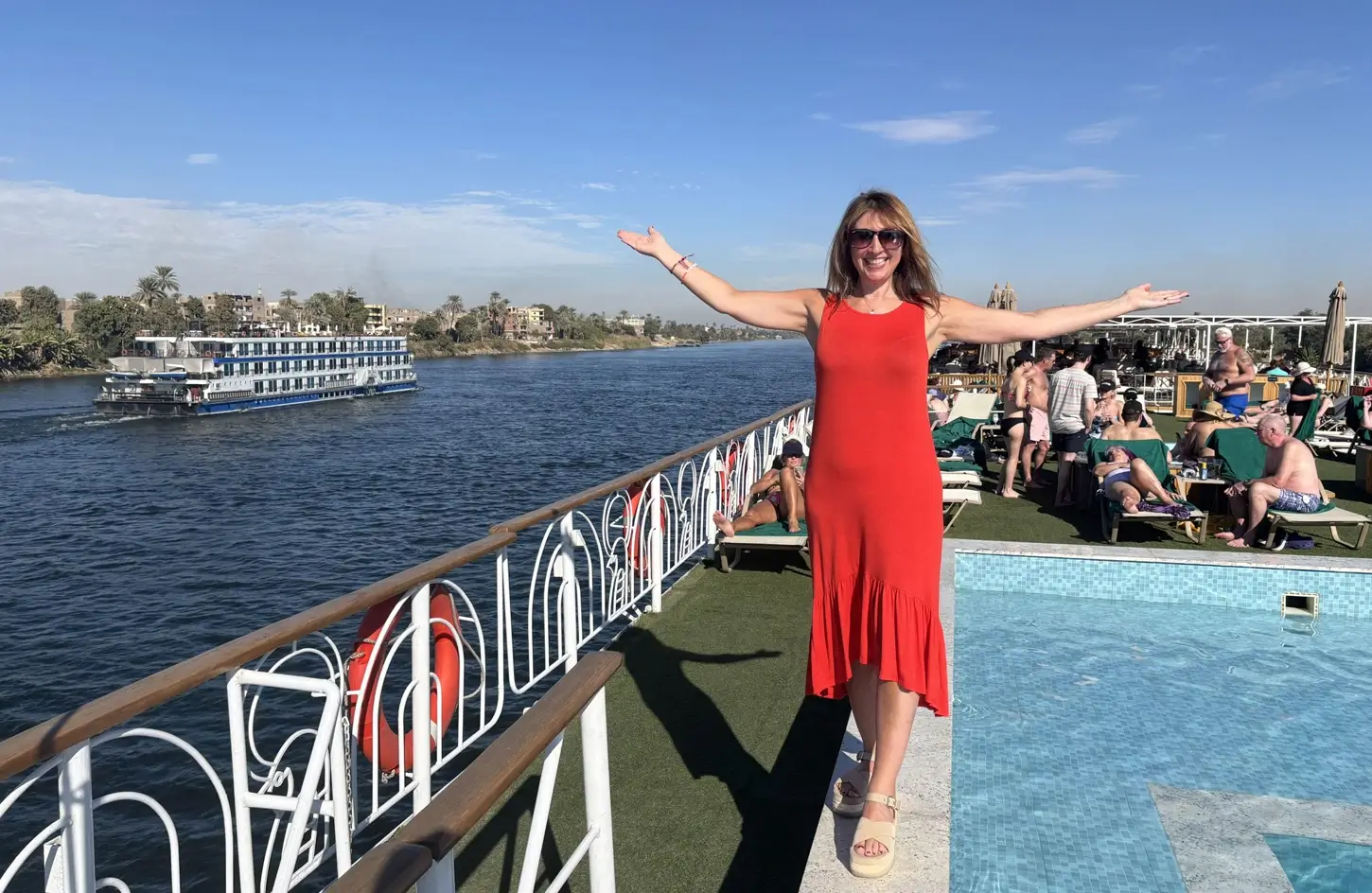
This is the most popular choice for international travelers. Deluxe ships have larger cabins, à la carte dining, a pool deck, and nicer shared spaces. Prices range from $180 to $320 per person per night, or about $650 to $1,900 for a 4-night cruise, depending on the season. Movenpick Royal Lily, Movenpick Royal Lotus, and MS Nile Goddess are well-known ships in this category.
Luxury / Ultra-Deluxe
Luxury ships offer private balconies, gourmet meals, spa facilities, and, most importantly, private or small-group Egyptologist guides instead of large group tours. These ships often schedule temple visits during quieter times, so you can explore places like Edfu or Kom Ombo while bigger groups are elsewhere. Prices are $400 to $900 or more per person per night, making a 4-night cruise cost $1,200 to $3,000 or more. Oberoi Zahra, Oberoi Philae, and Sonesta Star Goddess are top choices in this category.
Dahabiya (Traditional Sailboat)
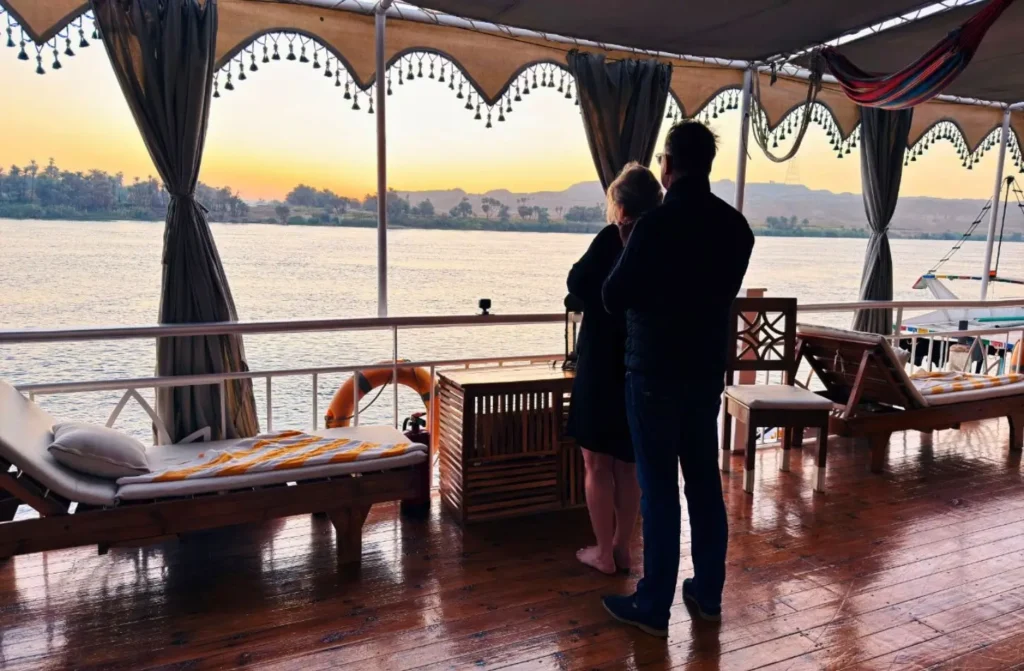
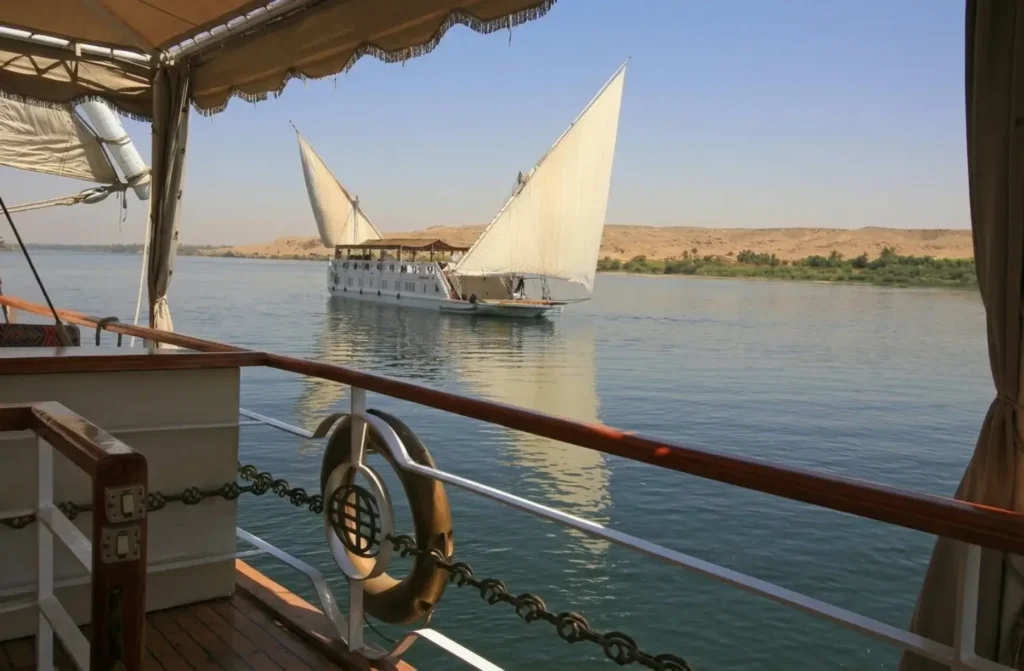
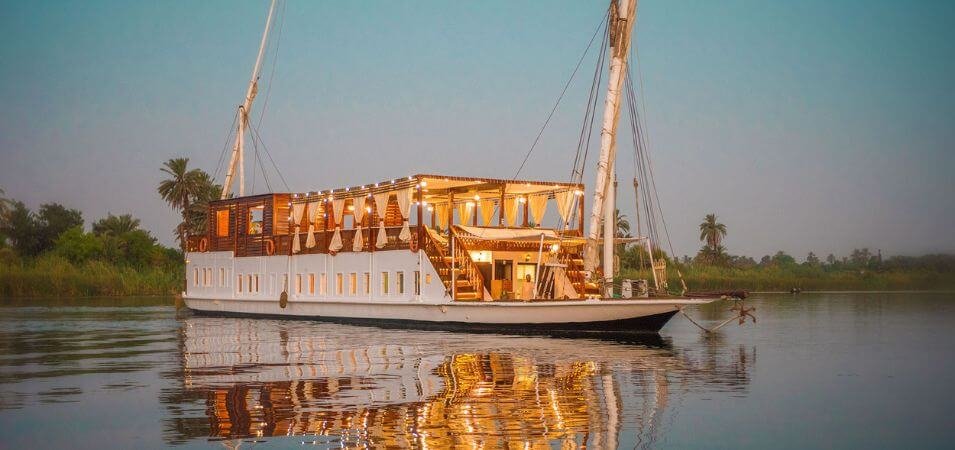
Dahabiya cruises offer a completely different experience. These small, engine-assisted sailboats carry 10 to 20 passengers, travel at a relaxed pace, and stop at quieter, less-visited sites. A 4- to 5-night dahabiya trip usually starts at $1,500 to $1,800 per person. If you have already tried a larger cruise or want something similar to how 19th-century travelers saw the Nile, this option is worth the extra cost.
What You’ll Actually See on the Best Nile Cruise
Most people book this trip to see the temples, and each one has its own special reason for inclusion in the itinerary.
- Karnak Temple is the largest religious complex from ancient Egypt, built and expanded over about 2,000 years. You should plan to spend at least two hours here. Many of my clients say their biggest regret is not taking enough time to explore.
- Luxor Temple is smaller than Karnak, but it is especially beautiful at night when it is lit up and much less crowded.
- The Valley of the Kings is where you’ll find the royal tombs on Luxor’s west bank. A standard ticket lets you visit three tombs, but you’ll need a separate ticket for Tutankhamun’s tomb and a few others.
- Edfu Temple is dedicated to Horus and is the best-preserved temple in Egypt. It stayed in such good condition because it was buried in sand for centuries, which protected its carvings.
- Kom Ombo is a unique double temple that honors both Horus and Sobek, the crocodile god. There is also a crocodile mummy museum next to it.
- Philae Temple — dedicated to Isis, and famously relocated block-by-block in the 1970s to save it from the rising waters of Lake Nasser.
Best Time to Take a Nile Cruise
When you go can make a big difference in how comfortable you feel and how much you spend.
- November to February is the high season. The weather is most comfortable for visiting temples, but it is also the busiest and most expensive time. Prices are usually at the higher end during these months.
- March to April and September to October are the shoulder seasons, and I usually recommend these months. The weather is still nice, there are fewer crowds, and prices are often 15 to 25 percent lower than peak season.
- May to August is the low season. In Upper Egypt, temperatures often exceed 40°C (104°F), and some smaller cruise companies suspend operations during the hottest weeks. If you do not mind the heat, you can save 20 to 40 percent and enjoy quiet temple courtyards in the early morning.
Nile Cruise Prices: What to Really Expect to Pay
| Ship Tier | Price per night (USD) | 4-night cruise total |
|---|---|---|
| Standard/Budget | $100–$150 | $450–$800 |
| Deluxe | $180–$320 | $650–$1,900 |
| Luxury | $400–$900+ | $1,200–$3,000+ |
| Dahabiya | — | from $1,500–$1,800 |
Please budget separately for the following costs: the Egypt tourist e-visa is $30 for a single entry as of 2026. If you plan to visit Cairo, general admission to the Grand Egyptian Museum for foreign adults is approximately EGP 1,450 (about $28–30).
How to Spot an Authentic, Well-Run Nile Cruise
Here are some practical things to check before you book:
Find out when the ship was last renovated, not just when it was built. Many Nile cruise ships are old but have been fully updated, while others have not been improved in years. You can often spot the difference in photos by looking at the bathroom fixtures and carpet, instead of just the polished dining room pictures.
Make sure you confirm the type of guide in writing. When you see “Egyptologist included,” it could mean a private guide or a group guide shared with up to 40 other passengers. Ask for this detail in your booking confirmation, not just during the sales talk.
Look at what’s not included, as well as what is. Entrance fees, drink packages, tips (baksheesh) for the crew, and the Abu Simbel trip (usually $85 to $120 per person from Aswan) are often not part of the main price.
Check the company’s license. Real Egyptian tour operators are registered with the Ministry of Tourism and Antiquities and usually show a license number on their website. If you find a deal that is much cheaper than the usual prices and there is no clear reason, ask about it.
What to Avoid: The Most Overrated Nile Cruise Add-Ons
Some so-called “upgrades” just aren’t worth the extra cost:
- The onboard photography package. Crew photographers offer prints at temple stops for about $11 to $16 each. While these can be nice souvenirs, you probably don’t need to spend on them. Your phone camera is more than enough.
- Overpriced onboard souvenir shops. Prices are usually two to three times higher than what you’ll find in the real markets of Luxor or Aswan. If you’re looking for papyrus or alabaster, it’s better to buy them on land.
- Booking too many nights for your first trip. A 7-night cruise might sound exciting, but if you’re new to Egypt, most people find a 4-night cruise with extra days in Cairo or at the Red Sea is a better use of time than spending more nights sailing past temples you’ve already visited.
Nile Cruise and Stay: Combining Land and River
If you combine your cruise with hotel stays in Cairo, Luxor, or Aswan, you can visit the Pyramids of Giza, the Grand Egyptian Museum, and Nubian villages near Aswan without feeling rushed. This plan is especially good for first-time visitors with 7 to 10 days, since it balances relaxing on the river with exploring Cairo’s busy sights.

Frequently Asked Questions
How many days should a Nile cruise be for a first-time visitor?
A 4-night, 5-day cruise between Luxor and Aswan is usually the best choice for first-time visitors. This option lets you see all the main temples at a relaxed pace and fits well into a 7- to 10-day trip that might also include Cairo or the Red Sea.
Is it better to start a Nile cruise in Luxor or Aswan?
Both routes visit the same sites, so the main difference is the pace. If you start in Luxor, you’ll see the biggest temples, like Karnak and Luxor Temple, right away. Starting in Aswan gives you a quieter first day, with the larger temples coming later in the trip.
How much does a Nile cruise actually cost in 2026?
A 4-night standard cruise usually costs about $450, while luxury options can go over $3,000. Most people pay between $650 and $1,900 for a deluxe cruise. Dahabiya sailings start at around $1,500 for 4 to 5 nights. Prices are highest from November to February.
What’s included in a typical Nile cruise price?
Most cruise packages cover your cabin, all meals, and guided tours of the main temples. However, check whether temple entrance fees, drinks, tips for the crew and guides, and extras like the Abu Simbel day trip from Aswan are included, as these are often not part of the package.
Is a Nile cruise safe for solo travelers or families?
The route between Luxor and Aswan is one of the safest in Egypt, with tourism police at major sites and security checks at temple entrances. If you are traveling alone, expect to pay a single-supplement fee, as most cruise prices are based on two people sharing a cabin.
What’s the best month to take a Nile cruise?
The best weather for sightseeing is from October to April. November to February are the busiest and most expensive months. For pleasant weather, smaller crowds, and prices about 15 to 25 percent lower than peak season, consider traveling in March, April, September, or October.
Final Note from Yousef Atta
If you remember one thing from this guide, let it be this: the best Nile cruise is not always the most expensive or the one with the most reviews. It’s the one that fits how you want to spend your time in Egypt. I’ve seen people pay too much for luxury they didn’t need, and others regret saving money by choosing a lower-quality guide.
Choose your travel season first, then your budget, and let those choices guide you to the right cruise. If you’re still unsure, try a 4-night deluxe cruise between Luxor and Aswan during the shoulder season. This is what I usually recommend to first-time visitors, and it almost always works out well.