Nile cruise or felucca — which should you book?
Felucca = budget & simplicity, no temples. Cruise ship = comfort & full itinerary. Dahabiya sits in between.
- ⛵ Felucca : 4–8 people, no cabin/toilet, Aswan–Kom Ombo only, ~$110–$245/boat
- 🚢 Cruise ship :60–150 passengers, AC cabins, all temples, from ~$350–$650pp
- 🛥️ Dahabiya : 8–12 guests, private cabins, remote sites, $900–$3,800pp
- 🏛️ Only cruise ships dahabiyas visit Karnak, Valley of Kings & Philae
- 🌡️ Best Oct–Apr ; avoid felucca entirely Jun–Aug (no shade/AC)
The river Nile provides three options for sailing, each offering a totally different experience of Egypt: a felucca ride for travelers looking for an affordable experience in Egypt, a dahabiya for those preferring boutique luxury and a slow journey, and a cruise ship for travelers looking for comfort while touring the great temples of Egypt. This decision must be made according to your preferences and travel style.
For years now, I have been arranging trips for people across the world to visit Egypt. It includes budget tour plans for individual backpackers and luxury plans for honeymooners aboard private Dahabiyas. Among all the questions I receive, the most common one is “Should I opt for a Nile Cruise or a felucca?” There is a definite way of approaching this question.
What Is the Difference Between a Nile Cruise and a Felucca?
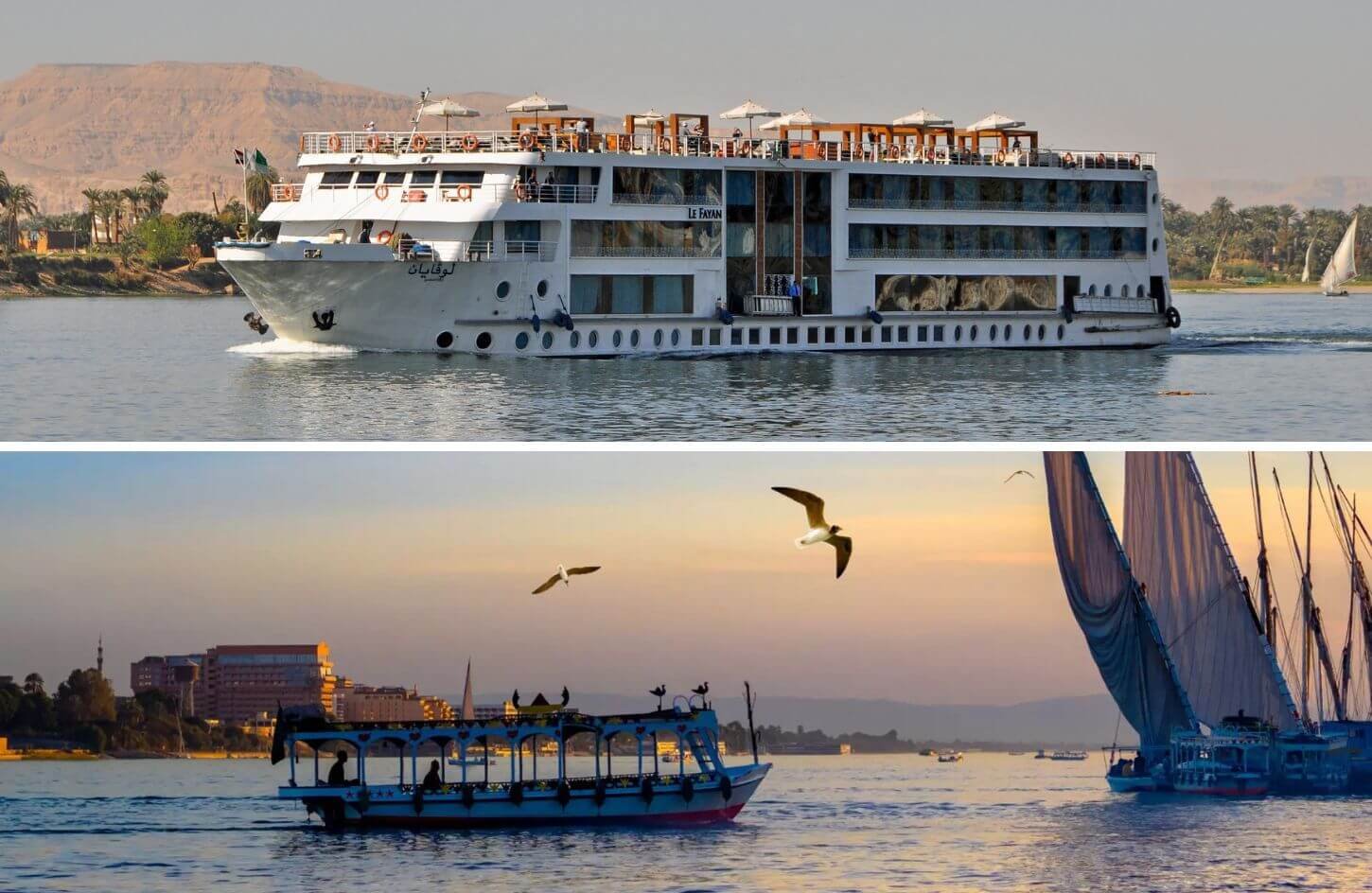
A felucca is a small, traditional wooden sailboat that has sailed the Nile for thousands of years. It operates on wind power only, accommodates 4 to 8 people, has no rooms or toilets aboard, and travels for 2 or 3 nights along the Aswan-Kom Ombo route. This is a very intimate and quiet experience, one of being totally immersed in the river’s atmosphere.
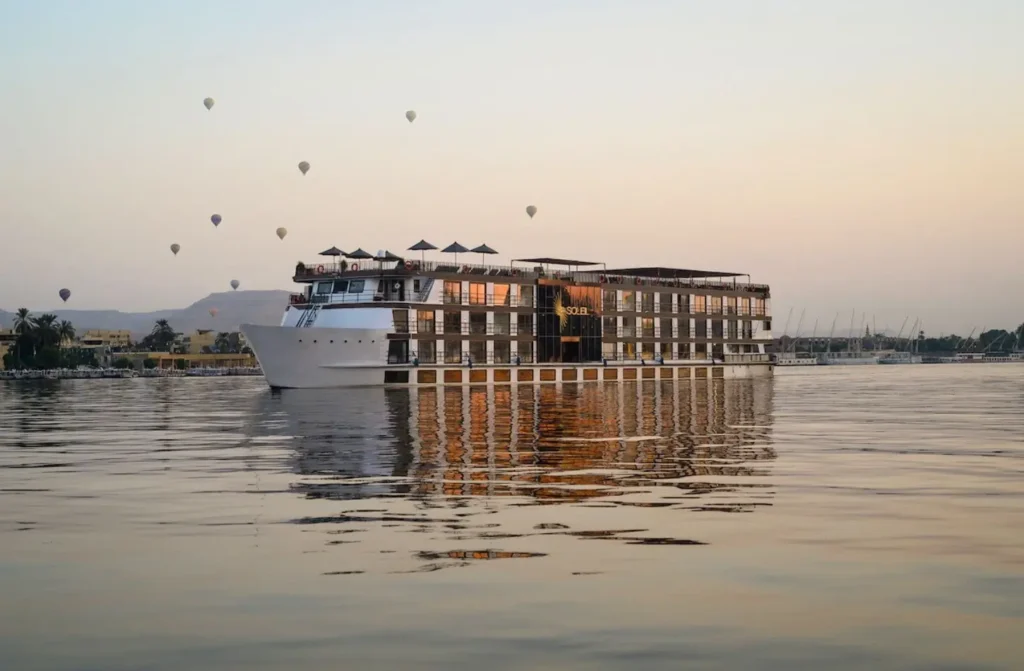
The Nile cruise ship is a floating hotel – a motorized vessel with several decks that accommodates up to 150 passengers and features air-conditioned rooms, restaurants, swimming pools, and a daily sightseeing tour program. This is a preplanned journey along the same route from Luxor to Aswan, visiting six or more ancient sites in 4-5 days.
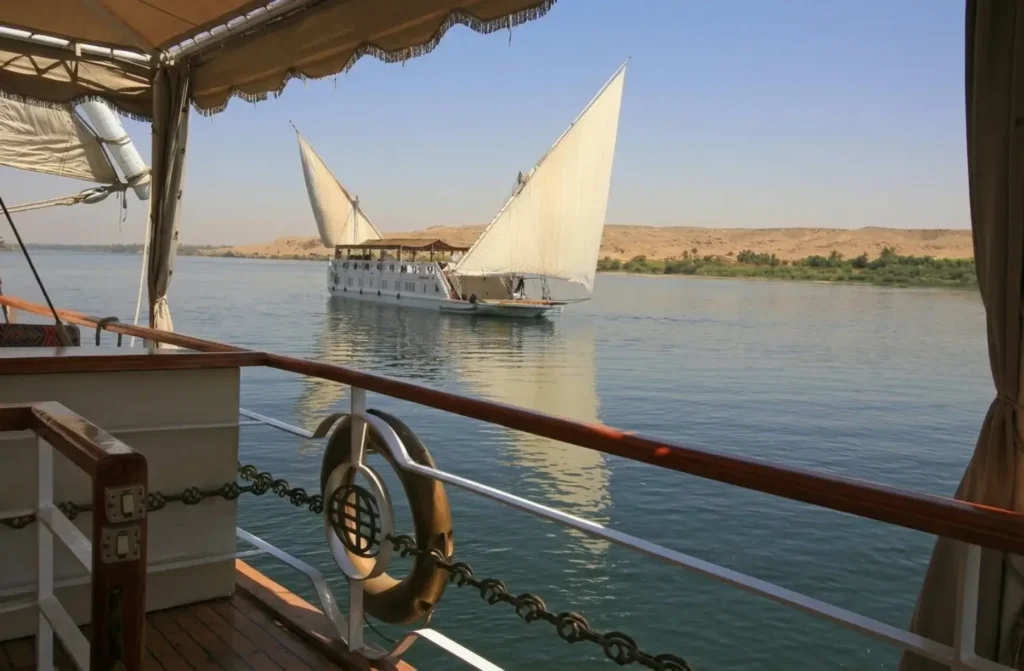
Something halfway between these two extremes is the dahabiya – a magnificent refurbished sailing barge that accommodates 8-12 travelers and unites the romantic old-world atmosphere of the Nile with all modern comforts.
The Three Ways to Sail the Nile (and How They Compare)
The Felucca — Authentic, Simple, Wind-Powered
The felucca represents the oldest form of travel on the Nile, which at once becomes its greatest advantage and its greatest limitation. This is a simple wooden boat, propelled solely by the wind, with no motor or air conditioning, and its doors open. You sleep on cushioned benches with a mosquito net, the captain prepares simple food based on bread, beans, eggs, and fresh veggies, and nights will be spent under open skies, away from anything but the stars.
Felucca trips start in Aswan and proceed north to Kom Ombo or Edfu, a journey of two or three days depending on the wind conditions. No excursions on the temple sites are involved – you see the river itself rather than the temples lining its shores. Many travelers I send to make this trip do not come for the ancient buildings but for the peace, the calmness, and complete isolation.
What a felucca does not provide: privacy (since the deck is open and shared by everyone else), a bathroom (the captain stops at riverbanks), and shelter from the heat when traveling in the summertime. If you travel in July or August, a felucca with the sun burning at noon will be very uncomfortable for you.
The Dahabiya — Boutique Luxury with Traditional Roots
Dahabiyas are the boats that no tourist ever thinks to inquire about, but which I would most highly recommend to couples, small groups, or those seeking a personal relationship with the river.
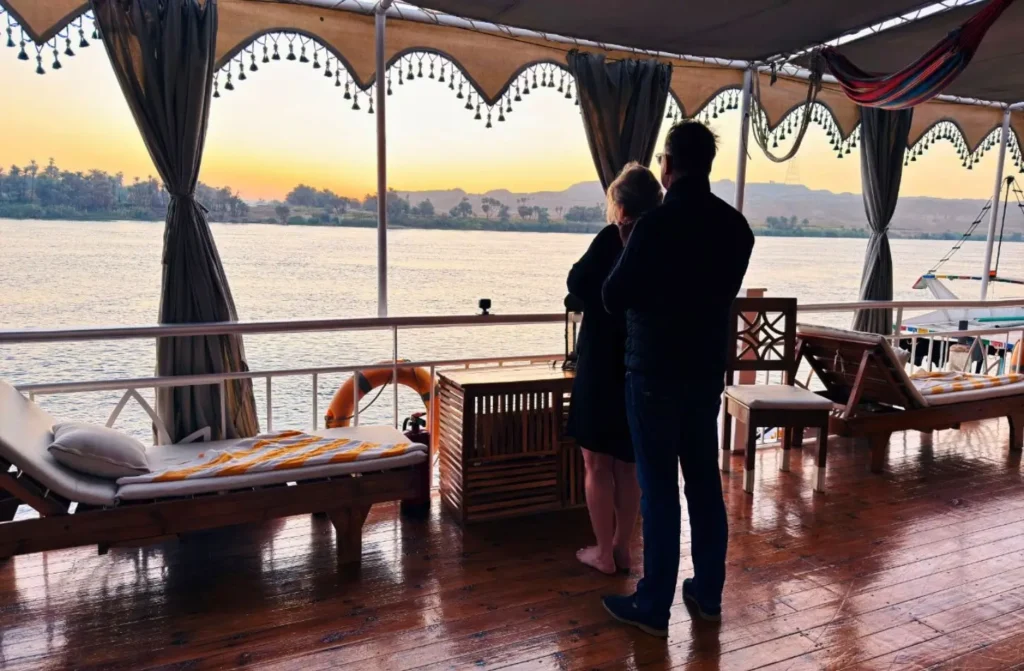
They are traditional Egyptian wooden boats with two masts, once used by Egyptian royalty and 19th-century Europeans for explorations along the Nile. The author Agatha Christie was aboard a dahabiya while writing on the Nile. Florence Nightingale recorded her experience on a dahabiya in 1849-1850 in her journals. Modern dahabiyas look the same but are fully refurbished, with air-conditioned cabins, bathrooms, sun decks, and a kitchen that offers fresh meals, sometimes sourced from local markets.
The intimacy of the experience is what makes it unique. Since there are only 8 to 12 people on board, the crew-to-passenger ratio is very close to 1:1. Moreover, the dahabiya travels at a much slower pace than large cruises; part of that speed comes from the wind, while some is provided by the auxiliary motor. This enables the ship to visit places unreachable by cruise boats, such as the ancient quarries at Gebel el-Silsila, rock-cut tombs near El Kab, and Nubian villages.
The Modern Nile Cruise Ship — Full Comfort, Full Itinerary
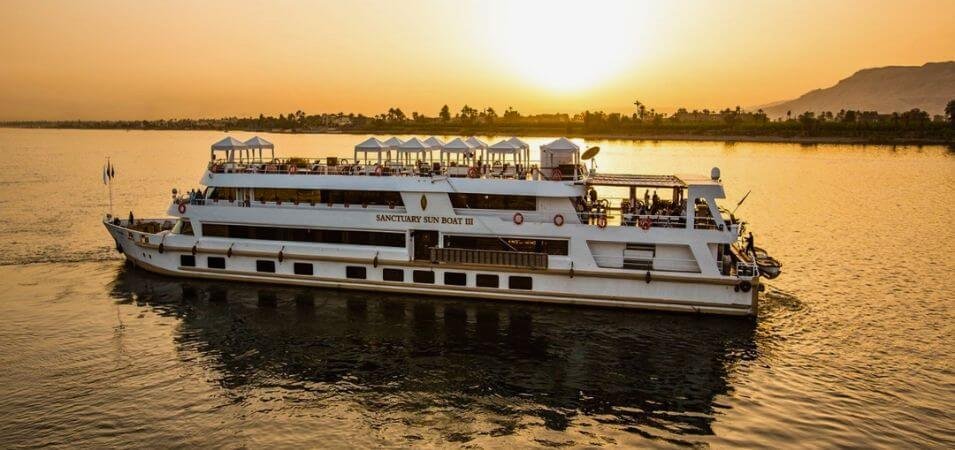
Those travelers who wish to visit all the famous temples of Karnak, the Valley of the Kings, Edfu, Kom Ombo, and Philae without much fuss, hassle, or discomfort will find a modern Nile cruise ship to be a solution. These are well-organized, crewed, and comfortable vessels that operate on set itineraries and depart weekly from Luxor and Aswan.
A typical four-day cruise from Luxor to Aswan includes visits to six temples under the supervision of a licensed Egyptologist, complete meals in the form of a buffet in a restaurant, and night entertainments in the form of Galabeya parties, belly dancing, and folklore nights.
Socially speaking, there is always something going on aboard the cruise ship. One travels with one’s co-passengers, eats together at the same time, and follows the ship’s schedule. If one is traveling with a family or group, or visiting Egypt for the first time, the best way to see all the main sights of Egypt is by cruise ship.
Nile Cruise vs Felucca: Side-by-Side Comparison Table
| Feature | Felucca | Dahabiya | Modern Cruise Ship |
|---|---|---|---|
| Vessel type | Traditional open sailboat | Boutique sailing barge | Large motorized ship |
| Passengers | 4–8 | 8–12 | 60–150 |
| Cabins | None (deck sleeping) | Private en-suite cabins | Private cabins/suites |
| Air conditioning | ❌ | ✅ | ✅ |
| Onboard toilet | ❌ (support boat or shore) | ✅ | ✅ |
| Meals | Basic (cooked on deck) | Gourmet, freshly prepared | Buffet (all meals included) |
| Temple excursions | ❌ Not included | ✅ With a private guide | ✅ With a group of Egyptologists |
| Route | Aswan → Kom Ombo / Edfu | Luxor ↔ Aswan (with extras) | Luxor ↔ Aswan (fixed stops) |
| Pace | Slow — wind dependent | Slow — leisurely | Structured daily schedule |
| Best for | Budget travelers, adventurers | Couples, small groups, honeymooners | Families, first-time visitors |
| Worst for | Summer heat, comfort seekers | Tight schedules | Solitude seekers |
Cost Breakdown: What Does Each Option Actually Cost in 2026?
Price transparency is something most Nile travel articles avoid. Here are the realistic figures based on current market rates.
Felucca: An hour-long felucca journey from Aswan is priced between 200 and 400 EGP ($4-$8) per boat. A one- to two-night felucca journey from Aswan with a total of 2-4 passengers costs $110-$150 USD (not per person). Meals are an additional $18 USD per person per night. On the other hand, a 3-night private felucca journey costs approximately $195-$245 USD. This price is for the entire boat, making it one of the least expensive ways to tour along the Nile.
Dahabiya: A journey from Luxor to Aswan in a dahabiya takes 4 to 5 nights. The minimum cost for this kind of sailing will be $900-$1400 USD per person, and on higher-end or privately hired vessels, $1800-$3800 USD per person. Such prices usually cover everything, including meals, temple entry tickets, and an Egyptologist guide for the entire journey.
Modern Nile Cruise Ship: A four-day cruise from Luxor to Aswan on an average 5-star ship costs $440 – $650 USD per passenger. Medium-range cruises that offer good service and have fewer passengers cost $700-$1,200 USD per passenger. Luxury liners such as Sanctuary, Oberoi, and Mövenpick range in cost from $1,400 – $2,500 USD per person for four days. Budget cruises are offered at $350 USD during the low season from June to August.
Which Route Does Each Vessel Sail?
- Felucca: The felucca sails between Aswan and Kom Ombo (about 45 km to the north of Aswan), sometimes going up to Edfu. The felucca relies on the wind and is slow; it takes two or three nights to cover this distance. Certain parts of the Luxor-Aswan journey are impractical to undertake by felucca.
- Dahabiya: The typical route for a dahabiya begins in Luxor (or nearby Esna) and ends in Aswan, taking four to six nights for the northbound route and five to seven nights for the southbound route. As dahabiyas are small boats, flat-bottomed vessels sail through areas of the Nile where cruise ships regularly go through.
- Cruise Ship of Today: The typical four-night journey goes from Luxor to Aswan, calling in at Edfu and Kom Ombo. The three-night journey goes from Aswan to Luxor, also calling at these same locations. The seven-night journey also calls at Abydos and Dendera, while sometimes spending the night in either Luxor or Aswan.
Which Should You Choose? A Decision Framework
Go for a felucca when:
Your travel plans require you to have limited financial means and a desire to stay out in nature without too many luxuries. You would prefer to be on the water rather than explore the temples, and you will visit during the cooler months, which run from October to April. This mode of transportation is suited for backpackers, travelers alone, and anyone who would love to be outdoors on an ancient river rather than camping under the open skies.
Opt for a dahabiya if:
It makes sense for you to feel like you have your own personal river. Whether you’re on a honeymoon, celebrating an anniversary, or making the trip to celebrate your life achievement, the dahabiya is for you if you would like to explore sites that are impossible for large ships to visit, or just end the day relaxing on the deck, enjoying a glass of wine as you watch the banks of the river darken at night.
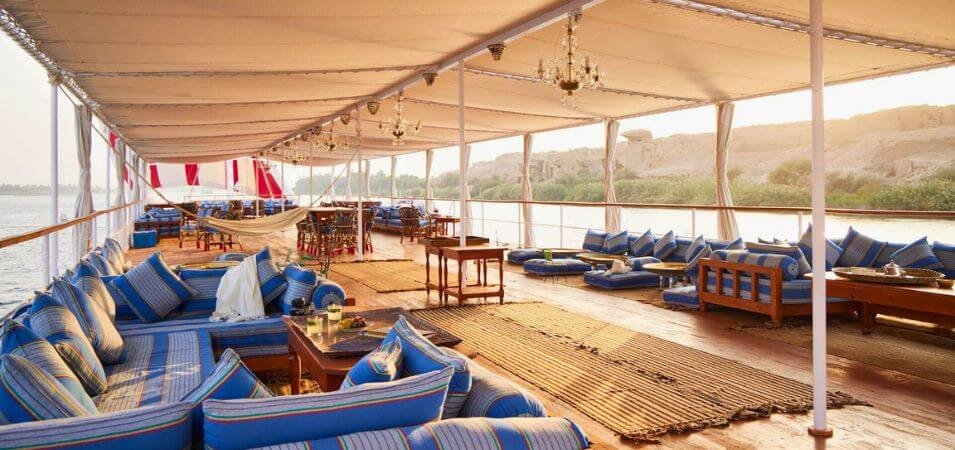
Choose cruise ships for modern ships when:
This is your first time in Egypt; you would like to see all the main temples without having to arrange everything yourself; you are traveling with family members or a mixed group; or you need comfort and air conditioning. It is not the “lazy” way to choose cruise ships; it is the practical way, and when you choose the right one along with an Egyptologist guide, then it can be unforgettable.
Choose a combination of both when:
More and more clients I deal with follow this approach: a 3-4-day cruise-ship tour with Karnak, the Valley of the Kings, Edfu, and the Philae temples, followed by some sailing on a felucca in Aswan at sunset.
What to Avoid When Booking a Felucca or Nile Cruise
On Feluccas:
- It is advised against going with a street captain on the Aswan corniche without verifying his permits. Make sure to see the captain’s tourist police permit.
- It is advisable not to go for a felucca ride without a support boat for toilet facilities, since the latter is crucial for your hygiene during a multi-day excursion.
- June, July, and August are not the best months to travel, especially given the heat you might experience on an open-deck felucca with no means of cooling.
Nile cruise tips:
- Don’t book your cruise solely by looking at photos. The cheapest cruises will have impressive professional photos, but they might differ greatly in their guiding service, food quality, and maintenance. Make sure to read recent reviews from other passengers and ask for the ship’s name before booking.
- Don’t think that entrance tickets are already included in the price. Many cruise operators show only one initial price that doesn’t include entry to the Valley of the Kings, Karnak Temple, and other important sites. Such tickets cost quite a lot of money – the Valley of the Kings alone costs 750 EGP per person in 2026.
- Don’t plan to go there during the holidays if you worry about the number of tourists at the sites. The most crowded periods are Christmas, New Year, and Easter, when all the boats and excursion groups are at their fullest.
Dahabiya tips:
- Don’t delay your booking. The most popular dahabiyas book their sailings from November to February, three to six months in advance.
Best Time of Year for Each Type of Nile Sailing
The best period for each vessel is from October to April. In this period, the temperature from Luxor to Aswan varies from 20°C to 30°C, allowing one to visit temples easily and enjoy time on the open deck of a felucca or dahabiya.
November to February is the most crowded and expensive time of the year. This is especially the case during Christmas and Easter.
March to April is an excellent time – the weather is still good, there are fewer people than in the winter months, and shoulder-season pricing starts.
Between May and September, the weather is extremely hot, with temperatures reaching 40°C to 45°C in Luxor and Aswan. Taking a felucca during July is highly discouraged. However, taking a dahabiya or a cruise ship is bearable since there is air conditioning; in addition, costs are greatly reduced, making it worth the trade-off.
Frequently Asked Questions
Is a felucca safe for overnight trips on the Nile?
Of course, the felucca tours from Aswan to Kom Ombo have become an established element of the Egyptian tourism industry. Each felucca pilot who provides the tour services must possess a valid license provided by the tourist police in Egypt, and the trustworthy companies will have the felucca supported by a boat that will provide toilets, extra meals, and a crew member. The only dangers you may encounter are river-related discomfort, heat, and a lack of amenities.
Can I see the major temples (Karnak, Valley of the Kings, Edfu) from a felucca?
Normally, no. The felucca voyage is a river cruise rather than a tour to any temple. The main routes for felucca cruises run from Aswan to Kom Ombo, so temples in Luxor, such as Karnak, the Valley of the Kings, and Luxor Temple, cannot be visited on this tour. If visiting the most important archaeological sites is the purpose, then taking a Nile cruise or a dahabiya will allow you to visit these temples.
How long is a typical Nile cruise?
The most common cruise lasts four nights (five days) and sails from Luxor to Aswan; it includes Karnak Temple, the Valley of the Kings, Edfu Temple, Kom Ombo Temple, and Philae Temple in Aswan. The shortened version of the same route – Aswan to Luxor, but lasting for only three nights – is also widely offered. Some seven-night cruises include the Abydos and Dendera temples in their routes as well.
What is a dahabiya, and how is it different from a standard Nile cruise?
The dahabiya is a traditional Egyptian sailing vessel that has been used by the royal family in ancient Egypt and by some 19th-century explorers, and is now renovated into a boutique cruise ship. The main distinction between a dahabiya and a regular cruise ship lies in its size (8-12 passengers as compared to 60-150 passengers), speed (slower with sails), ambiance (quieter as compared to busy), and accessibility (dahabiyas can enter areas on the Nile which cannot be reached by cruise ships).
How much does a felucca ride cost in Aswan?
The cost of hiring a private felucca for an hour in Aswan at the moment is between 200 and 400 EGP ($4-$8 USD) for the entire boat. An overnight cruise using a felucca for two to four people is approximately $110-$150 USD for the boat and $18 USD per person per day for meals. Always make sure that the entire cost is known beforehand.
When is the best time to take a Nile cruise or a felucca trip?
The optimum period for Nile cruises is from October to April. The weather is pleasant for visiting temples and enjoying the deck; the water is calm, and the quality of light during sunrise and sunset is extraordinary for photographs. From November to February, this is the high season, which means higher costs and full ships on popular cruises. When traveling from May until September, be prepared for hot weather and lower prices.
Final Note from Yousef Atta
In over ten years of planning trips along the Nile, I have found this to be the most personal question about traveling to Egypt. It is not a matter of choosing the best boat, but rather what type of memories you would like to leave behind with you.
If you have not yet been to Egypt and you wish to see the temples that brought you here in the first place, go on a cruise ship — just choose your boat wisely, because the quality of the guide is much more important than the quality of the pool.
For those seeking solitude, intimacy, and closer interaction with the river, as well as the locals who have lived along its banks for years and years, there is the dahabiya – definitely worth the extra expense.
But if your dream is drifting off to sleep at the gentle murmur of the Nile flowing under you, with nothing but the stars overhead and the mosquito net and the sails of the boat whispering in the breeze, then go for a felucca ride. The best time is October/November when the weather is cool; have breakfast with the captain’s ful medames, and enjoy two days without any plans at all.