What are the most important Egypt travel tips for first-timers?
Get your e-visa ($30) online, carry cash in EGP, dress modestly, agree on prices upfront, and sightsee early to beat heat and crowds.
- 🛂 E-visa costs $30 (single) or $65 (multi-entry), apply 24–72h ahead
- 💵 Carry small EGP notes — many taxis & stalls are cash-only
- 👗 Dress modestly outside resorts — cover shoulders & knees
- 🚕 Always agree on taxi/felucca price before you get in
- 🌅 Visit temples early morning to dodge heat & tour groups
Get your e-visa online before you go to Egypt (it costs $30 for a single entry). Bring small Egyptian pound notes for tips and shopping. Dress modestly when you’re not in a resort. Always agree on taxi and felucca prices before you get in. Try to do your sightseeing early in the morning to beat the heat and crowds.
Every week, I help travelers plan Nile cruises and cultural tours to Cairo, Luxor, and Aswan. Before each trip, I get the same questions: what to wear, how much things cost, is it safe, and how to avoid being overcharged. This guide shares the real advice I give my clients before they arrive—not just generic tips, but the details that help make their first 48 hours in Egypt easy and enjoyable.
Best Time to Visit Egypt
The best time to visit is from October to April, when daytime temperatures in Cairo and Upper Egypt are usually in the mid-20s°C (mid-70s°F). In contrast, Luxor and Aswan can reach over 40°C (104°F) from June to August. December and January are the most crowded and expensive months for Nile cruises and Red Sea resorts. For better prices and fewer people at places like Karnak or the Valley of the Kings, try to go in late October, November, or March.
If you plan to visit in summer, it is still possible. Just organize your day to avoid the hottest hours. Visit temples before 10 am, take a break indoors from midday to mid-afternoon, and explore markets or take riverside walks in the evening.
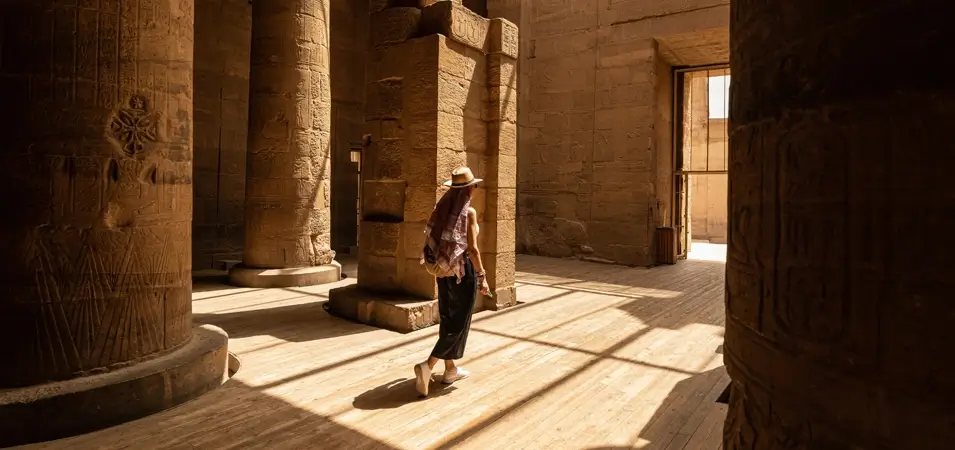
Pro tip from Yousef: If you enter Karnak Temple at sunrise, it is not only cooler but also before the tour bus groups arrive. This way, you can enjoy a truly quiet hour among the columns.
Is Egypt Safe? Egypt Travel Safety Tips
Egypt is one of the most closely monitored tourist destinations in the region. Major sites like the Pyramids of Giza, Karnak, and the Valley of the Kings all have visible tourist police. Nile cruise ships and long-distance trains between Cairo, Luxor, and Aswan usually go through security checkpoints.
Violent crime against tourists is rare. The most common problems are similar to those in any big tourist city: overcharging, pushy vendors, and unofficial “guides” who may approach you near ticket booths.
You can lower your risk by following a few simple habits:
- Carry your passport, cash, and phone in a cross-body bag or money belt instead of your back pocket, especially in busy places like Khan el-Khalili or the Cairo metro during rush hour.
- Only enter your e-visa or hotel booking details on official websites. The government e-visa portal is the only legitimate place to apply online.
- If someone outside an official ticket window offers to “help” you buy tickets, go to the window yourself. This is one of the most common scams targeting tourists in Egypt.
Visa & Entry Requirements
Most travelers need a visa to enter Egypt. As of March 2026, prices have gone up for the first time in years. A single-entry e-visa costs $30 USD and lets you stay for 30 days within a three-month period. The multiple-entry e-visa is $65 USD and is valid for six months.
You can also get a visa on arrival at the airport for $30 USD, paid in cash at the bank counter before passport control. However, I always recommend applying for the e-visa in advance through Egypt’s official visa portal, as it lets you skip the airport queue. Processing usually takes 24 to 72 hours, so be sure to apply at least a few days before you leave.
Your passport must be valid for at least six months from your arrival date. Immigration will check this, and I have seen travelers turned away at the gate for not meeting this requirement.
Money, Currency & Budgeting in Egypt
Egypt uses the Egyptian pound (EGP) as its currency. Around mid-2026, the exchange rate was about 1 USD to 50 EGP, but rates change, so check the latest rate before your trip. You can use cards at hotels, cruise ships, and bigger restaurants, but many taxis, street vendors, small cafés, and market stalls only take cash. It’s a good idea to withdraw EGP from an ATM soon after you arrive and keep some small bills for tips and quick buys.
| Expense | Typical Cost (EGP) | Approx. USD |
|---|---|---|
| Single-entry e-visa | — | $30 |
| Multiple-entry e-visa | — | $65 |
| Taxi/Uber, Cairo airport to downtown | 150–300 EGP | $3–$6 |
| Bottled water (street/shop) | 10–20 EGP | $0.20–$0.40 |
| Felucca ride (per hour, negotiated) | 150–300 EGP | $3–$6 |
| Museum/temple entry (average) | 300–800 EGP | $6–$16 |
| Small tip (baksheesh) for a quick service | 20–50 EGP | $0.40–$1 |
Prices change with the exchange rate and are only approximate as of mid-2026. Check the latest EGP/USD rates before your trip.
Tipping, or baksheesh, is a regular part of daily life in Egypt. People expect tips for small services like helping with bags, taking a photo, or giving directions, in addition to the usual 10–12% tip at restaurants. Carry plenty of small notes so you do not have to give a large bill for a small favor.
What to Pack for Egypt
Lightweight, breathable fabrics like cotton and linen are best for most of the year, but be ready for bigger temperature changes than you might expect. Desert nights, especially from December to February, can get as cold as single digits Celsius even after a hot day. Always include a light jacket or fleece in your packing list, no matter the season.
Dress modestly outside resort areas. For women, this means covering shoulders and knees in markets, mosques, and most public places. For men, lightweight trousers or longer shorts are seen as more respectful than short shorts. A scarf is useful both for modesty at religious sites and for protecting against dust during desert trips. Comfortable, closed walking shoes are important, since places like Karnak and the Valley of the Kings have a lot of uneven stone paths.
Yousef suggests packing a printed copy of your e-visa confirmation. Wi-Fi at Cairo airport arrivals can be unreliable, and immigration officers may ask to see a paper copy.
Getting Around: Transport Tips
In Cairo, Uber and Careem are the easiest ways to get around. They use in-app meters, so you don’t have to bargain, and fares from the airport to downtown usually cost 150 to 300 EGP depending on the time of day and traffic. Street taxis might seem cheaper, but you need to agree on a price before getting in, since meters often “don’t work” for tourists.
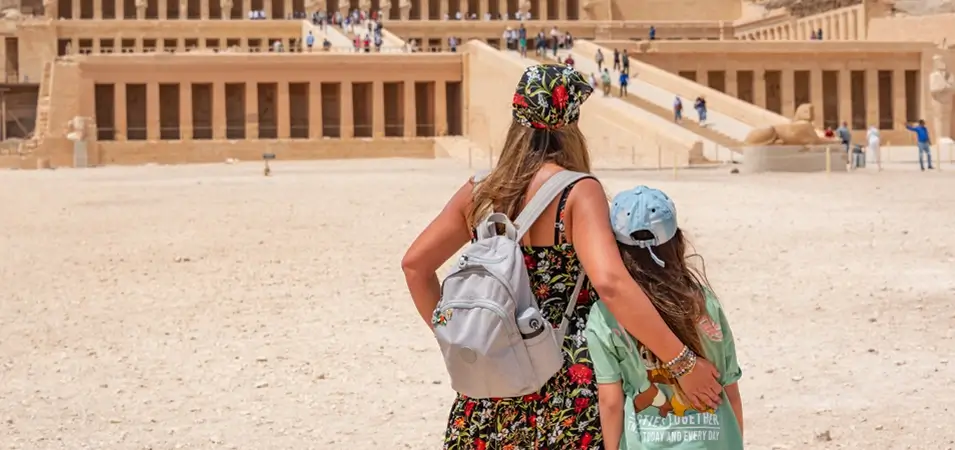
For travel between cities, domestic flights quickly connect Cairo, Luxor, Aswan, and the Red Sea resorts. The overnight sleeper train between Cairo and Luxor or Aswan is slower, but it’s a genuinely enjoyable way to see rural Egypt. In Luxor and Aswan, hiring a private driver for the day is the most efficient way to visit the West Bank sites. The Valley of the Kings, Hatshepsut Temple, and the Colossi of Memnon are far apart, so walking or using public transport between them isn’t practical.
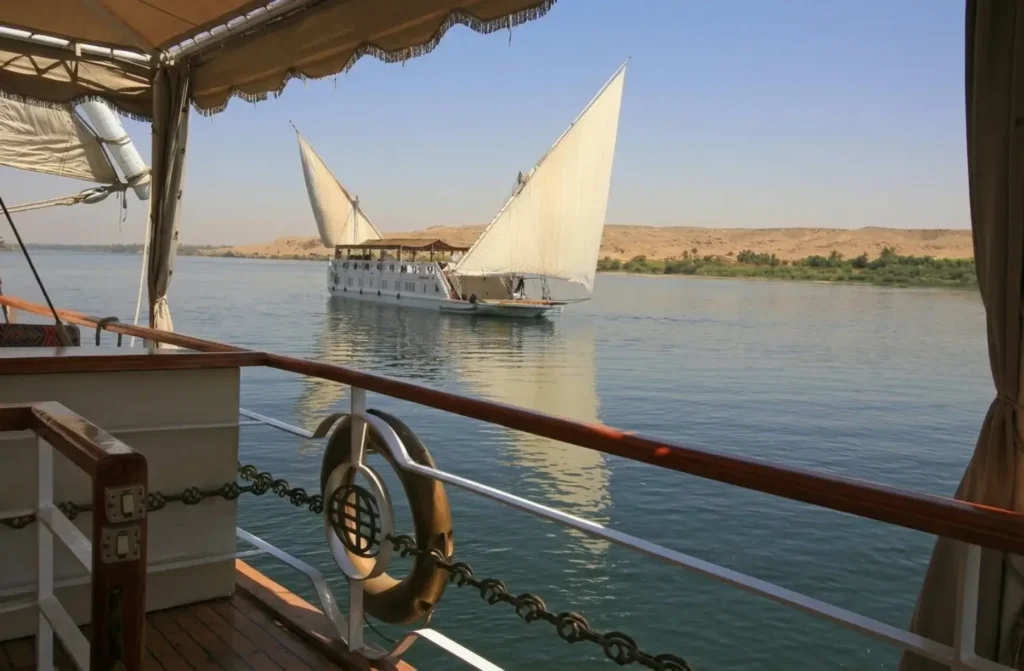
Feluccas, which are traditional Nile sailboats, are worth trying at least once, especially near sunset in Aswan. Agree on the hourly rate before you get on; 150 to 300 EGP per hour is typical, but prices vary by season and boat.
Cultural Etiquette & Language Tips
Saying “salaam alaikum” (hello) and “shukran” (thank you) is always appreciated, even though you’ll find English spoken at most tourist spots and hotels. If you visit a mosque, remember to dress modestly, take off your shoes before entering the prayer area, and ask before taking photos of worshippers.
Bargaining is normal in markets like Khan el-Khalili and is expected, not considered rude. A good way to start is by offering about a third to half of the vendor’s first price, then negotiate from there. Stay friendly instead of confrontational, as Egyptians usually enjoy the friendly back-and-forth more than a simple “no.”
Common Scams & How to Avoid Them
Most issues tourists face in Egypt involve overcharging or unwanted “help,” rather than serious crime.
- The unofficial ticket “helper” is someone outside a site, like Giza, the Egyptian Museum, or Luxor Temple, who offers to walk you to the ticket window faster and then asks for a tip or commission. To avoid this, buy your tickets directly at the official window.
- The “museum is closed today” trick happens when a stranger tells you your destination is closed and offers to take you to a shop or a “better” attraction. This is just a way to lead you to a shop that pays them a commission. Real opening hours are posted at sites, so check with your hotel or guide instead of trusting someone on the street.
- To avoid being overcharged by unmetered taxis, agree on the fare before you get in. You can also use Uber or Careem, which show the price before the ride starts.
- Camel or horse ride “surprise fees.” A quoted price for a short ride can balloon once you’re on the animal and want to get down. Confirm the full price, including the return, before mounting.
You don’t need to feel anxious about these situations. They are common and well-known, not signs that Egypt is unsafe. A firm but friendly “la, shukran” (“no, thank you”) is enough to handle almost all of them.
Must-See Highlights & How to Plan Your Route
Most trips begin in Cairo, where the Pyramids of Giza, the Grand Egyptian Museum, and the Khan el-Khalili bazaar in Islamic Cairo are the main attractions. From there, travelers usually head south to Luxor to see the Valley of the Kings, Karnak, and Luxor Temple, then continue to Aswan for the Temple of Philae, Nubian villages, and, if you have an extra day, Abu Simbel.
In my experience, taking a Nile cruise between Luxor and Aswan is the easiest way to explore this part of Egypt. Cruises usually stop at Edfu and Kom Ombo, two temples that are hard to visit on your own without a private driver. If you want some time at the beach, Hurghada, Sharm El Sheikh, and Marsa Alam are great options to add to your Cairo and Nile trip for a few days of diving or relaxation at the end.
Frequently Asked Questions
Do I need a visa to visit Egypt?
Most travelers will need a visa. The simplest way is to apply online for an e-visa through Egypt’s official portal. As of 2026, it costs $30 for a single entry or $65 for multiple entries, and processing usually takes 24 to 72 hours.
Is Egypt safe for tourists?
Yes, Egypt is safe for most travelers. Major sites and transport routes have visible security, and violent crime against tourists is rare. The main things to watch out for are overcharging and pushy unofficial “guides.” You can avoid these by agreeing on prices ahead of time and buying tickets only at official windows.
How much money should I budget per day in Egypt?
Costs depend on your travel style. Budget travelers can get by with enough for food, local transport, and a few small attractions each day. If you plan to take guided tours, a Nile cruise, or stay at resorts, you’ll need to budget more. It’s helpful to use a currency converter, since EGP amounts can seem high because of the exchange rate.
What should I wear in Egypt?
Wear lightweight, breathable clothes that cover your shoulders and knees in public places, markets, and religious sites. Resort areas and cruise ships are more relaxed. No matter when you visit, it’s a good idea to pack a scarf, comfortable closed shoes, and a light jacket for cool desert evenings.
Is tap water safe to drink in Egypt?
No, it’s best to drink bottled or filtered water, even when brushing your teeth, if you want to be careful. Bottled water is cheap and easy to find at hotels, shops, and on cruise ships.
What’s the best way to get from Cairo Airport to downtown?
Uber or Careem are the easiest ways to get from the airport, with upfront prices in the app usually between 150 and 300 EGP. You can also take a street taxi, but make sure to agree on the fare before you get in, since meters are often not used for tourists.
Final Note from Yousef Atta
Most clients I meet arrive a bit nervous about things that end up not mattering much, like traffic, noise, or bargaining. What really surprises them is how quickly the heat and the history make an impact. Make sure you have your visa, cash, and first ride from the airport sorted before you arrive. After that, focus on enjoying the experiences you came for. Egypt rewards travelers who come prepared but are also open to surprises along the way.