
Sailing along the Nile is more than just a scenic journey; it is a passage through the world’s greatest open-air museum. The riverbank is lined with some of the most impressive ancient structures ever built, and each temple tells its own story of power, faith, artistry, and innovation. When travelers search for Egyptian temples to visit on a Nile cruise, they quickly realize that these sites are not only breathtaking but also essential for understanding the heart of ancient civilization. The temples along the Nile represent thousands of years of history, architectural evolution, religious devotion, and cultural transformation.
This comprehensive guide explores the most remarkable Ancient Egyptian temples, analyzing their architecture, history, purpose, artistic features, and interior elements. Whether you’re planning a trip or simply fascinated by cultural heritage, these temples offer timeless insight into one of the greatest civilizations on Earth.
Why Egyptian Temples Are Essential Stops on a Nile Cruise
Egypt Nile cruise is designed around Egypt’s most iconic attractions, and temples are at the core of its itinerary. These sites were once centers of worship, ceremony, administration, science, and power. Their placement along the Nile was no accident; the river provided transportation, life, and spiritual symbolism, connecting people to their gods.
Temple complexes were built with deep intention. Their architecture reflects cosmic order, their walls reveal political messages, and their corridors mirror spiritual journeys. The sheer scale of these structures—and the precision required to build them—continues to astonish archaeologists and travelers alike.
The Best Egyptian temples to visit on a Nile cruise
Karnak Temple Complex – A Kingdom of Stone and Spirit
No discussion about Egyptian temples to visit on a Nile cruise is complete without the magnificent Karnak Temple. This vast complex functioned as the spiritual heart of ancient Thebes and remains one of the largest religious structures ever constructed. Its architecture spans more than 2,000 years, with contributions from numerous pharaohs who sought to leave their mark on this holy ground.
Walking into the Hypostyle Hall feels like entering a stone forest. Colossal papyrus-shaped columns tower above visitors, creating a sense of both power and tranquility. The walls are carefully inscribed with battle scenes, offerings to the gods, and ceremonial processions that reveal the political and religious ideals of the New Kingdom rulers. The temple’s primary purpose was to honor the Theban triad, particularly Amun-Ra, but it also served as a monumental statement of royal legitimacy.
Exploring the interior reveals chapels, obelisks, sacred lakes, and ceremonial avenues. The complexity of the space was designed to transition worshippers from the world of humanity into the realm of the divine, reflecting the ancient Egyptians’ belief in order, creation, and eternal life.
Luxor Temple – The Sanctuary of Kingship
Further along the river stands the elegant Luxor Temple, a masterpiece of symmetry and refined design. Unlike other temples dedicated solely to gods, Luxor Temple was deeply connected to kingship itself. Pharaohs came here to affirm their divine right to rule, participating in rituals that linked them with the gods.
The architecture of this temple is both grand and graceful. Massive statues of Ramses II guard the entrance, while towering columns support beautifully carved architraves. The interior reveals chapels, a birth room, and chambers once used for coronation ceremonies. Even today, the warm glow of sunset on its sandstone walls highlights every carved symbol and hieroglyph, making it a favorite stop for travelers seeking atmospheric experiences.
Luxor Temple also forms part of the famous Avenue of Sphinxes, connecting it to Karnak in a ceremonial procession route that embodied harmony between the earthly capital and the divine center of worship.
Temple of Philae – A Jewel of Grace on the Water
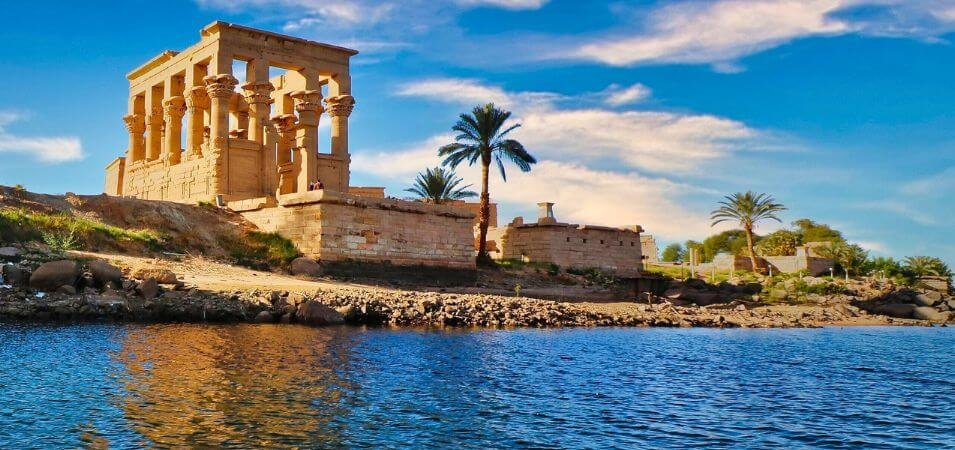
Near Aswan, on the banks of serene waters, stands the delicate and enchanting Philae Temple. Dedicated to the goddess Isis, the temple was relocated to its current island to protect it from flooding after the construction of the High Dam. Its journey and reconstruction make it one of the world’s greatest archaeological preservation achievements.
The temple’s architecture features refined colonnades, intimate sanctuaries, and artistic carvings depicting scenes from the life of Isis, including her role in resurrecting Osiris and protecting Horus. The purpose of Philae extended far beyond worship; pilgrims traveled across Egypt and beyond to seek blessings, healing, and wisdom.
Inside, the sanctuary is carefully lit, emphasizing the spiritual meaning of Isis as a mother, protector, and symbol of rebirth. Its blend of mythology, artistic detail, and historical preservation makes Philae one of the most beloved Egyptian temples.
Abu Simbel – The Mountain of Eternity
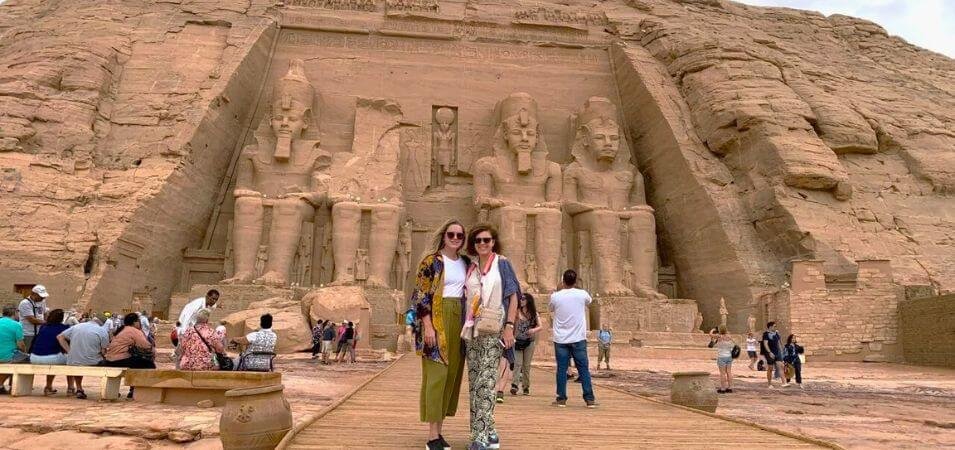
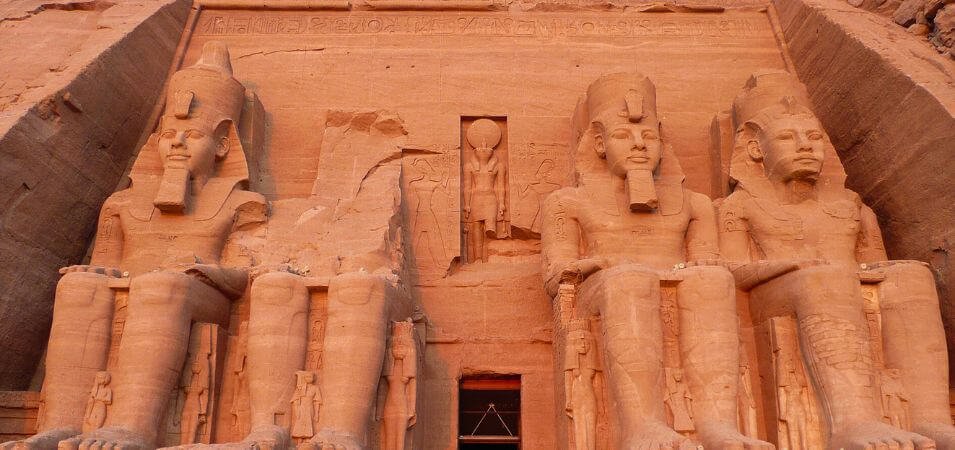
Although located farther south, many extended Nile cruise itineraries include a visit to the awe-inspiring Abu Simbel. As one of the most iconic Egyptian temples to visit on a Nile cruise, this monumental site is carved directly into a mountainside and stands as a dramatic declaration of power by Ramses II. The four colossal statues at its entrance are among the most recognized symbols of ancient Egypt, each one a testament to the pharaoh’s ambition, architectural mastery, and military achievements.
Inside the Great Temple, visitors encounter vast halls supported by Osirid pillars, with walls covered in intricate battle scenes, particularly the famous Battle of Kadesh. Deeper inside lies the sanctuary, aligned so that twice a year, the sun illuminates the statues of the gods and Ramses II—a feat of engineering that continues to astound historians.
Nearby stands the smaller temple dedicated to Queen Nefertari, a rare tribute to a royal consort. Its interior displays elegant carvings emphasizing her importance and divine connection.
Kom Ombo Temple – A Unique Double Sanctuary
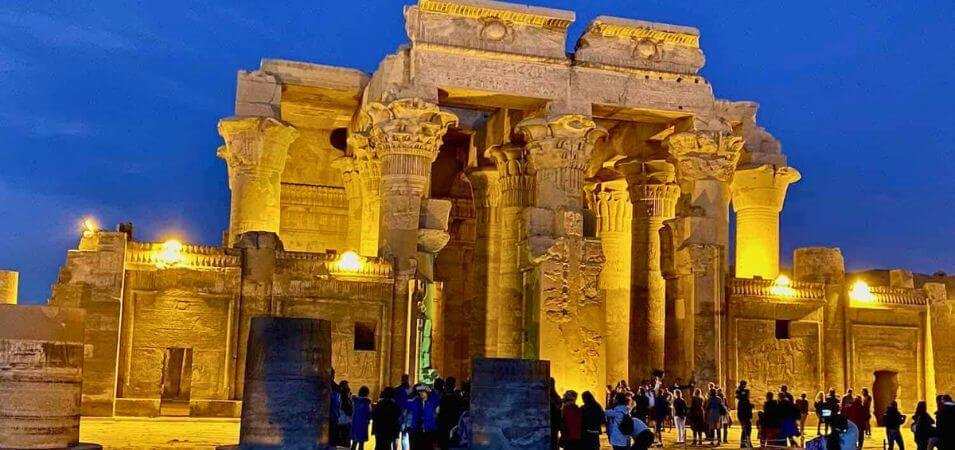
Sailing toward Kom Ombo introduces travelers to a temple unlike any other. The Kom Ombo Temple stands directly beside the Nile, its symmetry a reflection of its dual dedication: one side honors Sobek, the crocodile god, and the other honors Horus the Elder.
This architectural duality is one of its most fascinating features. Every element—from doorways to halls—is mirrored, creating a perfectly balanced layout. The temple’s purpose centered on healing and protection, as both Sobek and Horus represented forces important to ancient life.
Intriguing facts emerge as visitors explore the interior. Detailed carvings depict ancient medical tools, giving historians rare insight into Egyptian surgical practices. The nearby Crocodile Museum adds another layer of interest, displaying mummified crocodiles once considered sacred.
Edfu Temple – The Best-Preserved Temple in Egypt
Between Luxor and Aswan lies the remarkably preserved Edfu Temple, dedicated to Horus. Thanks to its excellent condition, it offers the closest experience to stepping into a functioning ancient sanctuary.
The temple’s towering pylon leads into courtyards and chambers filled with inscriptions describing the eternal struggle between Horus and Seth. These narratives reveal not only religious beliefs but also symbolic representations of order versus chaos. The interior includes a well-preserved sanctuary and ceremonial chambers, offering a clear understanding of temple rituals.
Edfu’s purpose extended beyond worship; it served as a center of learning, ceremony, and community identity. Its architecture follows the classic Ptolemaic style, blending traditional Egyptian design with refined artistic features.
The Architecture of Ancient Egyptian Temples
The architecture of these temples reflects a world deeply rooted in symbolism, especially when exploring Egyptian temples to visit on a Nile cruise. Every structure, from the grandest pylon to the smallest chamber, was crafted with cosmic intention. These temples were never simple constructions; they were living representations of creation itself, designed to guide worshippers from the earthly realm into the presence of the divine.
Massive pylons symbolized the horizon where the sun rose between two sacred peaks. Hypostyle halls evoked the marshes of creation, their towering columns shaped like papyrus and lotus plants to mirror the natural world. The inner sanctuary rooms were purposely small and dark, preserving an atmosphere of mystery that reflected the hidden nature of the gods. Obelisks rose like rays of sunlight, while sacred lakes served as symbols of purity and essential ritual cleansing.
The precise celestial alignments found in many temples—most famously the remarkable solar illumination phenomenon at a major southern monument—highlight the harmony between architecture, astronomy, and religious philosophy. This fusion of science, symbolism, and spirituality is one of the reasons these ancient structures remain so captivating for travelers today.
The Purpose and Function of Egyptian Temples to Visit on a Nile Cruise
Ancient Egyptian temples served multiple roles: religious, political, scientific, economic, and ceremonial. They housed the gods, preserved sacred knowledge, confirmed the pharaoh’s divine authority, and anchored communities through festivals and rituals.
Priests performed daily offerings to the gods, ensuring harmony between the human and divine worlds. Festival processions connected temples across cities, symbolizing unity and cosmic balance. Temples also stored wealth, agricultural surplus, artworks, texts, and historical records.
The purpose of these temples extended far beyond worship—they were engines of culture, stability, and identity.
Amazing Facts Behind Egyptian Temples to Visit on a Nile Cruise
While each temple has its unique highlights, several fascinating facts connect them. Many temples along the Nile were expanded by multiple pharaohs, each contributing architectural additions that reflected their reign. Temples also doubled as astronomical observatories, their layouts corresponding to celestial cycles. Inscriptions carved into their walls preserve military victories, religious rituals, and political propaganda.
One particularly compelling fact is how many temples survived natural disasters, invasions, and thousands of years of erosion. Their longevity reflects the impressive engineering skills of ancient builders and their deep understanding of geology, mathematics, and structural design.
The Interior Designs of Nile Temples
Stepping inside an ancient Egyptian temple is like entering a world frozen in time. The interiors are filled with symbolic carvings, painted reliefs, hidden chambers, and sacred spaces designed for ritualistic journeys. Light enters selectively, reinforcing the transition from the earthly world outside to the spiritual realm within.
Some temples, like Edfu and Philae, retain traces of their original colors, offering glimpses into the vibrant appearance these structures once had. Others, like Karnak, impress through their monumental scale and dramatic play of shadows. The interiors often follow a progressive path from public areas to increasingly exclusive spaces, mirroring the spiritual ascent toward the divine.
Conclusion
Exploring the best Egyptian temples on the Nile is one of the most unforgettable experiences in travel. These ancient structures offer more than historical insight—they provide a profound connection to a civilization that shaped the world’s understanding of spirituality, architecture, art, and leadership. Each temple reveals stories of gods and kings, victories and rituals, craftsmanship and cosmic order.
For anyone planning a journey, researching Egyptian temples to visit on a Nile cruise is essential, as these monuments form the heart of the experience. They are breathtaking reminders of human achievement and enduring symbols of a civilization that remains as mesmerizing today as it was thousands of years ago.
