
Exploring Egypt is a dream for many travelers, but choosing a Nile Cruise vs. Land Tour can shape your entire experience. Both offer unforgettable views of ancient temples, vibrant cities, and timeless landscapes, yet each comes with its own rhythm, comforts, and unique perspective. This comprehensive guide walks you through the history, architecture, interiors, purposes, and essential facts surrounding these travel styles so you can decide which journey best matches your travel personality.
Understanding the Essence of Egyptian Travel
Egypt is, at its core, a land of stories—stories carved in stone, painted on temple walls, buried beneath sand, and whispered along the Nile. Whether you glide on the river or travel by road, your experience hinges on how you want to absorb this ancient world. Nile cruises offer calm, leisure, and stunning slow-motion scenery, while a land tour immerses you deeper into local life, bustling markets, and spontaneous encounters that unfold on the streets.
History of Traveling Through the Nile Valley
Travel along the Nile has existed for thousands of years. In ancient times, Egyptians used the river as the main transportation route. Goods, people, and royalty moved between the major cities of Luxor, Memphis, and Aswan using wooden boats powered by the wind and current. The river was the lifeline of the civilization, making it a natural travel corridor since antiquity.
Land travel emerged as roads developed and camel caravans began to cross desert paths. This enabled visits to remote temples and settlements not directly located on the Nile. Modern Egypt adopted a mix of both methods—luxury cruise ships now sail from Aswan to Luxor, while comfortable highways connect ancient sites spread across the desert.
Choosing Nile Cruise vs. Land Tour isn’t just about travel logistics; it reflects two deep-rooted historical traditions of exploring Egypt.
What a Nile Cruise Experience Feels Like
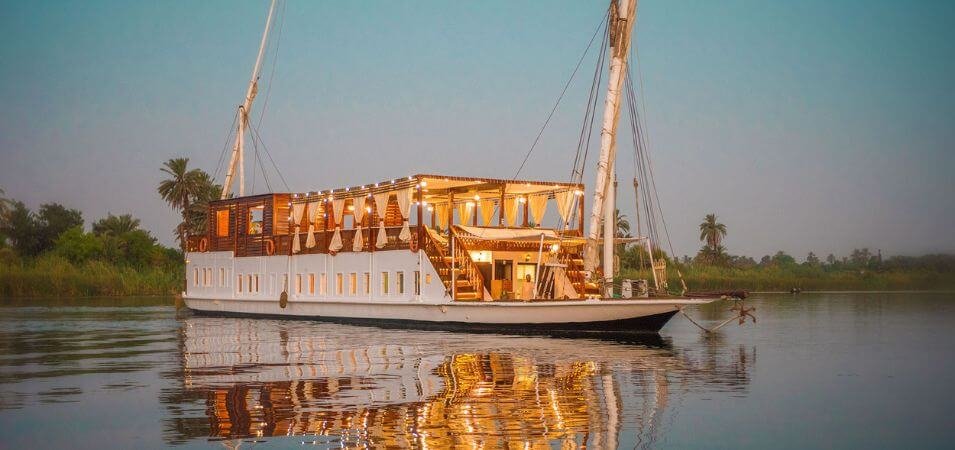
A Nile cruise is one of the most classic and atmospheric ways to explore the country. Large, multi-level ships glide gently along the river between Luxor and Aswan, offering panoramic views from sundecks and lounges.
Interior and Onboard Ambience
Inside a cruise ship, the atmosphere is peaceful and elegant. Rooms are typically designed with large windows so guests can watch daily life unfold along the riverbanks. Many ships offer restaurants, spas, swimming pools, and entertainment areas. The interiors usually blend modern comfort with subtle Egyptian touches—warm colors, carved wood, and motifs inspired by ancient art.
The pace of a cruise is slow and relaxing. Excursions are scheduled around temple visits, allowing travelers to absorb each site without rushing. When not touring, guests relax on deck, watching palm groves, fishing boats, and golden desert hills roll by like scenes from a living postcard.
Architectural Marvels You See on a Nile Cruise
Cruises conveniently stop at some of the Nile Valley’s most impressive temples. Travelers commonly visit:
- Luxor Temple and Karnak Temple, where grand pylons and massive columns showcase the power of New Kingdom pharaohs.
- The Valley of the Kings, home to the richly decorated tombs of rulers, each interior intricately painted with scenes of the afterlife.
- Kom Ombo Temple, uniquely dedicated to both Sobek and Horus the Elder, with architectural symmetry divided between two gods.
- Philae Temple, gracefully relocated to Agilkia Island, features refined reliefs honoring Isis.
Seeing these monumental structures rise from the riverbanks offers a sensory connection to the past that feels almost cinematic.
Purpose of a Nile Cruise
A cruise provides structure, comfort, and serenity. Its purpose is to offer a relaxed style of sightseeing where transportation becomes part of the pleasure. Travelers seeking calm, romance, or scenic beauty often find that cruising enhances the magic of Egyptian history rather than simply transporting them from point to point.
Experience Egypt the way it was meant to be seen—gliding along the legendary Nile. Book your Egypt Nile Cruise packages today and unlock ancient temples, breathtaking landscapes, and unforgettable moments from Luxor to Aswan. Your journey through history starts the moment you step onboard—reserve your cruise now and make your dream Egyptian adventure a reality!
What a Land Tour Offers
A land tour—sometimes called an overland tour—creates a more varied and immersive experience. Traveling by car or bus across cities and desert landscapes lets visitors explore areas that cruises cannot reach.
The Feel of Land-Based Exploration
On a land tour, each day can feel different. You might start your morning in the vibrant streets of Cairo, where the sound of car horns mixes with the aroma of fresh bread, then find yourself hours later in the vast silence of the Sahara.
Land tours can cover a wider geographic range, including destinations such as:
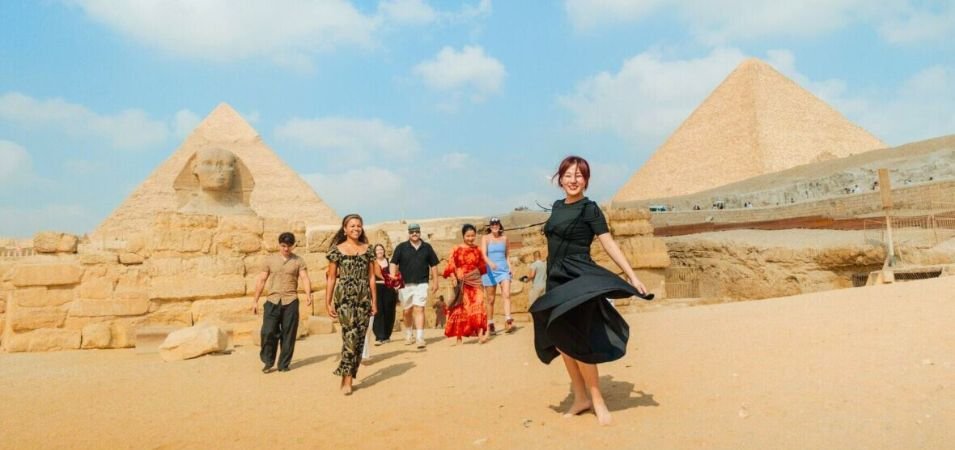
- The Great Pyramids and Sphinx of Giza, whose architecture represent Egypt’s oldest monumental structures.
- Saqqara’s Step Pyramid, the world’s earliest large-scale stone building.
- Abu Simbel, carved directly into a cliff with colossal statues guarding its entrance.
- The temples of Abydos and Dendera, celebrated for their immaculate, colorful interiors rarely seen by cruise travelers.
Traveling by road also allows spontaneous cultural encounters—the bustling souks, family-owned restaurants, desert villages, and local artisan shops that make Egypt vibrant today.
Interior of Land Tour Sites
Many interior spaces visited during land tours showcase some of the best-preserved artwork in Egypt. Dendera’s ceiling is covered with astronomical scenes, Abydos features the famous Abydos King List, and the tombs of the Nobles offer detailed depictions of daily life in ancient times. The interiors are often quieter and less crowded, giving travelers time to observe delicate pigments and architectural symmetry at their own pace.
Purpose of a Land Tour
A land tour is designed for flexibility. It suits travelers seeking deeper cultural immersion, wider exploration, and the freedom to choose how long to stay at each destination. It also allows access to archaeological sites located far beyond the Nile’s shoreline.
Architecture and Atmosphere: Cruise vs. Land
Choosing between Nile Cruise vs. Land Tour often comes down to how you want to experience Egypt’s architecture.
A cruise focuses on temples built directly along the Nile—structures designed to face the river because it was the symbolic artery of life. These temples were architectural masterpieces meant to be approached from water, making cruises historically immersive.
Land travel, on the other hand, gives access to desert temples and tombs carved into cliffs, pyramids constructed on elevated plateaus, and cities with intricate Islamic architecture. From Cairo’s medieval mosques to desert monasteries, a land tour adds architectural diversity beyond the river valley.
Practical Facts to Help You Choose
While both options provide exceptional experiences, their differences help travelers make the right choice based on preference and travel goals.
A Nile cruise is generally more relaxing. Egyptian dishes, transportation, and schedules are planned, making it ideal for travelers who want a smooth and comfortable journey. The scenery becomes part of the experience, and the slow movement of the ship creates a sense of timelessness.
A land tour requires more physical movement and transitions between hotels, but it offers unmatched variety. It’s perfect for travelers who want to see more than the standard Nile Valley route or who prefer exploring modern culture alongside ancient history.
The best choice ultimately depends on your travel style: calm and structured, or dynamic and exploratory.
Who Should Choose a Nile Cruise?
A Nile cruise suits travelers who enjoy a resort-style atmosphere and appreciate the romance of river travel. If you love the idea of waking up to the soft glow of sunrise over the Nile, savoring leisurely meals, and sailing past farmland and ancient ruins, a cruise will feel magical. It’s also ideal for those who want historical highlights without constant packing and unpacking.
Who Should Choose a Land Tour?
A land tour is ideal for adventurers who crave flexibility and authenticity. If you want to walk through local markets, experience Egypt’s cities in depth, visit remote archaeological sites, and see how ancient and modern Egypt blend together, land travel offers richer diversity. It’s well-suited for history enthusiasts who want to explore beyond the classic Nile route.
Final Thoughts: Which Is Truly Better?
There is no definitive winner in the debate of Nile Cruise vs. Land Tour—the best option depends on what you want from your journey. A cruise is smooth, scenic, and iconic, offering a timeless way to explore temples along the river. A land tour is expansive, immersive, and flexible, opening doors to architectural wonders and cultural experiences far from the Nile.
Some travelers even choose to combine both—cruising between Luxor and Aswan, then exploring Cairo, Abu Simbel, the desert, and northern sites by land. This hybrid approach delivers the best of both worlds.
No matter which path you choose, Egypt will leave you transformed. Its ancient temples, deep history, and breathtaking scenery ensure that every traveler—by river or by road—walks away with memories rooted as deeply as the stories carved into its stone walls.
