
Nestled along the banks of the majestic Nile River, Aswan City stands as one of Egypt’s most enchanting destinations. Known for its serene beauty, rich history, and unique architecture, Aswan offers visitors a glimpse into both ancient and modern Egyptian life. From bustling markets to sacred temples, this city holds a special place in the heart of every traveler who ventures south of Cairo.
What Makes Aswan City So Famous
Aswan City is famous for its stunning Nile scenery, historic sites, and vibrant Nubian culture. Perhaps one of its most iconic attractions is the Philae Temple, dedicated to the goddess Isis. This temple, beautifully situated on an island, offers visitors a magical experience as they navigate the waters to reach its grand columns and intricate carvings. Beyond its temples, Aswan is renowned for its Elephantine Island, where remnants of ancient settlements reveal the city’s historical significance as a trading and religious hub.
Another hallmark of the city is the Aswan High Dam, a modern marvel of engineering. Completed in the 1970s, the dam transformed Egypt’s economy by controlling Nile flooding, generating electricity, and creating Lake Nasser, one of the world’s largest artificial lakes. While the High Dam represents the city’s contemporary achievements, it stands in harmony with Aswan’s long-standing reputation as a center of trade and culture.
The Rich and Evolving History of Aswan City
The history of Aswan City is a remarkable journey shaped by trade, culture, and strategic importance along the Nile. For thousands of years, Aswan served as Egypt’s southern frontier—an entry point where Egyptian and Nubian civilizations met, interacted, and influenced one another. Its location made it a vibrant hub where goods, ideas, and traditions flowed freely between Africa and the rest of Egypt.

Aswan grew in prominence due to its role as a major trading center, where gold, ivory, spices, and exotic products from the African interior were transported northward. Travelers and merchants from across the ancient world passed through its bustling river docks, leaving behind a mosaic of cultural footprints that still shape the city’s identity today.
The city also played an important administrative role throughout the pharaonic period. It was home to officials responsible for monitoring Egypt’s borders and overseeing trade with neighboring regions. Many ancient inscriptions found around Aswan highlight its political and economic significance, offering valuable insight into how it functioned as both a guardian and gateway of the kingdom.
During the Greco-Roman era, Aswan remained a strategic settlement, with new temples and fortifications built to secure the southern lands. Under Islamic rule, the city continued to thrive as a key point of connection, sustaining its role in commerce and cultural exchange.
Aswan’s long history is still visible in its temples, ruins, and traditional communities. Every corner of the city reflects a chapter of Egypt’s story—from ancient rituals to medieval trade routes—making Aswan not just a place to visit, but a living archive of civilization.
Architecture and Interior of Aswan’s Historic Sites
Aswan’s architecture is a fascinating blend of ancient Egyptian, Nubian, and Islamic influences. The Philae Temple is a prime example, with its elegant pylons, elaborate hieroglyphics, and beautifully carved interiors. Walking through the temple, visitors can see intricate reliefs depicting religious rituals, mythological stories, and pharaohs making offerings to the gods.
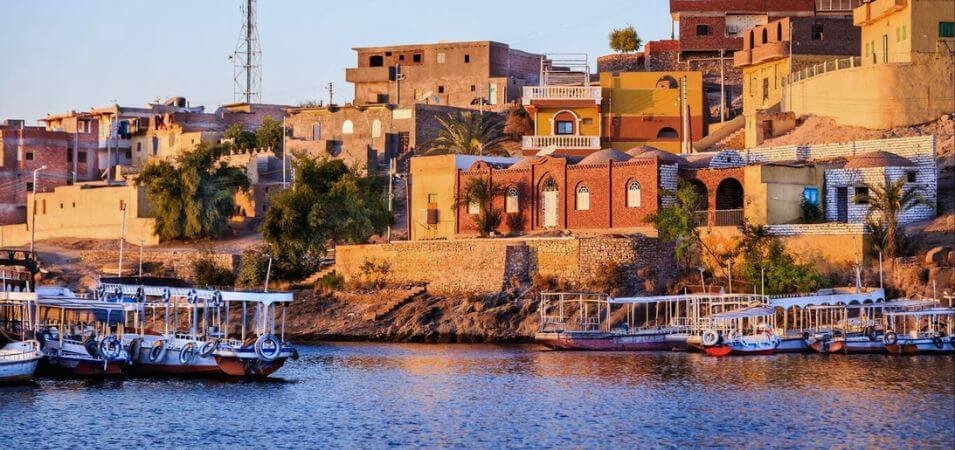
The Nubian houses in Aswan offer a completely different architectural experience. Painted in bright colors and adorned with traditional patterns, these homes reflect the city’s rich cultural diversity. Many of these houses have unique interiors designed to provide natural cooling, a practical adaptation to the region’s hot climate. Visitors exploring Nubian villages often find themselves fascinated by the blend of artistry, practicality, and cultural storytelling evident in each structure.
Even modern architecture in Aswan reflects the city’s respect for its heritage. Hotels and public buildings incorporate local design elements, such as domed ceilings, stone facades, and open courtyards, providing a seamless blend of old and new. The cityscape along the Nile offers breathtaking views where ancient temples, traditional homes, and modern constructions coexist harmoniously.
Exploring Aswan: Attractions and Cultural Highlights
Beyond its temples and architecture, Aswan City is famous for its vibrant cultural life. The old souks, or traditional markets, offer a sensory delight where visitors can experience local spices, fabrics, jewelry, and handicrafts. Walking through these markets, one can witness the daily rhythm of life in Aswan and the enduring influence of Nubian traditions.
Elephantine Island is another must-visit location, featuring archaeological sites, gardens, and the Aswan Museum, which displays artifacts from ancient Nubia. Visitors can also take leisurely felucca rides along the Nile, enjoying the tranquility of the river while observing the scenic beauty of the city and the surrounding landscapes.
For those interested in ancient history, a short trip from the city leads to Abu Simbel, the monumental temples built by Ramses II. These temples, carved directly into rock, demonstrate the grandeur of ancient Egyptian architecture and the city’s historical connection to major pharaonic projects. Back in Aswan itself, visitors can also explore the Unfinished Obelisk, an enormous monument left incomplete in the granite quarries. It offers a rare, up-close look at how ancient Egyptians carved and transported their massive obelisks, providing deeper insight into the engineering skill that defined their civilization.
Interesting Facts About Aswan City
Aswan is not only a hub of history and culture but also a city full of fascinating facts. It enjoys a more temperate climate compared to other parts of Egypt, making it a popular retreat during the hot summer months. The city is also home to the Nubian Museum, which preserves the heritage of Nubia and educates visitors about its people, traditions, and contributions to Egyptian history.
Another unique aspect of Aswan is its strategic role in Egypt’s ancient economy. The city functioned as a vital trade route connecting Egypt with sub-Saharan Africa, facilitating the exchange of gold, ivory, and exotic goods. Its location on the Nile made it a natural center for transportation and commerce, a role that continues to some extent today with tourism and river-based trade.
The Purpose and Significance of Aswan City
Throughout its long history, Aswan City has served multiple purposes. In ancient times, it was a religious, military, and commercial hub. Temples and shrines provided spiritual guidance, while quarries and trade routes ensured economic prosperity. In modern times, Aswan continues to fulfill practical roles through projects like the High Dam, while also acting as a cultural and tourist center, attracting visitors from around the globe.

The city’s enduring significance lies in its ability to balance tradition with modernity. It preserves the memory of Egypt’s past while embracing contemporary advancements, offering a living narrative of the country’s history. Visitors to Aswan leave not only with memories of beautiful landscapes and historic sites but also with an appreciation for the city’s ongoing cultural and economic importance.
Experiencing the Heart of Aswan
To truly experience Aswan City, one must immerse oneself in its daily life. Start with a stroll along the Nile Corniche, where locals gather for socializing, shopping, and relaxation. Enjoy traditional Nubian cuisine in small restaurants and interact with friendly locals who are often eager to share stories about their heritage.
Visiting Aswan during a cultural festival provides an even deeper insight into the city’s identity. Music, dance, and traditional crafts come alive during these events, celebrating both the past and present. Whether exploring ancient temples, cruising the Nile, or wandering through colorful neighborhoods, every moment in Aswan offers a connection to Egypt’s soul.
Conclusion
Aswan City is more than just a stop on a Nile itinerary—it is a city that embodies history, culture, and natural beauty. From the grandeur of Philae Temple and the engineering marvel of the High Dam to the charm of Nubian houses and bustling markets, Aswan offers a truly unique experience. Its rich history, diverse architecture, and fascinating facts make it a destination worth exploring for anyone seeking to understand the essence of Egypt.
Visiting Aswan allows travelers to step into a world where the past and present coexist, creating memories that last a lifetime. Whether you are an archaeology enthusiast, a culture seeker, or simply someone in search of breathtaking views along the Nile, Aswan City promises an unforgettable journey into the heart of Egypt.
