
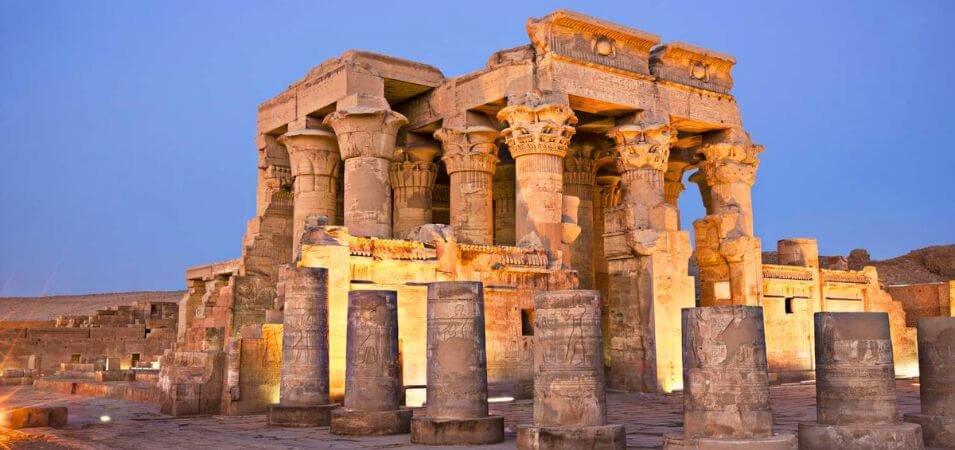
Kom Ombo Temple is one of Egypt’s most fascinating ancient monuments, not only for its beauty but also for its unusual design. Standing majestically along the eastern banks of the Nile River between Aswan and Edfu, this unique structure captivates travelers with its symmetry, rich history, and religious significance. What makes the temple especially intriguing is that it was dedicated to two gods at once—Sobek, the crocodile god, and Horus the Elder—resulting in a perfectly mirrored layout unlike any other temple in Egypt.
Today, Kom Ombo Temple attracts thousands of visitors who come to explore its architectural wonders, decipher its detailed carvings, and learn about the rituals and daily life of ancient Egyptians. Whether you are traveling through Upper Egypt on a Nile cruise or exploring Aswan’s historical attractions, the temple offers a memorable experience that immerses you in the country’s past.
The History of Kom Ombo Temple
Origins of a Dual Temple
The history of Kom Ombo Temple begins during the Ptolemaic period, around the 2nd century BC, although parts of it were later completed under Roman rule. Unlike other temples built for a single deity, this one was constructed for two equally powerful gods. The southern half honored Sobek, the god associated with fertility, military power, and, of course, crocodiles, which were abundant in the Nile near Kom Ombo. The northern half was dedicated to Horus the Elder, symbolizing protection, kingship, and the sky.
This unusual dedication created political and spiritual balance in a region where both deities were widely worshipped. The dual purpose of the temple made Kom Ombo an important spiritual center, drawing priests and worshippers from across the region who participated in ceremonies, healing rituals, and offerings.
Development Through Time
Kom Ombo Temple was built during the reign of Ptolemy VI but saw expansions and restorations under later rulers, including Ptolemy XII and the Roman emperors Augustus and Tiberius. The Romans added several architectural elements and inscriptions, including scenes of medical instruments and surgical tools that reveal ancient Egypt’s advanced knowledge of medicine.
Throughout the centuries, the temple suffered from natural erosion, Nile floods, and human activity. Some carvings were damaged, and parts of the roof collapsed. However, extensive restoration efforts in the 20th century helped bring the temple back to life. Today, modern visitors can once again appreciate its grand pillars, sacred chambers, and extraordinary stone reliefs that tell stories thousands of years old.
Architecture of Kom Ombo Temple
A Perfectly Symmetrical Design
What sets Kom Ombo Temple apart is its perfectly symmetrical architectural layout. The temple is essentially two temples fused into one. Everything—from halls and doorways to sanctuaries and courtyards—is duplicated, reflecting the equal importance of the two gods worshipped here.
As you walk into the main courtyard, you’ll notice two matching entrances leading into two parallel hypostyle halls. Each hall corresponds to one of the deities, with columns decorated with lotus and papyrus capitals that represent Upper and Lower Egypt. The inscriptions and carvings along the walls mirror each other, creating a harmonious visual balance that is rarely found in Egyptian architecture.
Decorative Reliefs and Symbolism
The walls of Kom Ombo Temple are adorned with some of the most detailed and symbolic carvings in all of Egypt. Scenes depict offerings to the gods, ceremonies, medical treatments, and even astronomical observations. One of the most famous carvings is the depiction of ancient surgical instruments—scalpels, forceps, scissors, and more—suggesting that Kom Ombo may have been a center for healing and medical practice.
Another captivating relief tells the story of Sobek, whose association with the Nile’s crocodiles made him both feared and respected. Many carvings also emphasize Horus’s protective role, portraying him standing behind pharaohs as a guardian deity. These detailed scenes provide invaluable insight into ancient Egyptian culture, religion, and daily life.
The Purpose of Kom Ombo Temple
A Place of Worship and Healing
Kom Ombo Temple served as a major religious center where priests performed rituals honoring Sobek and Horus. Each god had separate priesthoods, shrines, and ceremonial practices. Worshippers visited the temple seeking protection, fertility, guidance, and healing.
The presence of medical instruments carved into the walls suggests that the temple functioned as a healing center. Many believe that priests practiced medicine here and offered treatments to the sick. Visitors may also have come seeking divine intervention, believing that Sobek and Horus could cure illness and protect them from harm.
A Strategic Location on the Nile
Kom Ombo’s position along the Nile made it an important stop for ancient travelers, traders, and soldiers. The temple’s placement on a high bank allowed it to be seen from afar, creating a symbolic welcome for boats approaching the settlement. It also served as a reminder of the gods’ power and protection along the river, which was the lifeline of ancient Egypt.
Inside Kom Ombo Temple
Exploring the Interior Layout
As you step inside Kom Ombo Temple, you immediately experience the harmonious yet unusual layout. The twin entrances lead to two sets of ceremonial rooms. Each side contains its own sanctuaries, offering halls, and priest chambers, all decorated to honor their corresponding deity.
Visitors often spend time exploring both sides, comparing the carvings and studying the subtle differences in the stories depicted. The interior columns, with their detailed floral capitals, create an intimate yet majestic atmosphere as the sunlight filters through broken ceilings and casts shadows across the stone floors.
The Inner Sanctuaries
At the very heart of the temple lie the inner sanctuaries of Sobek and Horus. These rooms once held statues of the gods, which priests would bathe, clothe, and offer food to each day. Though the original statues are long gone, the sanctuaries offer a powerful glimpse into ancient ritual practices.
The Nileometer and Sacred Lake
Behind the temple, visitors can see a well-preserved Nileometer—a structure used to measure the water levels of the Nile during the flood season. The temple also features remnants of a sacred lake where priests performed purification rituals before entering the sanctuaries.

Interesting Facts About Kom Ombo Temple
Crocodile Mummies and the Sobek Connection
One of the most fascinating aspects of Kom Ombo Temple is the connection to crocodiles. In ancient times, crocodiles thrived in the waters around Kom Ombo, and the people associated these powerful creatures with Sobek. As part of their worship, Egyptians mummified crocodiles and buried them in nearby tombs.
Today, you can see many of these preserved crocodile mummies at the Crocodile Museum, located next to the temple. The museum displays mummified crocodiles of various sizes, along with artifacts and information about the cult of Sobek, making it an essential part of any visit.
Roman Influence on the Temple
While the temple was built during the Ptolemaic period, the Romans contributed significantly to its final appearance. Roman emperors expanded the complex and added inscriptions that blend Egyptian and Greco-Roman artistic styles. This combination makes Kom Ombo one of the most culturally diverse temples in Egypt.
Nearby Attractions Worth Visiting
Edfu Temple
A short distance north of Kom Ombo lies the Temple of Edfu, one of the best-preserved temples in Egypt. Dedicated to Horus, it features towering pylons, dramatic reliefs, and an impressive sanctuary. Many travelers visit both temples on the same day, especially when cruising the Nile.
Aswan High Dam and Philae Temple
If you continue traveling south toward Aswan, you’ll reach major attractions such as the Aswan High Dam and the beautiful Philae Temple, dedicated to Isis. These landmarks offer additional layers of Egyptian history and are commonly included in Nile cruise itineraries.
Nubian Village in Aswan
For a cultural experience, the Nubian Village in Aswan offers colorful houses, warm hospitality, and a chance to learn about Nubian traditions. Many visitors enjoy strolling through the vibrant streets or taking a boat ride along the Nile while learning about the unique heritage of the region.
Why You Should Visit Kom Ombo Temple
Kom Ombo Temple is more than an archaeological site—it’s a journey into ancient Egypt’s beliefs, architecture, and daily life. Its twin design, symbolic carvings, and rich history make it one of the most memorable temples along the Nile. Whether you’re fascinated by ancient religion, architecture, or simply enjoy exploring historical sites, this extraordinary temple offers a captivating experience.
Visitors often describe Kom Ombo as a place where the past feels close enough to touch. The peaceful riverside setting, combined with the temple’s mysterious stories and extraordinary craftsmanship, makes it a must-see attraction for anyone visiting Egypt.
Conclusion
Kom Ombo Temple stands as a rare masterpiece in the world of ancient Egyptian architecture. With its symmetrical design, dual dedication to Sobek and Horus, and incredible carvings, the temple offers a window into the lives, beliefs, and rituals of its creators. Exploring its halls, reliefs, and sanctuaries allows you to understand why this temple played such an essential role in Egypt’s spiritual and cultural history.
Whether you’re traveling on a Nile cruise, touring Aswan, or exploring Upper Egypt, Kom Ombo Temple promises an unforgettable journey into the heart of ancient Egypt—and remains one of the top attractions you should not miss.
