
The Nubian Village in Aswan is one of Egypt’s most immersive cultural experiences, full of color, rhythm, history, and stories that have survived for thousands of years. Nestled along the Nile, the village fascinates visitors with its bright architecture, friendly people, traditional music, and ancient heritage. From the moment you arrive—often by Nile cruise va Felucca, gliding past Aswan’s iconic attractions—you step into a world unlike any other in Egypt.
This guide explores the village’s history, purpose, architecture, interior design, cultural festivals, activities, souvenirs, and nearby attractions so you can fully appreciate why this destination is one of Aswan’s most unforgettable highlights.
The History of the Nubian Village
The story of the Nubian Village in Aswan begins thousands of years ago, long before many ancient civilizations rose to power. Nubians are among Africa’s oldest peoples, known for their early kingdoms, powerful rulers, and unique language. Their territory historically stretched along the Nile in what is now southern Egypt and northern Sudan, forming a region rich in gold, trade, and monumental achievements.
Nubian communities lived in harmony with the Nile for generations. Their villages were built from mud brick, their artwork reflected the desert and river around them, and their architecture relied on domes and arches that naturally cooled their homes. However, a major turning point came in the 1960s with the construction of the Aswan High Dam. The creation of Lake Nasser forced many Nubian families to relocate, their villages submerged by rising waters.
Rather than losing their identity, Nubians rebuilt their villages with the same passion and creativity. Today, the colorful houses, hand-painted designs, and traditional crafts are living evidence of a culture determined to preserve its spirit. The village you explore today is a modern continuation of ancient traditions and a tribute to Nubian resilience.
Where Is the Nubian Village Located?
The Nubian Village in Aswan lies on the west bank of the Nile, near Soheil Island and just a short boat ride from central Aswan. Most travelers arrive on small motorboats, traditional feluccas, or during stops offered by luxury Nile cruises. The journey itself is an attraction: the river widens, birds glide above the water, and massive boulders create scenic landscapes unique to the region.
Your trip may also pass several famous Aswan attractions, including the Aswan Botanical Garden, the Tombs of the Nobles, and Elephantine Island, making the ride to the village just as delightful as the destination. The desert hills, golden sand dunes, and lush riverbanks blend together beautifully, giving visitors an unforgettable first impression of the Nubian land.
The Architecture and Interior of the Nubian Village
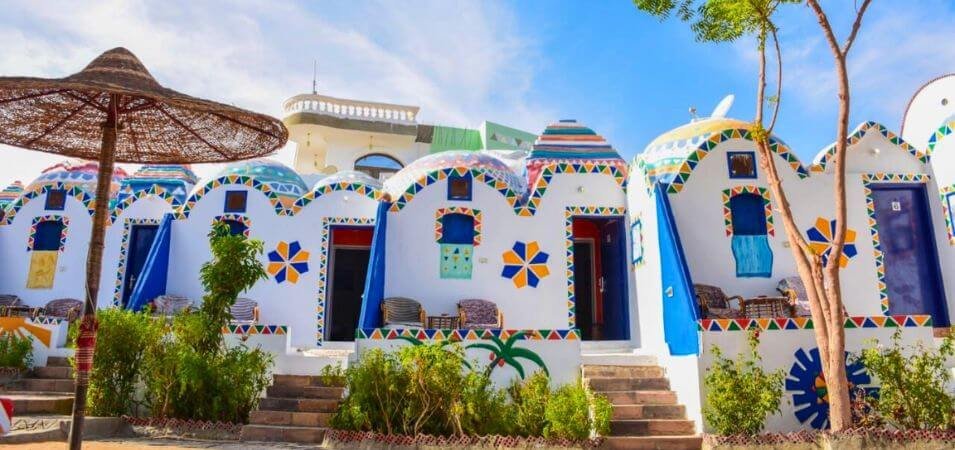
Stepping into the Nubian Village in Aswan feels like entering an open-air art gallery. The architecture is bright, symbolic, and intentionally designed to reflect the harmony between culture and nature. Houses are typically made from mud bricks, a tradition that keeps interiors cool during Aswan’s intense heat. Domes, curved ceilings, and archways help circulate air naturally, eliminating the need for modern cooling systems.
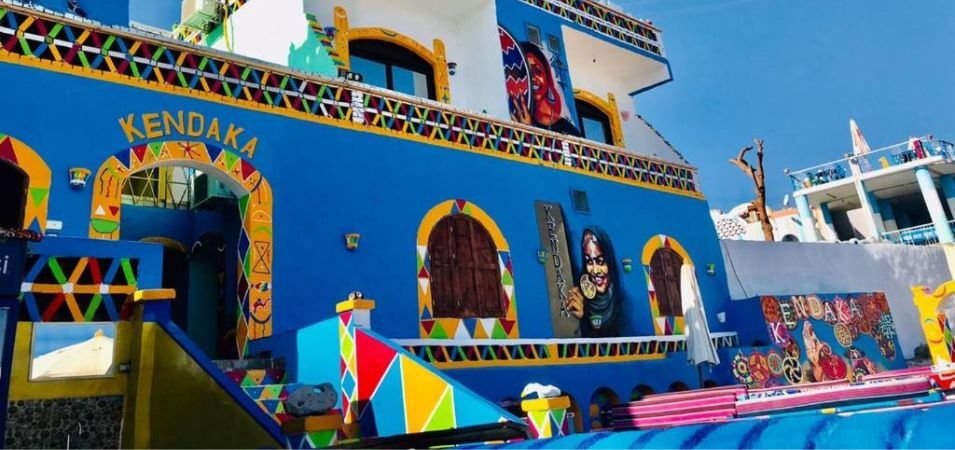
The exteriors are hand-painted with vivid shades of blue, pink, green, orange, and yellow—colors believed to bring joy and blessings. Many walls display Nile-inspired artwork: crocodiles, boats, palm trees, suns, and geometric patterns that tell stories of daily life, mythology, and ancient beliefs. These paintings reveal the artistic heart of the Nubian community.
Inside the homes, the décor is equally charming. Visitors discover low seating areas, woven carpets, clay pottery, wall hangings, and handmade baskets crafted from palm leaves. The interiors are airy and peaceful, soaking up natural light through small windows. Many homes even welcome tourists inside to see traditional kitchens, inner courtyards, or small family museums showcasing heirlooms passed down over generations.
The combination of color, texture, and practical design highlights the Nubian philosophy: simplicity, beauty, and comfort intertwined with tradition.
Nubian Village Activities
A visit to the Nubian Village in Aswan is never just a sightseeing stop—it is a cultural experience filled with warm hospitality and unforgettable activities.
Many travelers begin by exploring the village’s scenic streets, where children play, artists paint murals, and shop owners greet visitors with smiles. Some local families open their homes to guests, encouraging them to learn about Nubian customs, taste homemade food, or enjoy a cup of hibiscus tea.
One of the most memorable activities is taking part in a Nubian cooking experience. Here, you prepare dishes flavored with cumin, cloves, garlic, and aromatic herbs while hearing the stories behind each recipe. Others prefer a camel ride along the golden dunes behind the village, where the desert meets the Nile in perfect harmony.
Visitors also enjoy vibrant musical gatherings where traditional drums, clapping rhythms, and Nubian songs come alive. The music is powerful—full of energy and emotion—and travelers often find themselves dancing alongside villagers.
For those who want a relaxing experience, a peaceful boat ride around the surrounding islands is ideal. Sunset on the Nile paints the water in shades of orange and gold, creating a magical atmosphere that many consider the highlight of their trip.
The Nubian Museum
A short distance from the Nubian Village in Aswan, the Nubian Museum stands as one of Egypt’s most impressive cultural institutions. Built in the 1990s, the museum was created to preserve artifacts and traditions endangered by the flooding caused by the Aswan High Dam.
Inside, visitors explore thousands of years of Nubian history through more than 3,000 artifacts. These include pottery, ancient tools, jewelry, manuscripts, statues, and photographs documenting the villages before relocation. The museum’s architecture blends perfectly with the surrounding landscape, using natural stone and desert-inspired design to create a calm and reflective atmosphere.
The museum takes you on a chronological journey through Nubian civilization—from prehistoric settlements to the kingdoms of Kush and Meroe, and then to modern Nubian life. This attraction is an essential companion to a village visit, offering historical depth that enriches your overall experience.
Nearby Attractions Worth Exploring
The Nubian Village in Aswan is surrounded by several fascinating attractions that enhance your journey along the Nile. Many travelers combine their visit with the Temple of Philae, known for its incredible island setting and beautifully restored reliefs. The Unfinished Obelisk, carved directly into Aswan’s granite quarries, offers insight into ancient craftsmanship.
At the Aswan Botanical Garden, located on Kitchener Island, travelers stroll through towering palm trees, rare plants, and scenic pathways. Elephantine Island is another attraction full of archaeological sites, traditional villages, and Nubian temples.
Local Crafts and Souvenirs
Shopping in the Nubian Village in Aswan is an experience full of color, creativity, and cultural pride. The village is famous for handmade crafts created using traditional techniques passed down over generations.
Visitors find beautifully woven baskets, beaded jewelry, clay pottery, colorful fabrics, and natural henna. Many shops sell spices such as saffron, hibiscus, cinnamon, and cumin, filling the air with warm and exotic aromas. One of the most popular souvenirs is the “khamsa” good-luck charm, shaped like a hand to ward off negative energy.
Nubian artisans often demonstrate their craft directly in front of visitors, explaining the meaning behind each design. Taking home a souvenir becomes more than just a purchase—it becomes a meaningful reminder of the culture, stories, and people you encountered.

Traditional Festivals and Celebrations
Nubian celebrations are among the most joyful and vibrant experiences you can witness in Egypt. Music plays a central role, with rhythmic drumbeats, clapping patterns, and traditional dances bringing gatherings to life.
Weddings are particularly spectacular. Homes are decorated with bright colors and lanterns, and family members sing and dance late into the night. Visitors are often welcomed to join, experiencing firsthand the warmth and togetherness that define Nubian culture.
Religious holidays and seasonal festivals also bring the community together. Families share traditional meals, exchange stories, and honor customs that have survived centuries. These celebrations are not only joyful but also serve as a way to keep cultural identity strong from one generation to the next.
Why the Nubian Village in Aswan Is Worth Visiting
The Nubian Village in Aswan is far more than a tourist attraction—it is a living expression of culture, history, and community. Its colorful houses, peaceful Nile views, traditional music, delicious food, and warm hospitality leave a lasting impression on every traveler. Whether you visit by boat or as part of a larger Egypt itinerary, the village offers a cultural richness you won’t find anywhere else.
Exploring the Nubian Museum, wandering through the painted streets, shopping for handmade crafts, meeting local families, or simply watching the sunset over the river—all these experiences create memories that stay with you long after your trip ends
