
Luxor Temple is one of the most iconic and awe-inspiring monuments in Egypt, drawing visitors from around the world. Known for its grand architecture, intricate carvings, and rich history, this temple offers a glimpse into the religious, cultural, and political life of ancient Egypt. If you are planning to explore Egypt’s historical treasures, understanding the Luxor Temple is a must.
Where Luxor Temple Located?
Luxor Temple is situated in the modern city of Luxor, on the east bank of the Nile River. Luxor, often referred to as the world’s greatest open-air museum, was historically known as Thebes, the ancient capital of Upper Egypt. The temple sits in the heart of the city, making it easily accessible for travelers. The east bank of Luxor is home to many other significant monuments, including Karnak Temple, while the west bank houses the Valley of the Kings and other necropolises. This strategic location highlights Luxor Temple’s central role in the religious and political life of ancient Thebes.
Who Constructed the Luxor Temple, and When?
The construction of Luxor Temple was initiated during the New Kingdom period of ancient Egypt. The earliest structures are attributed to Pharaoh Amenhotep III, who reigned from 1391 to 1353 BCE. Amenhotep III commissioned the initial grand colonnades and statues that defined the temple’s majestic appearance.
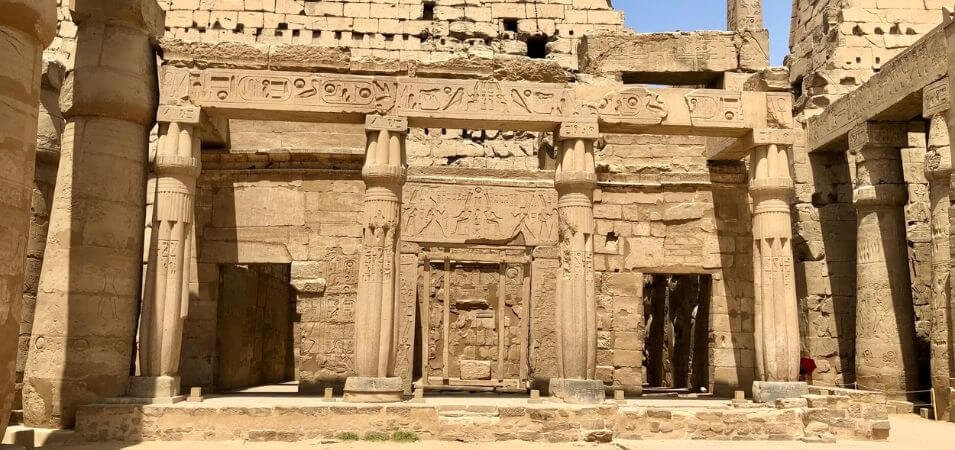
Later, Pharaoh Tutankhamun and Horemheb made minor modifications to the temple. However, it was Ramesses II, one of Egypt’s most famous pharaohs, who significantly expanded Luxor Temple during the 13th century BCE. Ramesses II added monumental statues, elaborate obelisks, and decorative elements, leaving a lasting mark on the temple’s grandeur. Over time, various rulers contributed to renovations and extensions, reflecting Luxor Temple’s continuous importance for centuries.
Exploring the History of the Temple
Luxor Temple’s history is deeply intertwined with the religious and ceremonial life of ancient Egypt. Unlike many temples that were dedicated to a single god, Luxor Temple was primarily associated with the Theban Triad of gods: Amun, Mut, and Khonsu. It played a central role in the Opet Festival, an annual celebration where statues of the gods were transported from Karnak Temple to Luxor Temple to renew the divine power of the pharaoh. This festival symbolized the connection between the gods and the ruler, reaffirming the legitimacy of the pharaoh’s reign.
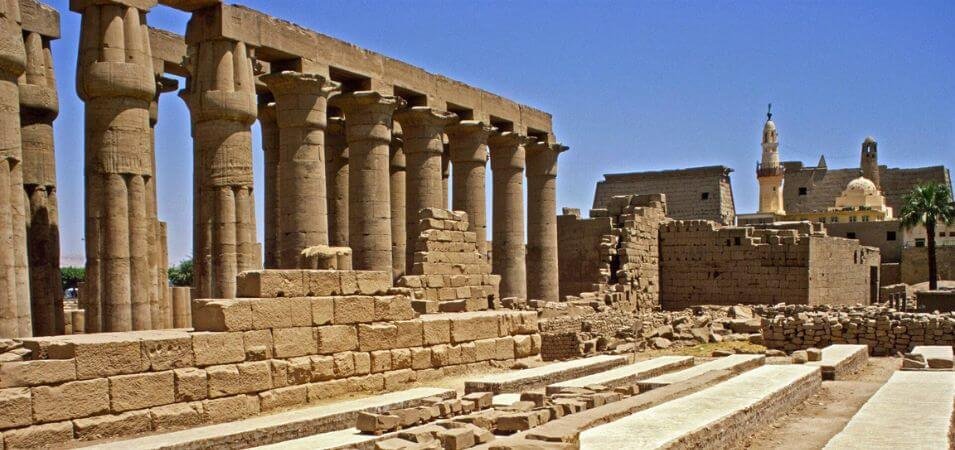
Throughout its history, Luxor Temple served not only as a religious site but also as a hub for royal ceremonies, political events, and cultural activities. After the decline of ancient Egyptian religion, the temple transformed during the Christian and Islamic periods. Parts of the temple were converted into a church during the Coptic era, and a mosque dedicated to Abu Haggag was later built within the temple complex, which remains in use today.
Architecture of Luxor Temple
Luxor Temple is renowned for its grand architectural design, which reflects the sophistication of ancient Egyptian construction techniques. The temple’s layout follows the traditional axial plan, guiding visitors through a sequence of monumental gateways, open courtyards, massive columns, and inner sanctuaries.
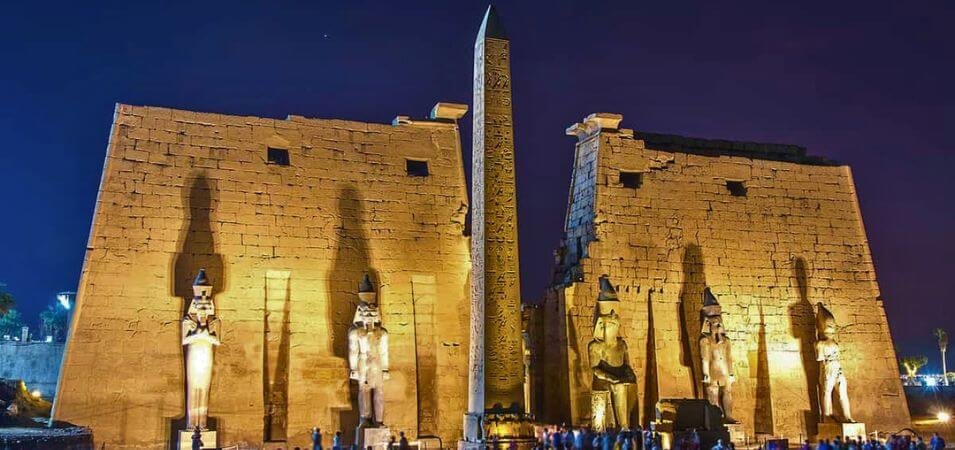
The entrance is marked by a massive pylon, adorned with reliefs depicting the pharaoh’s triumphs and divine blessings. The first courtyard is flanked by colossal statues, including several representations of Ramesses II, emphasizing the pharaoh’s power and authority. Beyond the courtyard lies the hypostyle hall, a forest of towering columns covered with intricate hieroglyphic inscriptions and carvings illustrating religious rituals and historical events.
The inner sanctuaries of Luxor Temple were considered the most sacred spaces, accessible only to priests and royalty. These chambers were dedicated to the worship of gods and the performance of sacred rites. The careful alignment of the temple with celestial and solar events demonstrates the Egyptians’ profound understanding of astronomy and its integration into religious architecture.
Interior and Decorative Features
The interior of Luxor Temple is a masterpiece of art and symbolism. The walls, columns, and statues are decorated with detailed carvings and inscriptions that convey stories of divine favor, military victories, and the pharaoh’s piety. Scenes depicting the Opet Festival provide valuable insight into the ceremonial practices of the time.
One of the most remarkable features inside the temple is the Great Court, surrounded by massive columns with intricate capitals in the shape of papyrus and lotus plants. The hypostyle hall, with its forest of columns, creates an awe-inspiring atmosphere, evoking the sense of entering a sacred realm. Statues of pharaohs and deities are strategically placed to emphasize the connection between the divine and mortal worlds.
Luxor Temple also contains several obelisks, one of which was transported to Paris and now stands in the Place de la Concorde. These towering stone monuments were not only symbolic of the pharaoh’s power but also served as commemorative structures celebrating military victories and divine protection.
Facts About Luxor Temple
Luxor Temple holds numerous fascinating facts that make it a must-visit site in Egypt. Unlike many other temples that were abandoned or buried over time, Luxor Temple has remained relatively well-preserved, allowing modern visitors to experience its grandeur.
The temple is unique in its continuous use over thousands of years. From its origins in the New Kingdom to its Christian and Islamic transformations, Luxor Temple demonstrates the adaptability of sacred spaces across different cultures and religions.
Luxor Temple’s construction utilized large sandstone blocks, some weighing several tons, showcasing the Egyptians’ engineering skills. The alignment of the temple with the Nile and celestial events reflects the deep connection between religion, nature, and astronomy in ancient Egyptian thought.
Another interesting fact is that the temple complex once extended all the way to Karnak Temple, connected by the Avenue of Sphinxes. This ceremonial route, lined with hundreds of sphinx statues, symbolized the path taken by the gods during religious festivals, enhancing the spiritual significance of the journey.
Visiting Luxor Temple Today
Today, Luxor Temple remains one of Egypt’s most visited historical sites. The temple offers a unique opportunity to explore ancient architecture, religious practices, and Egyptian history firsthand. Visitors can walk through the grand courtyards, admire the towering statues, and study the intricate carvings that narrate centuries of Egyptian civilization.
Evening visits are particularly enchanting, as the temple is beautifully illuminated, creating a magical atmosphere that evokes the grandeur of ancient Egypt. The presence of Abu Haggag Mosque within the complex adds a living cultural dimension, demonstrating the temple’s continued relevance and spiritual significance.
Attractions Near the Temple
Luxor Temple is perfectly located in the heart of Luxor, making it easy for visitors to explore several other remarkable attractions nearby. Just a short distance from the temple lies the Karnak Temple Complex, one of the largest religious sites ever constructed. Known for its massive pylons, towering obelisks, and the famous Hypostyle Hall with 134 colossal columns, Karnak offers an unforgettable glimpse into ancient Egyptian grandeur. Many travelers combine visits to Luxor Temple and Karnak to experience the full scope of Thebes’ religious and architectural significance.
A stroll along the Avenue of Sphinxes, which historically connected Luxor Temple and Karnak Temple, allows visitors to imagine the ceremonial processions of the pharaohs and gods during the Opet Festival. Although partially restored, the avenue still showcases rows of sphinx statues that once lined this sacred path.
On the west bank of the Nile, across from Luxor Temple, lie the Valley of the Kings and the Valley of the Queens, where pharaohs and their families were laid to rest in elaborately decorated tombs. While slightly farther away, these sites are essential for anyone seeking to explore the rich history of ancient Thebes. Nearby, the Colossi of Memnon—two giant stone statues of Pharaoh Amenhotep III—stand as enduring symbols of Luxor’s ancient past.
For visitors interested in modern Luxor, the Luxor Museum offers an impressive collection of artifacts excavated from nearby temples and tombs, including statues, jewelry, and papyri, providing deeper insights into the lives and beliefs of ancient Egyptians.
Whether you’re captivated by monumental temples, royal tombs, or historical artifacts, the area surrounding Luxor Temple offers a treasure trove of attractions, all within easy reach for an enriching exploration of Egypt’s past.
Conclusion
Luxor Temple stands as a testament to the ingenuity, devotion, and artistic excellence of ancient Egypt. From its strategic location in Luxor and construction by Pharaohs Amenhotep III and Ramesses II to its pivotal role in the Opet Festival, Luxor Temple embodies the essence of Egyptian civilization. Its magnificent architecture, intricate interior decorations, and rich history make it a must-visit destination for travelers and history enthusiasts alike. Exploring Luxor Temple allows visitors to step back in time and experience the grandeur of one of the most important religious and cultural centers of ancient Egypt. Whether you are fascinated by architecture, history, or religious rituals, Luxor Temple offers an unforgettable journey into the heart of Thebes.
