
The Temple of Abydos is one of Egypt’s most mystical and historically important sites, yet it remains far less crowded than temples in Luxor or Aswan. Revered as a center of pilgrimage for thousands of years, Abydos preserves some of the most detailed wall carvings, fascinating inscriptions, and mysterious architectural features ever uncovered in Egypt. We will let you explore the Temple of Abydos’ history, architecture, purpose, interior highlights, and essential Temple of Abydos facts, offering a rich and engaging journey through one of the country’s greatest ancient wonders.
The Temple of Abydos: An Introduction to Egypt’s Sacred City
Abydos is located in Upper Egypt, north of Luxor, and has long been considered one of the holiest places in ancient Egyptian religion. It served as the cult center of Osiris, god of the afterlife, resurrection, and eternal justice. Egyptians believed the entrance to the underworld was located near Abydos, making the site a symbolic gateway between life and death. Pilgrims from across the country traveled here to honor Osiris, leave offerings, and participate in rituals that celebrated rebirth.
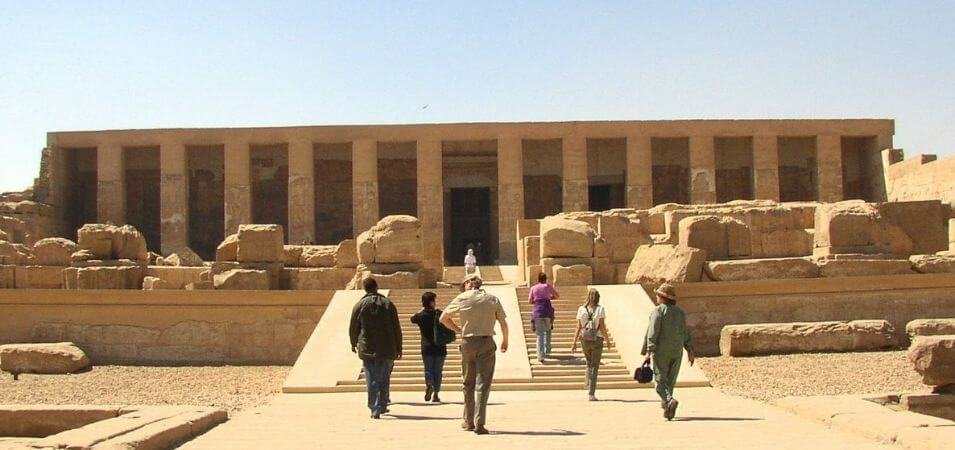
The most famous monument in Abydos is the Temple of Seti I, commonly referred to as the Temple of Abydos. Its reliefs are among the best preserved in Egypt, and the temple’s layout reflects a unique blend of religious symbolism and architectural ambition.
Temple of Abydos History: From Pharaohs to Pilgrims
The construction of the Temple of Abydos began under Pharaoh Seti I during the 19th Dynasty and was completed by his son, Ramesses II. Seti I intended the temple to honor both the gods and his own royal lineage, creating a structure that combined state power with deep spiritual significance.
The Temple of Abydos played a major role in religious festivals dedicated to Osiris. Ancient texts and reliefs show processions, reenactments of divine myths, and ceremonies symbolizing the death and resurrection of the god. These traditions continued for centuries, making Abydos one of the longest-active sacred shrines in Egyptian history.
Beyond its religious importance, Abydos also became a political symbol. Pharaohs used the site to connect themselves with ancient traditions and legitimize their power. The famous Abydos King List, carved into the temple walls, is a chronological record of Egypt’s rulers and one of the most valuable historical documents from ancient times.
Architecture of the Temple of Abydos: A Rare and Perfect Design
The Temple of Abydos is celebrated for its unusual L-shaped layout, which sets it apart from most temples in Egypt. The design includes seven doorways leading into seven chapels, each dedicated to a different deity. This multi-chapel arrangement is one of the temple’s most distinctive architectural features.
The facade of the temple includes a large courtyard once surrounded by pillars and decorated with scenes of kings presenting offerings to the gods. Inside, the temple becomes increasingly sacred as visitors progress deeper into its halls, a symbolic journey toward the heart of the divine world.
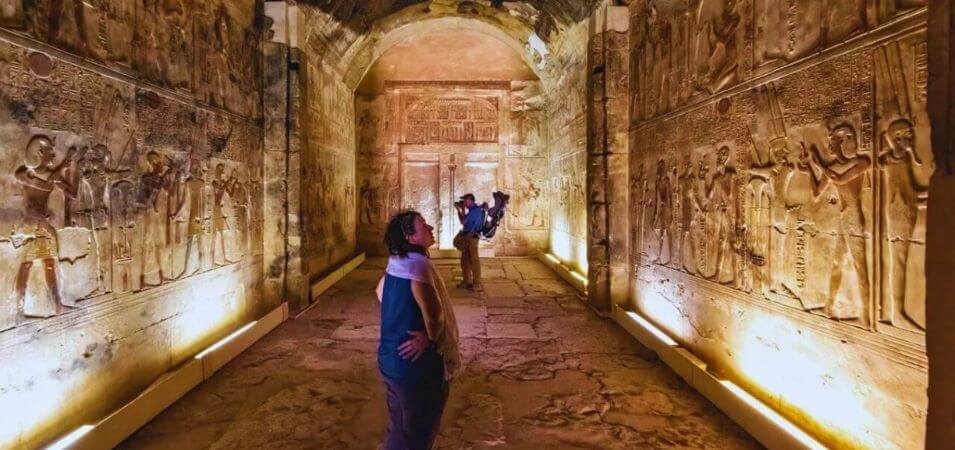
One of the architectural masterpieces of Abydos is the Hypostyle Hall, filled with intricately carved columns. These columns support a partially preserved roof that filters sunlight softly into the interior, giving the space a serene and almost otherworldly atmosphere.

Exploring the Interior: The Art and Mysticism of Abydos
Walking through the Temple of Abydos feels like stepping into a living illustration of ancient Egyptian mythology. The reliefs inside the temple are famous for their exceptional craftsmanship and vibrant original colors that still survive in many sections.
The seven chapels dedicated to Osiris, Isis, Horus, Amun-Ra, Ra-Horakhty, Ptah, and Seti I himself form the spiritual core of the temple. Each chapel contains scenes of rituals, offerings, and divine interactions. The Chapel of Osiris is particularly striking, showcasing detailed depictions of the god’s resurrection and the eternal cycle of life.
One of the most fascinating parts of the interior is the Osireion, a mysterious underground structure located behind the main temple. Built with massive stone blocks, it resembles the architectural style of the Old Kingdom rather than the era of Seti I. Scholars still debate its purpose, with theories suggesting it served as a symbolic tomb of Osiris or a cenotaph linked to the mysteries of rebirth.
Temple of Abydos Facts: History Carved in Stone
The Temple of Abydos is home to several remarkable historical records and artistic achievements. Among the most famous is the Abydos King List. This inscription displays the names of 76 pharaohs in chronological order, starting with Egypt’s earliest rulers. It provides essential information for historians and helps fill gaps in Egypt’s dynastic chronology.
Another intriguing detail often discussed by visitors is the “Abydos carvings” that some claim resemble modern machines like helicopters or submarines. These shapes are actually the result of overlapping hieroglyphs created during the reuse of carved surfaces—a fascinating example of how ancient inscriptions evolved.
The temple also contains beautifully preserved scenes of Seti I performing rituals, Ramesses II in military triumphs, and detailed depictions of offerings, festivals, and cosmic symbolism. Every wall contributes to a deeper understanding of ancient Egyptian beliefs.
Purpose of the Temple: A Gateway to the Afterlife
The primary purpose of the Temple of Abydos was to honor Osiris and reinforce the connection between the pharaoh and the divine world. Ancient Egyptians believed that landscapes, buildings, and rituals could reflect cosmic order, and the temple was designed as a microcosm of the universe.
Pilgrims came to Abydos hoping to ensure safe passage into the afterlife and to take part in sacred ceremonies. The temple also served as a memorial to Seti I, allowing his spirit to be eternally renewed through offerings and prayers performed within its walls.
The temple’s inscriptions show the rituals necessary to maintain balance in the world, including purification ceremonies, offerings of food and incense, and symbolic reenactments of mythological stories.
Attractions Near the Temple of Abydos
A visit to Abydos offers more than the temple alone. The Osireion, located behind the main Temple of Seti I, is one of the most mysterious structures in Egypt, often compared to the Valley Temple at Giza due to its massive stonework. Its central island and water-filled chamber symbolize the primeval mound of creation.
Nearby, visitors can explore the Temple of Ramesses II, decorated with bold reliefs showing battles, offerings, and royal processions. Although less preserved than Seti I’s temple, it still contains impressive artwork and gives insight into Ramesses II’s influence on the area.
Abydos also includes remarkable early structures such as Shunet el-Zebib and the royal tombs at Umm el-Qa’ab, believed to be connected to Egypt’s earliest kings. These ancient sites create a fascinating contrast to later monuments across Egypt, such as the grand Karnak Temple Complex in Luxor and the iconic Abu Simbel Temples in the far south—highlighting how Abydos played a central role long before these world-famous landmarks were built.
The surrounding archaeological zone features desert landscapes, ancient processional routes, and remnants of chapels and shrines used during the Osiris festivals. Together, these attractions make Abydos a destination that beautifully complements Egypt’s other major temples while showcasing its own profound religious and historical importance.
Why the Temple of Abydos Matters Today
The Temple of Abydos remains a treasure of Egyptian heritage, offering exceptional insight into the spiritual beliefs, artistic traditions, and political power of ancient Egypt. Its well-preserved reliefs, rare architectural layout, and mysterious structures make it a destination unlike any other.
Visitors today can walk through the same halls that ancient pilgrims once traveled, admire the same vibrant carvings, and witness firsthand the artistry and devotion that shaped this sacred sanctuary. Whether you’re a history lover, archaeology enthusiast, or curious traveler, Abydos offers a journey into the heart of ancient Egyptian civilization.
Final Thoughts: A Timeless Masterpiece Worth Exploring
The Temple of Abydos continues to captivate travelers with its beauty, depth, and sense of mystery. Its history stretches back thousands of years, and its architecture remains one of Egypt’s most sophisticated religious designs. From the intricate reliefs in the chapels to the enigmatic Osireion and the surrounding sacred landscapes, Abydos invites every visitor to uncover the stories etched into its walls.
A trip to the Temple of Abydos is more than a sightseeing experience—it’s a walk through Egypt’s spiritual past, a chance to see the remnants of ancient rituals, and an opportunity to connect with one of the country’s most powerful cultural landmarks.
