
The Colossi of Memnon are among Egypt’s most iconic monuments, standing tall on the west bank of the Nile near Luxor. These massive statues have fascinated historians, travelers, and archaeologists for centuries. Carved during the 14th century BCE, they represent a remarkable achievement of ancient Egyptian craftsmanship, combining artistry, engineering, and religious symbolism in a single monumental work.
These statues are not just stone figures; they are a gateway into the past, offering a glimpse of Egypt’s grandeur, culture, and beliefs. Understanding the Colossi of Memnon requires exploring their history, purpose, and the stories surrounding them, including the enigmatic figure of Memnon himself.
Who Was Memnon?
Memnon, a figure from Greek mythology, was a king of Ethiopia and a hero of the Trojan War. According to legend, Memnon was the son of the goddess Eos, the goddess of dawn, and Tithonus, a mortal prince. Memnon fought alongside the Trojans against the Greeks and was ultimately slain by the warrior Achilles. The connection between Memnon and these statues in Egypt comes from the Hellenistic period, when Greek travelers visited Egypt and associated the statues with Memnon because of a mysterious sound reportedly emitted by one of them at sunrise. This phenomenon, combined with the grandeur of the statues, inspired the Greek name “Memnon.” However, the statues themselves have nothing to do with the Ethiopian king; they were originally built to honor Pharaoh Amenhotep III.
The Story of the Colossi of Memnon
The Colossi of Memnon are two massive stone statues depicting Pharaoh Amenhotep III seated on a throne, with his hands resting on his knees and his gaze directed east toward the Nile. They were constructed around 1350 BCE as part of a larger mortuary temple complex meant to honor the pharaoh and ensure his divine presence in the afterlife.
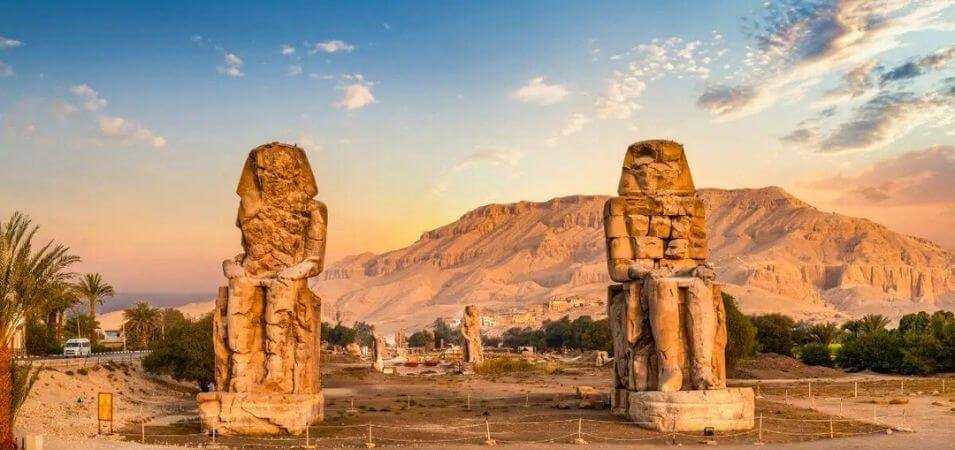
Standing approximately 18 meters (60 feet) tall and weighing over 720 tons each, these statues were carved from blocks of quartzite sandstone transported from quarries near Cairo, nearly 675 kilometers away. The logistics alone speak to the incredible skill and organization of the ancient Egyptians.
Originally, the Colossi flanked the entrance to Amenhotep III’s mortuary temple, which was one of the largest in Egypt. Today, most of the temple has been destroyed by natural disasters and human activity, but the statues remain as silent witnesses to the grandeur that once stood there.
The Morning Song
One of the most intriguing aspects of the Colossi of Memnon is the “singing” phenomenon. In antiquity, travelers reported that the northern statue emitted a musical sound at dawn, which they believed to be the voice of Memnon greeting his mother, Eos. This occurrence turned the site into a popular tourist attraction in the Roman period, attracting emperors and scholars who recorded the phenomenon. Modern studies suggest that the sound was caused by the temperature changes in the stone, causing cracks to expand and contract.
Colossi of Memnon Facts
The Colossi of Memnon are not only fascinating because of their size and historical significance, but also due to the wealth of details they reveal about ancient Egypt:
- Material and Construction: Both statues are carved from quartzite sandstone. Each block weighs several tons, demonstrating advanced engineering techniques for transport and assembly.
- Depiction of the Pharaoh: Amenhotep III is portrayed in a traditional seated pose, wearing a nemes headdress and a false beard, symbols of kingship. His throne is decorated with reliefs depicting conquered territories and deities.
- Alignment and Position: The statues face east, toward the rising sun, reflecting the ancient Egyptians’ reverence for solar deities and the pharaoh’s association with divine power.
- Size and Scale: Each statue measures approximately 18 meters tall, making them instantly recognizable and imposing on the surrounding landscape.
The Colossi of Memnon Are How Many Statues?
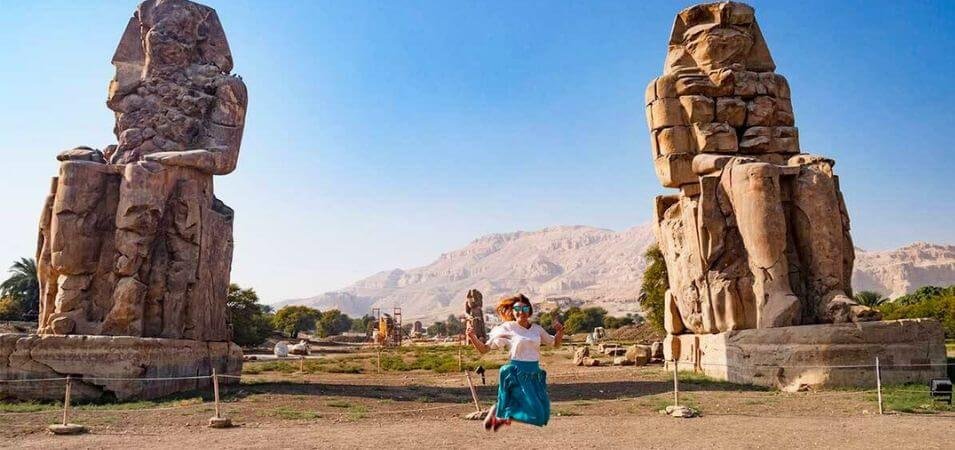
There are two Colossi of Memnon, standing side by side. These twin statues were intended as guardians of Amenhotep III’s mortuary temple and symbolize his eternal vigilance. While the temple itself has largely disappeared, the statues continue to dominate the site, providing insight into the scale and splendor of the original complex.
Interestingly, the fact that there are two statues has contributed to myths and stories over the centuries. The Greeks, observing the phenomenon of the “singing” statue, believed the twin figures represented Memnon and his mother or a single hero in a dual form. Today, visitors often marvel at the sheer size of the statues and their harmonious symmetry, reflecting both artistry and spiritual symbolism.
Architecture and Interior
While the Colossi themselves are solid stone statues with no interior spaces, their design and construction demonstrate remarkable architectural knowledge. The statues rest on massive stone pedestals that provide stability and withstand the test of time. The intricate carvings on the throne illustrate Amenhotep III’s achievements, battles, and divine connections, offering historians clues about his reign and religious practices.
The original mortuary temple surrounding the Colossi was one of the largest in Egypt, covering hundreds of meters and including courtyards, statues, and halls dedicated to worship and ritual. Though most of the temple has vanished, excavations have revealed foundations and fragments, helping scholars reconstruct its former glory. Nearby attractions, such as the Ramesseum—the mortuary temple of Ramses II—and the Valley of the Kings, are also within easy reach, offering visitors a deeper look at Luxor’s rich historical landscape. The Medinet Habu Temple, dedicated to Ramses III, is another remarkable site showcasing grandiose architecture and detailed reliefs that complement the Colossi’s grandeur.
Cultural Significance
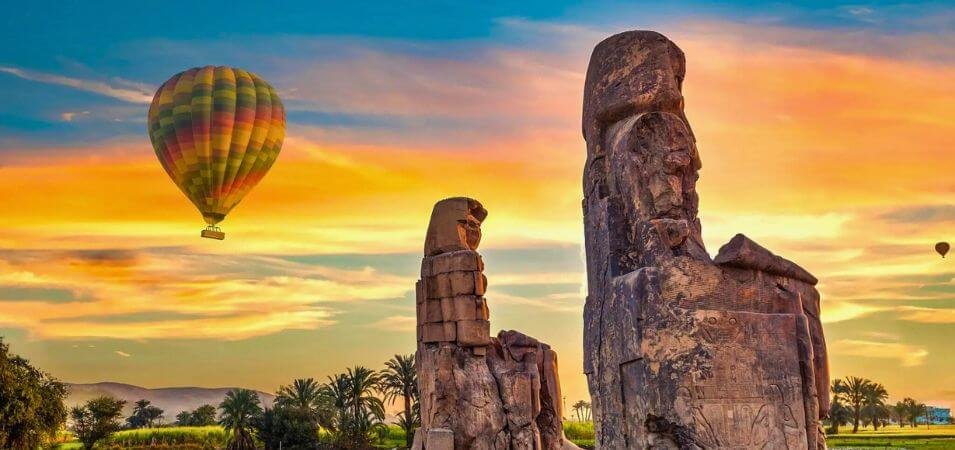
The Colossi of Memnon are more than architectural feats; they are symbols of ancient Egypt’s religious and political ideals. The statues reflect the pharaoh’s role as both a ruler and a divine intermediary. By positioning the statues to face the rising sun, the Egyptians emphasized the connection between the pharaoh and solar deities, reinforcing his eternal presence and authority.
In addition, the Colossi serve as a bridge between cultures. Greek and Roman travelers associated them with their own myths, creating a fascinating cross-cultural dialogue that continues to enrich the site’s historical narrative.
Visiting the Colossi Today
Modern visitors can experience the Colossi of Memnon firsthand on the west bank of Luxor. Despite the passage of over three millennia, the statues retain their imposing presence, offering a tangible connection to ancient Egypt. Tourists can walk around the statues, admire the detailed carvings on the throne, and imagine the scale of the original temple complex. The site is particularly captivating at sunrise, when the morning light illuminates the statues and creates long shadows on the desert floor. Though the “singing” phenomenon no longer occurs, the Colossi continue to inspire awe and wonder.
Visitors can also explore nearby attractions such as the Valley of the Queens, the Colonnade of Luxor Temple, and the Luxor Museum, which provide additional context to the statues’ history and Amenhotep III’s era. Together, these sites make the west bank of Luxor a comprehensive journey into Egypt’s monumental past.
Conclusion
The Colossi of Memnon stand as timeless guardians of history, culture, and myth. From their colossal size and intricate carvings to the legends surrounding Memnon and the mysterious morning sounds, these statues embody the ingenuity and spirituality of ancient Egypt. With only two statues remaining, they continue to dominate the landscape near Luxor and offer a glimpse into the grandeur of Amenhotep III’s reign.
Whether you are drawn by history, architecture, or mythology, the Colossi of Memnon provide an unforgettable experience, combining art, legend, and human achievement in a single, awe-inspiring sight. Exploring these statues is not just a journey through stone; it is a journey through time itself, connecting modern visitors with a civilization that has fascinated the world for thousands of years.
